



Common Battery Problems in FPV Drone Builds
Under high-load flight conditions, battery performance becomes the key factor limiting long range fpv.


Inflated C-Rating
Many FPV batteries are labeled 120C or 150C, but under real flight conditions their usable discharge rate is far lower than the advertised rating.


Transient Voltage Sag
Higher internal resistance can cause a sharp, instant voltage drop, resulting in soft throttle, sluggish RPM ramp-up, and non-linear throttle response, while increasing the risk of brownouts in the flight controller or video transmitter.


Connector Overheating
FPV demands higher electrical and mechanical reliability from connectors. Common issues include overheated plugs, melted plastic, reduced contact pressure, and arcing, which can lead to unstable voltage or intermittent power loss.


Insufficient Crash Resistance
In freestyle and racing FPV, crashes and impacts are routine. Batteries must withstand real-world damage risks under high load, including case rupture and tab/lead stress.


Inconsistent Quality
Even within the same model, performance can vary across batches. Brand-new packs may feel different out of the box, reducing consistency and repeatability for racing and multi-drone setups.
Solving Voltage Sag & High-Current Power Issues
System-level optimization delivers true power and stable voltage, making every high-intensity flight steadier and more reliable.
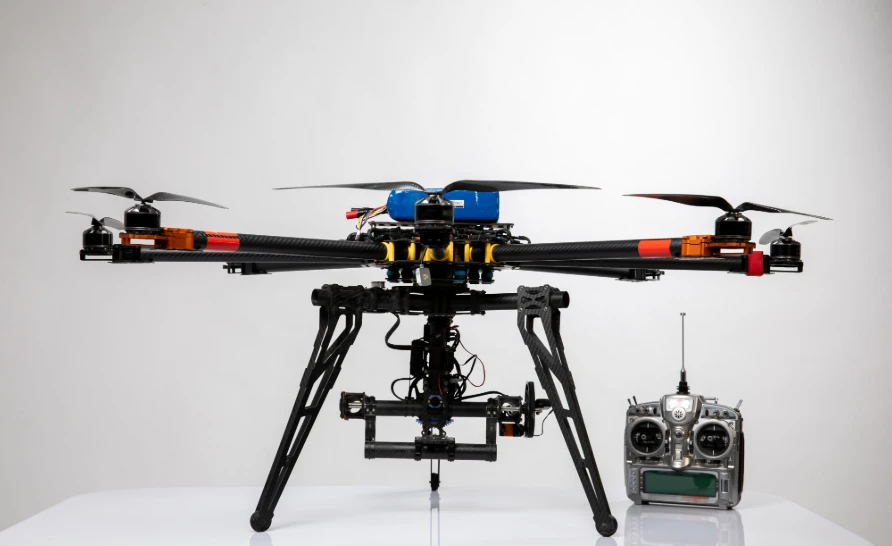
Tested Burst C-Rating & Cell Matching
- Real C-Rating: Based on proven discharge capability under real conditions, not just a single advertised C value.
- Capacity & IR Matching: Cells are graded and matched by capacity and internal resistance to improve pack-level burst output consistency.
- Burst Current Capability: Supports an equivalent burst discharge capability of >150C.
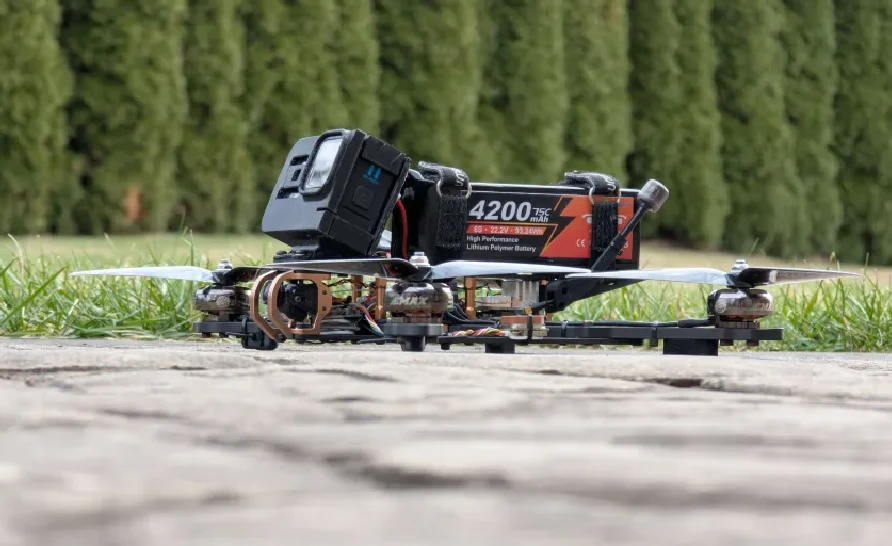
Ultra-Low IR + Stacked Electrodes
- Ultra-Low IR Matching: Extremely low internal resistance reduces in-flight voltage sag for more linear, responsive thrust.
- Stacked Electrode Process: Improves burst discharge and voltage curve stability, delivering more reliable performance for high-end FPV.
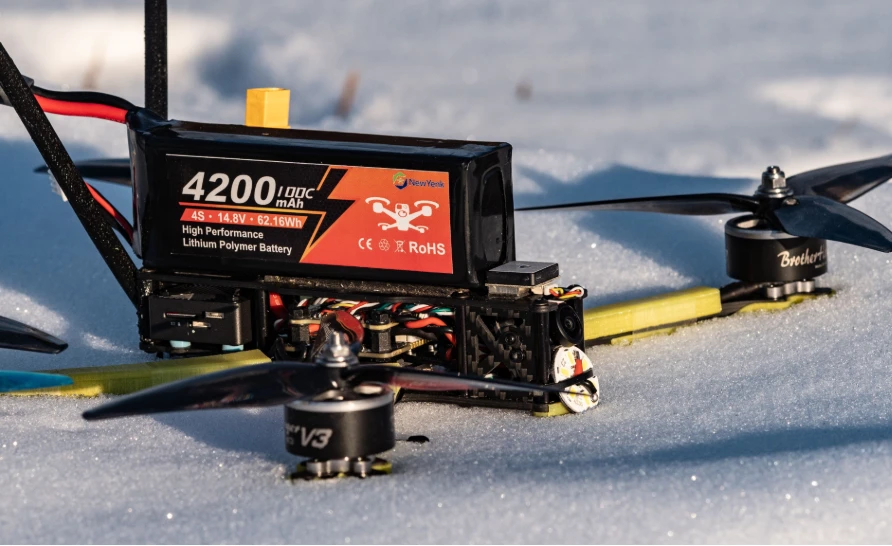
Stable Voltage & Low Ripple
- Cell consistency screening and optimized pack design keep voltage output smoother under high load, reducing transient fluctuations and ripple for better FC and VTX stability.
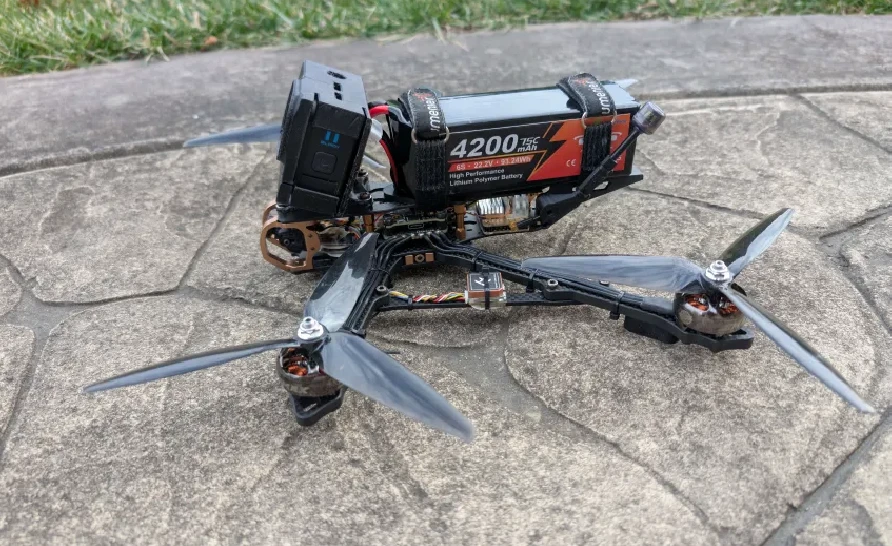
Reinforced Leads & Strain Relief
- By isolating external forces from critical electrical connections, this design reduces damage risk to tabs and solder joints during endurance fpv and crashes, improving connection stability under high load and impact conditions and minimizing poor contact or momentary power loss caused by lead issues.
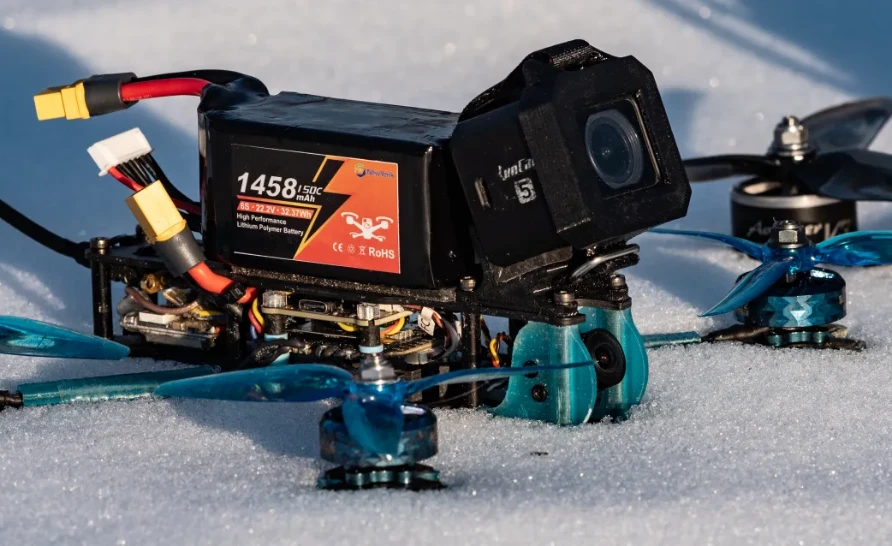
End-to-End In-House Production
- From raw material processing and cell manufacturing to performance screening, pack assembly, and final inspection, every critical step is tightly controlled to ensure stable, consistent performance under FPV high-load conditions.
FPV Battery Selection by Flight Style
Based on real flight scenarios, we match optimal power performance for each FPV application.
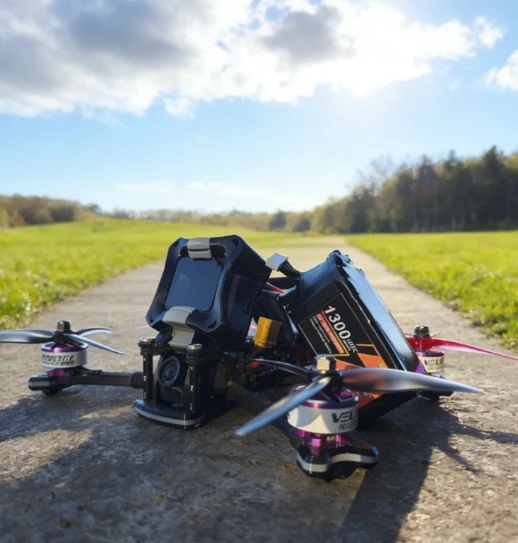
For high-frequency full-throttle acceleration & extreme lap time demands on fastest fpv racing drones, the battery focuses on true high-rate output and ultra-low internal resistance, enabling rapid response, stable thrust, and sustained high-intensity flight.
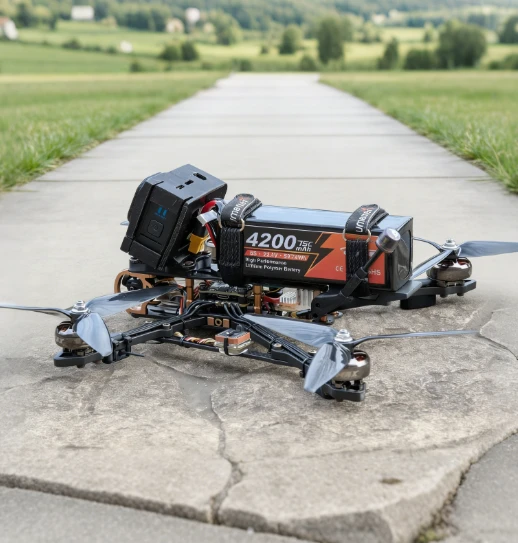
For high-frequency full-throttle ascents & sustained high-intensity maneuvers, the battery focuses on low internal resistance and stable output, delivering linear thrust through repeated punch-outs, quick stops and starts, with reduced voltage sag.
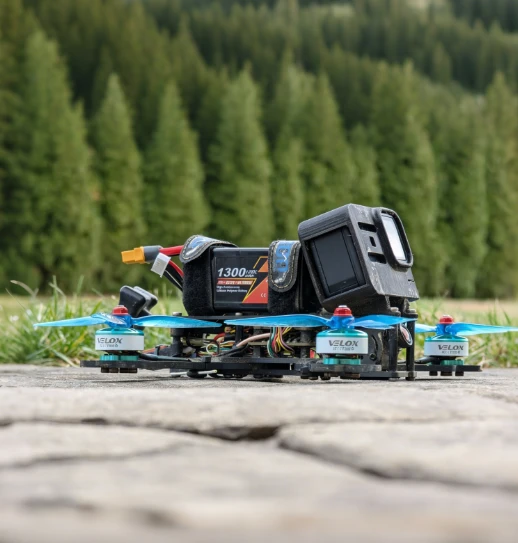
Stable voltage output & low ripple enable quiet, controllable flight, minimize voltage fluctuation impact on footage and flight control, for a smoother, more reliable aerial shooting experience.
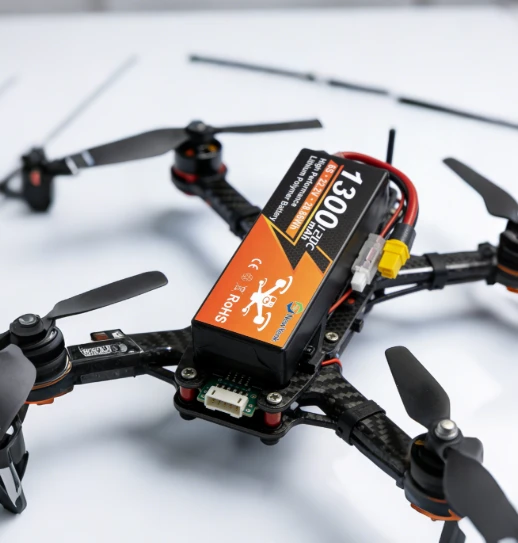
Rapid response + stable output for high-speed traversal & complex environment flights, maintains seamless power during frequent acceleration, deceleration and direction shifts, reducing control fluctuations due to voltage sag.
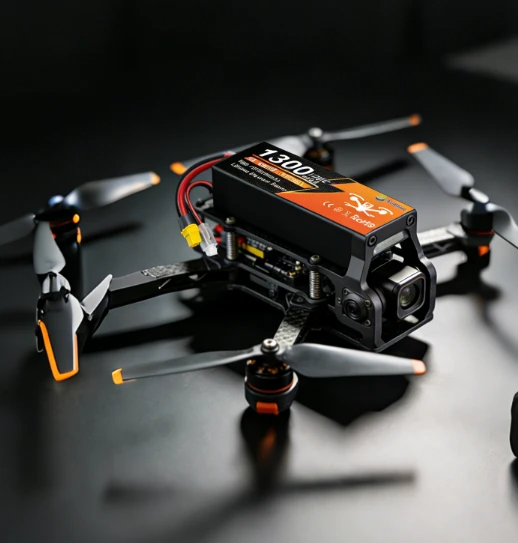
Equipped with cameras & extra devices, the battery boasts continuous discharge performance and good thermal stability, delivering stable power for hovering, wind resistance and throttle tuning, guaranteeing reliable consistent footage and flight performance.

Suitable for applications such as racing, freestyle, aerial photography, and long-range flight. Parameter and specification communication is supported.