



We support cell selection, battery pack assembly, protection circuit integration and custom mechanical design.
A 24V-class lithium-ion system is not defined by one fixed nominal voltage. Depending on the cell chemistry and series arrangement, the pack may operate across different voltage ranges. The equipment input range, current demand and charging method must be confirmed before a configuration is selected.
24V Li-ion Battery Pack Configurations
YATTOX evaluates 24V Li-ion battery pack requirements around the actual equipment specification. Cell format, series/parallel arrangement, protection functions and available installation space are considered together, rather than treating every product labeled 24V as interchangeable.
18650 and 21700 Cell Options
For a custom 24V 18650 battery pack project, cell count and arrangement must be determined from the required voltage range, runtime and operating current. 18650 and 21700 cells differ in size and available electrical characteristics; the appropriate choice depends on the selected cell model and the finished pack design.
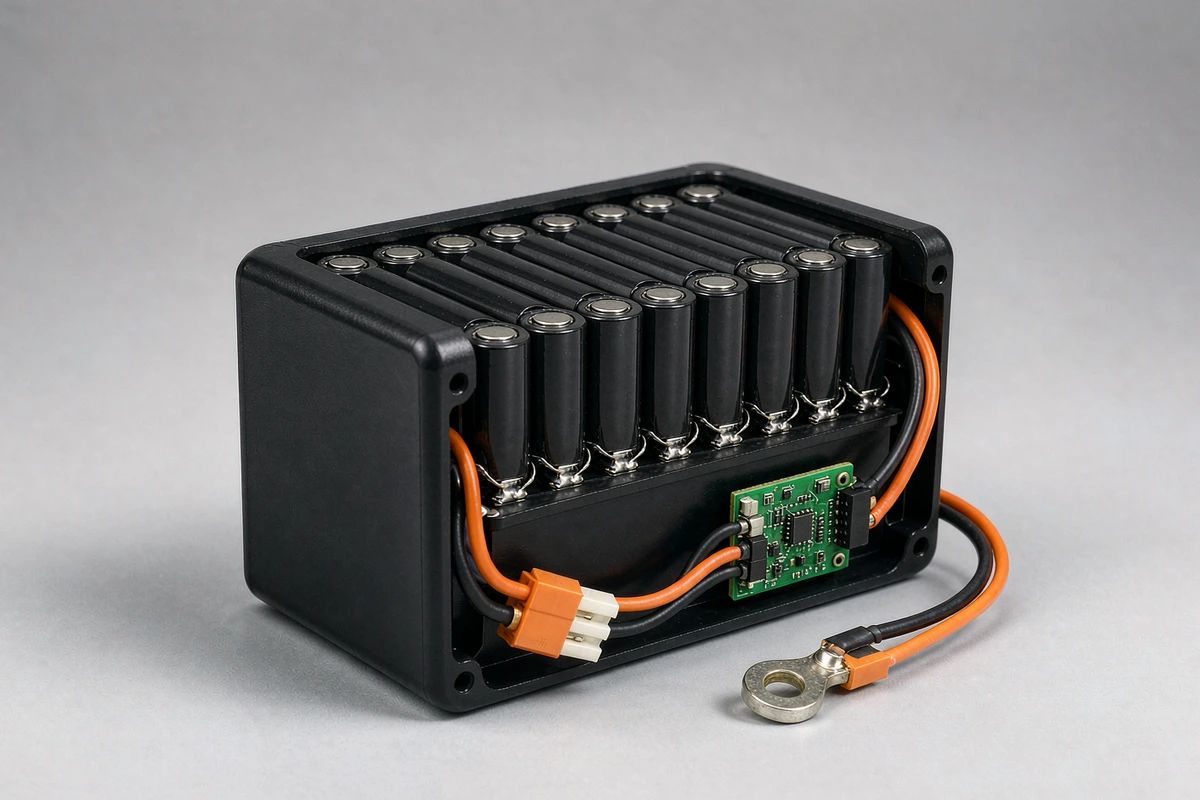
24V lithium-ion battery pack configuration with BMS protection and custom connectors
Specifications to Confirm for an OEM Pack
These are configuration requirements, not an inventory list or fixed YATTOX stock specifications. The final pack design and sample specification are established during project review.
| Design Item | Information Needed |
|---|---|
| Voltage configuration | Equipment input range, battery nominal voltage and charging limits |
| Capacity and runtime | Target Ah/Wh, operating profile and expected run time |
| Load capability | Continuous current and startup or peak current |
| Electrical protection | BMS functions, protection limits and sensing needs |
| Mechanical integration | Available dimensions, mounting, enclosure and cable routing |
| Connections | Connector type, wiring, polarity and charging interface |
Related product experience: View YATTOX 21700 Li-ion Battery Series
Which Battery Voltage Fits Your 24V System?
A device labeled 24V does not automatically accept every 24V-class lithium-ion pack. With conventional cells charged to 4.2V each, a 6S pack reaches 25.2V at full charge, while a 7S pack reaches 29.4V. The selected battery must remain within the equipment's permitted voltage range over the intended discharge cycle.
6S vs 7S Lithium-Ion Battery Configurations
| Series | Nominal Voltage per Cell | Pack Nominal Voltage | Typical Full-Charge Voltage |
|---|---|---|---|
| 6S | 3.6V | 21.6V | 25.2V |
| 6S | 3.7V | 22.2V | 25.2V |
| 7S | 3.6V | 25.2V | 29.4V |
| 7S | 3.7V | 25.9V | 29.4V |
Technical note: These are reference voltages for conventional 4.2V-charge lithium-ion cells. Actual charging and operating limits follow the selected cells and approved pack design.
Check the Complete Electrical System
- Equipment input voltage. Confirm the controller's minimum and maximum operating voltage, including the voltage seen when the battery is fully charged.
- Continuous and peak current. Check steady-state power demand, startup current and short-duration loads. Cells, interconnections, wiring and BMS limits must be evaluated for the load profile.
- Charger compatibility. A charger labeled 24V is not automatically suitable for both 6S and 7S packs. Its charging voltage, current and profile must match the selected battery.
The best-fit configuration is determined by the whole electrical system, not the nominal voltage label alone.
Battery Applications for OEM Equipment
Different 24V-class devices may need different battery layouts and protection settings. YATTOX reviews 24V Li-ion battery packs against their intended electrical load, operating conditions, runtime and physical constraints.

Mobile inspection and robotic equipment powered by a 24V-class lithium-ion battery pack
Industrial and Portable Equipment
For compact industrial equipment, the proposed 24V lithium battery pack should be evaluated for steady-load current, available capacity, connector selection and installation dimensions before a sample design is approved.
Inspection and Mobile Robotic Systems
Mobile equipment may experience changing power demand during startup, movement and repeated duty cycles. Controller voltage limits, peak current, runtime, battery weight and mounting space should be assessed together.
Equipment-Specific Battery Assemblies
Some OEM products require a defined enclosure, cable layout, connector polarity or monitoring interface. Electrical and mechanical specifications should be reviewed together before adapting a battery pack to the equipment.
Application suitability is established from the actual equipment specification; these examples describe design requirements rather than completed customer projects.
Custom 24V Battery Pack Design and Manufacturing
YATTOX supports custom 24V battery pack development for OEM projects needing specified electrical configurations, battery structure and connections. Our approach to custom 24V lithium-ion battery packs begins with the equipment's actual operating conditions.
Cell Configuration and Capacity
The cell format, series/parallel configuration and total capacity are reviewed against voltage requirements, discharge current, target runtime and available space. The final specification depends on the selected cell model.
BMS Protection and Electrical Integration
Depending on the design, protection requirements may include overcharge, overdischarge, overcurrent, short-circuit and temperature monitoring. Protection settings, connectors, cable routing and any monitoring interface must match the equipment and charger.
Pack Structure and Quality Checks
Mechanical review may cover cell arrangement, insulation, enclosure design, wiring and terminal placement. YATTOX's PACK-related capabilities include cell evaluation, voltage and internal-resistance checks, battery assembly and quality control.
For a defined project, sample verification may cover voltage, capacity, load performance, protection operation, connector polarity and overall dimensions. Test methods, acceptance criteria and documentation requirements should be agreed for the specific design.
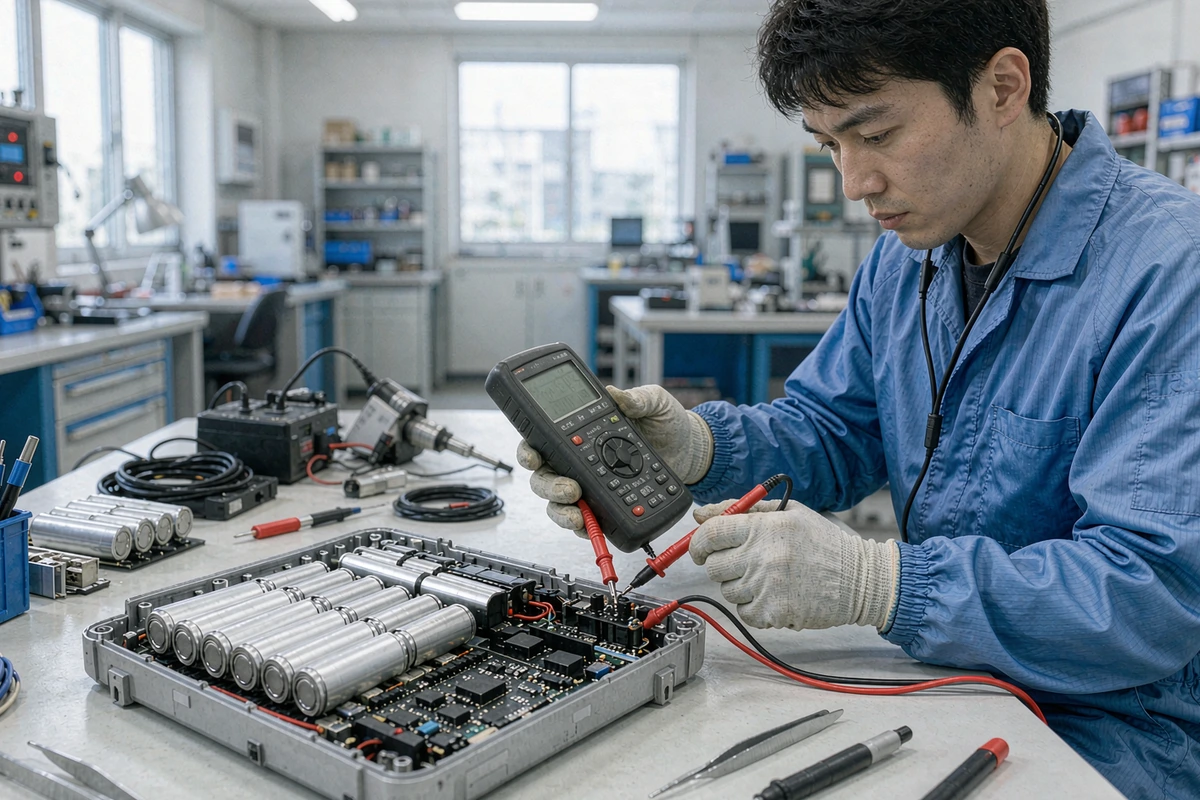
Pack assembly and quality checks for custom OEM battery projects
Frequently Asked Questions
Q1: Can I use my existing 24V charger with a lithium-ion battery pack?
Only if its output voltage, charge profile and current are compatible with the chosen pack chemistry and series count. Conventional 6S and 7S packs have different full-charge voltages, so the charger specification must be checked before use.
Q2: Why does a battery shut down when the equipment starts?
Possible causes include high startup current, BMS overcurrent protection, excessive voltage drop under load or an equipment fault. The startup load, wiring and protection thresholds should be checked before deciding on a remedy.
Q3: Can YATTOX customize BMS protection, connectors and pack dimensions?
YATTOX supports design reviews for protection circuits, electrical connections and pack structure. Provide the continuous and peak current, connector details, size limits and any sensing or monitoring requirements.
Q4: What information is needed to replace an existing 24V battery?
Share the original battery chemistry, voltage range, capacity, continuous and peak current, charger details, connector polarity and installation dimensions. A battery datasheet or equipment drawing helps establish compatibility.
Q5: Can I request a sample before a bulk order?
Sample development can be discussed after the electrical and mechanical requirements are reviewed. Availability, testing scope, cost and schedule depend on the selected cells, protection circuit, pack construction and materials.