


×

key word:

YanKe

High-Voltage Lithium Battery Packs

Engineered Around Your Equipment, Not a Fixed Voltage Rating

When a standard battery configuration cannot meet an equipment’s electrical or installation requirements, the starting point is a suitable battery architecture—not simply a higher voltage number.

A high voltage battery pack must be matched to the equipment’s full operating voltage range, energy demand, charging method and electrical interfaces. These factors also determine the required protection and mechanical arrangement. YATTOX provides lithium battery configuration, PACK assembly and electrical integration support for OEM projects; requirements beyond published product specifications are subject to an engineering review of component suitability, manufacturing feasibility and verification needs.


When Does Equipment Need a Custom Battery Configuration?

A high voltage lithium ion battery pack uses a series-parallel arrangement of lithium-ion cells to deliver the voltage, energy and current required by a particular electrical system.

The term high voltage does not describe one universal battery rating. Its technical meaning depends on the application and applicable standards.

Unlike a standard voltage-specific product, a high-voltage lithium-ion battery pack may require an application-specific combination of cell configuration, protection, charging and installation interfaces.

Operating Voltage and Battery Chemistry

Battery selection begins with the minimum and maximum voltages accepted by the equipment. Cell chemistry and series count determine the pack’s nominal voltage, full-charge voltage and allowable discharge limits. They also influence the charger and BMS requirements.

Two batteries described by similar voltage classes may not be electrically interchangeable.

When Standard Packs Are Not Suitable

A custom configuration may be considered when:

⚡

The equipment requires an operating voltage range not met by available standard packs.

📏

Energy capacity and discharge current must fit within restricted dimensions.

🔌

The battery needs a specific charging or monitoring interface.

📦

Standard enclosures or connections cannot accommodate the equipment’s installation requirements.

🧪

The application has particular environmental or electrical protection requirements.

📜

These conditions should be established before the cell arrangement and pack structure are finalized.
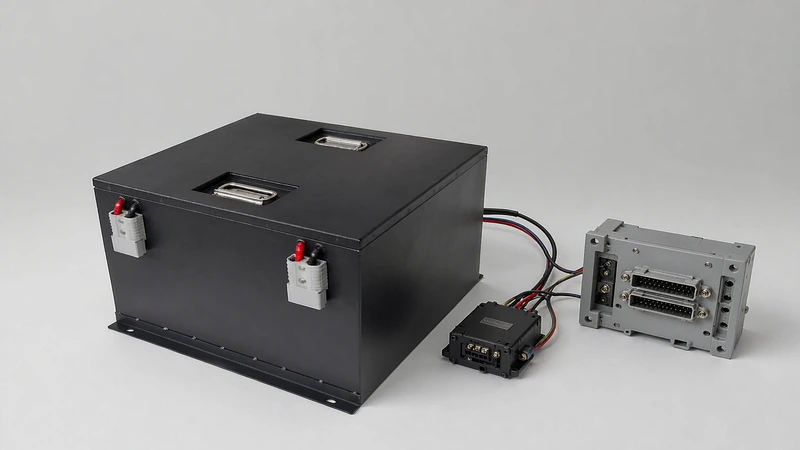

High-Voltage Battery Pack Design Requirements

High voltage battery pack design begins with the power system rather than an individual battery specification.

The objective is to define a pack that can deliver the required energy and current while remaining compatible with the equipment’s electrical limits, installation constraints and safety requirements.

Voltage, Energy and Current

Nominal voltage is only one part of the electrical specification. Maximum charging voltage and minimum operating voltage must also be established.

Energy requirements are expressed in watt-hours (Wh), while continuous and peak current determine the electrical load the cells, connections and protection devices must support.

For example, a conventional 20S lithium-ion arrangement using cells charged to 4.2V per cell reaches 84V at full charge. The actual pack voltage and protection limits depend on the selected cells and series arrangement.

Higher system voltage can reduce current for a given electrical power level, but electrical insulation, component ratings and system protection still require separate assessment.

Engineering Specification Checklist

Design parameterInformation requiredPurpose
Voltage rangeNominal, minimum and maximum operating voltageEstablish electrical compatibility
Energy capacityRequired Wh, Ah and operating durationDetermine the energy target
Electrical loadContinuous current, peak current and duty cycleGuide cell and connection selection
ChargingCharger voltage, current and charging methodMatch charging requirements
Battery protectionBMS functions, temperature monitoring and fault responseDefine battery management needs
Electrical safetyInsulation, access protection and applicable isolation requirementsIdentify protective measures
Mechanical limitsDimensions, weight, enclosure and mountingAssess installation feasibility
VerificationTest conditions and acceptance criteriaEstablish evaluation requirements

For an OEM project, this information provides a clearer basis for battery selection than nominal voltage or capacity alone.

Protection and System Integration

A battery must operate as part of the equipment’s electrical system. BMS protection settings, charging controls and connection design should therefore be considered together.

The necessary protection architecture depends on cell chemistry, operating voltage range, equipment load and applicable safety requirements.

Battery management and electrical integration concept for high-voltage equipment
Battery module, protection/control unit and equipment interface concept

BMS and Fault Protection

The BMS should be selected according to the cell configuration and electrical operating limits. Key considerations include:

  • Cell voltage monitoring and overcharge/overdischarge limits
  • Continuous current and short-duration peak-current limits
  • Temperature sensing and protection response
  • Cell balancing and electrical fault response
  • Battery status monitoring or communication, if required

A BMS suitable for one battery chemistry or series arrangement cannot automatically be used for another.

Insulation, Charging and Connections

Depending on the voltage level and intended application, the system may require additional measures for insulation, accessible-part protection and safe disconnection.

Some equipment may also require isolation monitoring, interlocks or other system-level protective functions. These must be evaluated against applicable design requirements rather than assumed to be standard battery features.

Charging voltage, connector polarity, cable specifications and controller interfaces must match the proposed battery configuration. Where equipment supports regenerative operation, allowable charging current and the protection response should also be reviewed.

Applications Across Specialized Equipment

Battery requirements can vary significantly between equipment types, even when their power systems are described using similar voltage terminology. The final battery configuration must be evaluated against the actual application rather than selected by voltage class alone.

Industrial UAV application with custom battery power requirements
Industrial UAV inspection application concept with high-voltage power requirements

Industrial UAV Systems

Industrial UAVs carrying inspection instruments, sensors or heavy payloads require careful consideration of battery energy, weight and propulsion performance.

A higher-voltage battery architecture is suitable only when its full operating voltage range is compatible with the aircraft’s motors, ESCs, power distribution and onboard electronics.

Battery mass, continuous and peak current, mission duration and safe landing reserve must also be considered. Higher voltage alone does not guarantee longer flight time; the complete aircraft and propulsion system determine whether a configuration is practical.

Related reading: UAV Li-ion Battery Solutions

🧞Robotics and Automation

For equipment that requires a higher-voltage power architecture, custom battery pack design for robotics starts with the controller’s permitted voltage range and the machine’s operating cycle.

Repeated acceleration, changing electrical loads, confined installation space and charging intervals can influence the battery arrangement.

Connector locations, maintenance access and any required battery status signals should be assessed alongside the mechanical layout. The resulting specification should reflect the robot’s actual electrical and installation requirements rather than rely on a generic battery replacement.

🏵Industrial Power Equipment

Industrial machines and mobile equipment may require custom industrial battery packs to fit defined operating conditions and electrical interfaces.

The design may involve restrictions on enclosure dimensions, weight, cable routing, environmental exposure and access for charging or maintenance. Equipment drawings and electrical specifications help establish which configuration and protective measures are appropriate.

From Specification to Battery Assembly

A custom battery project becomes more practical when the electrical and mechanical requirements are documented before selecting components.

YATTOX’s published capabilities include cell configuration, battery PACK assembly and inspection activities. Requirements outside the established product range require separate confirmation of technical feasibility and validation needs.

Engineering Review and Verification

The review starts with the equipment’s voltage limits, energy target, current profile and available installation space. These requirements guide the assessment of cell arrangements, protection functions, electrical interfaces and mechanical options.

A custom battery pack assembly may require specific insulation, cable exits, mounting arrangements or connection layouts.

Depending on the approved design, sample evaluation may include voltage, capacity, load behavior, protection response, connector polarity and mechanical dimensions. Test conditions, acceptance criteria and applicable documentation should be defined for the project.

Related reading: Battery Manufacturing and Quality Control

Information for an OEM Quotation

To help establish a proposed specification, please provide:

Project informationWhat to share
EquipmentApplication and operating environment
VoltageNominal and allowable minimum/maximum voltage
EnergyRequired capacity or operating duration
Electrical loadContinuous and peak current, including duty cycle
ChargerCharging voltage, current and interface
Space and weightInstallation dimensions and mechanical limits
ConnectionsConnector, cable and monitoring requirements
Safety and verificationApplicable standards and required tests
Order detailsDevelopment stage and expected quantity

An existing battery datasheet, electrical diagram or equipment drawing can also help clarify the requirements.

Request an Engineering Review

Frequently Asked Questions

Q1: What is a high-voltage battery pack?

A high-voltage battery pack is a battery assembly designed for an electrical system operating within a specified higher-voltage range. The exact definition depends on the application and applicable standards. Battery selection must consider its complete operating voltage range, current capability, charging requirements and safety measures.

Q2: When is a custom battery design necessary?

A custom configuration may be needed when standard battery packs cannot meet the equipment’s voltage, energy, electrical interface or installation requirements. The proposed design should be based on those requirements rather than nominal voltage alone.

Q3: What information is required for battery pack design?

The main inputs are the permitted voltage range, energy requirement, continuous and peak current, charging method, installation limits and operating conditions. Protection, interface and testing requirements should also be identified.

Q4: Does every higher-voltage battery use the same BMS?

No. BMS requirements vary with the selected chemistry, series configuration, charging voltage, current limits and monitoring needs. Additional system-level safety measures may also be necessary for the application.

Q5: Can a custom battery be considered for UAVs or robotics?

A battery configuration can be assessed for a specific UAV or robotics project. UAV selection requires particular attention to propulsion voltage, battery weight, current demand and flight reserve. Robotics projects may require different controller interfaces, installation arrangements and charging behavior.

Q6: Can YATTOX review requirements outside its published battery range?

Customers can submit equipment specifications for an initial technical review. Component suitability, manufacturing feasibility, testing requirements and final engineering scope must be confirmed before a non-standard configuration can be proposed as an approved product.