






LiPo, Li-ion and Semi-Solid Battery Options
Compare battery chemistry options by power demand, energy requirements and integration needs. YATTOX’s 6S LiPo models provide a 22.2V nominal platform across multiple capacities; Li-ion and semi-solid technologies involve different design trade-offs.
6S UAV LiPo Batteries
A consistent 22.2V nominal voltage with multiple capacity options. Review the stated discharge rating, mass and physical size of each pack.
UAV Lithium-Ion Batteries
Consider energy-to-weight requirements alongside the continuous and peak power demanded by your aircraft. Explore the dedicated Li-ion application information.
Semi-Solid and Battery Management Options
For projects evaluating alternative cell chemistries or battery-management features, define your electrical and integration requirements before selecting a solution.
Explore Batteries by Voltage and Capacity
Browse 14 YATTOX 6S LiPo battery configurations from 12,500mAh to 80,400mAh. Each pack carries a 22.2V nominal voltage and a 10C label rating. Select a model to review its full specifications and discuss integration requirements.
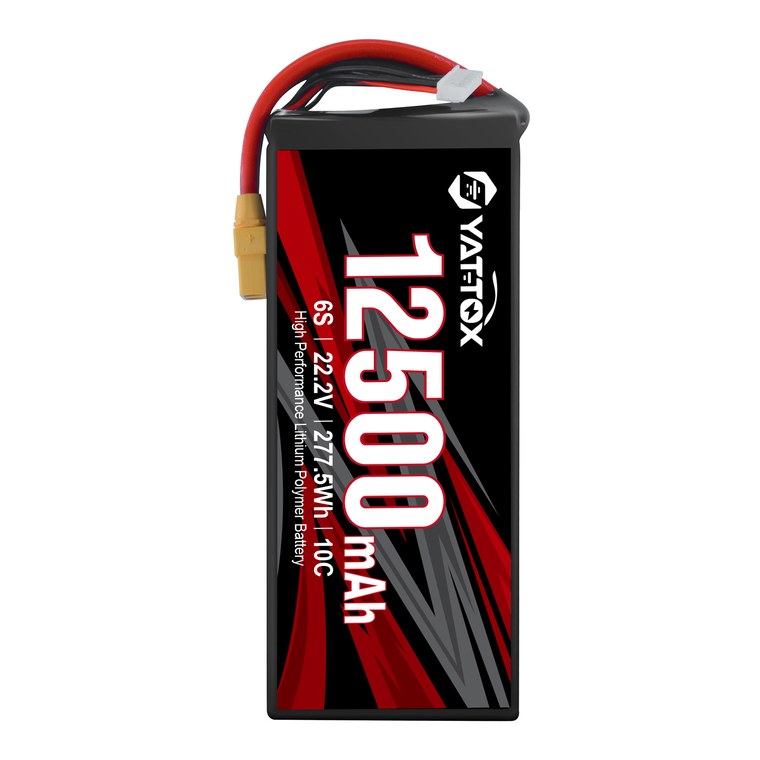
6S 12,500mAh LiPo Battery
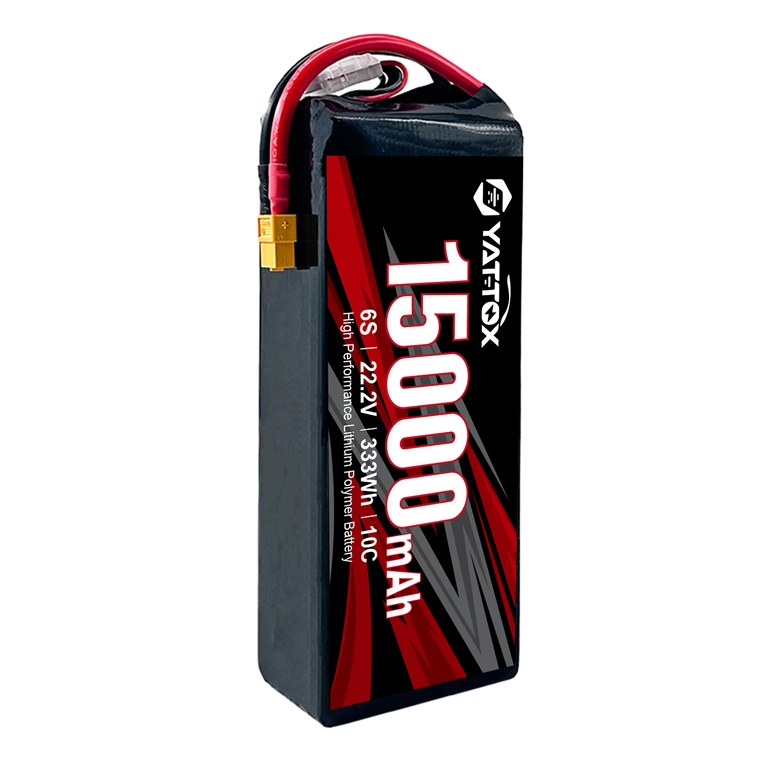
6S 15,000mAh LiPo Battery
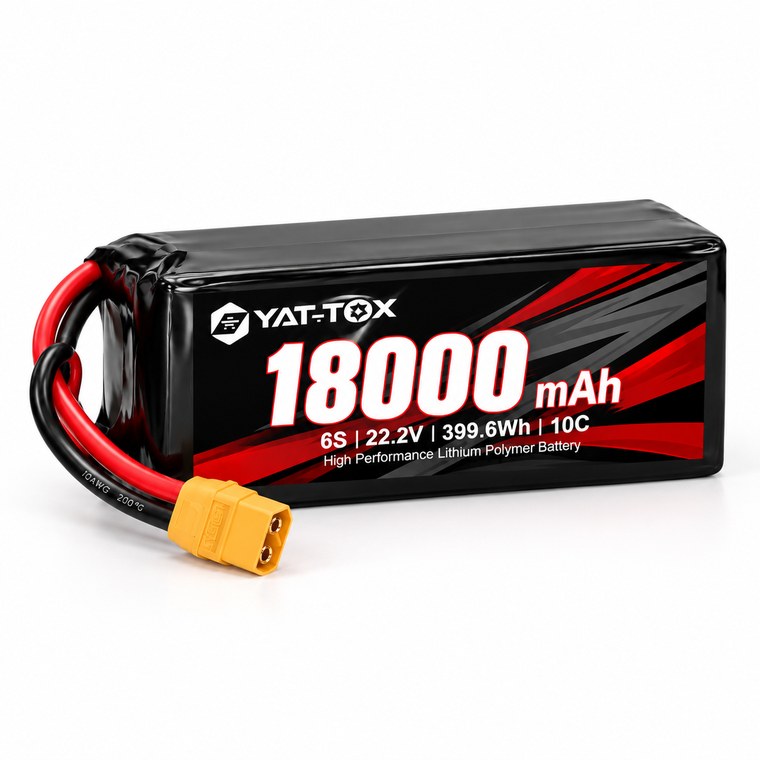
6S 18,000mAh LiPo Battery
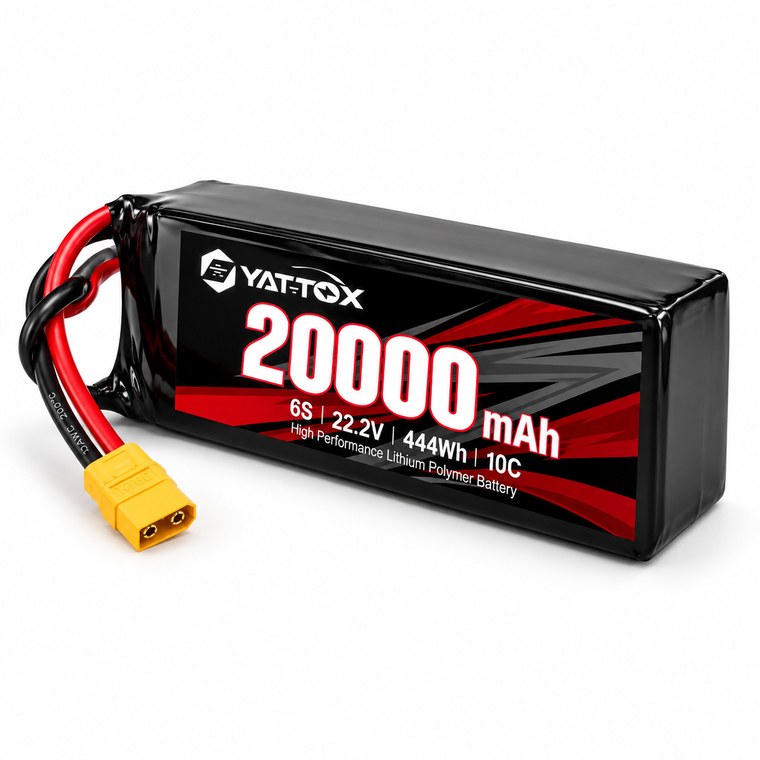
6S 20,000mAh LiPo Battery
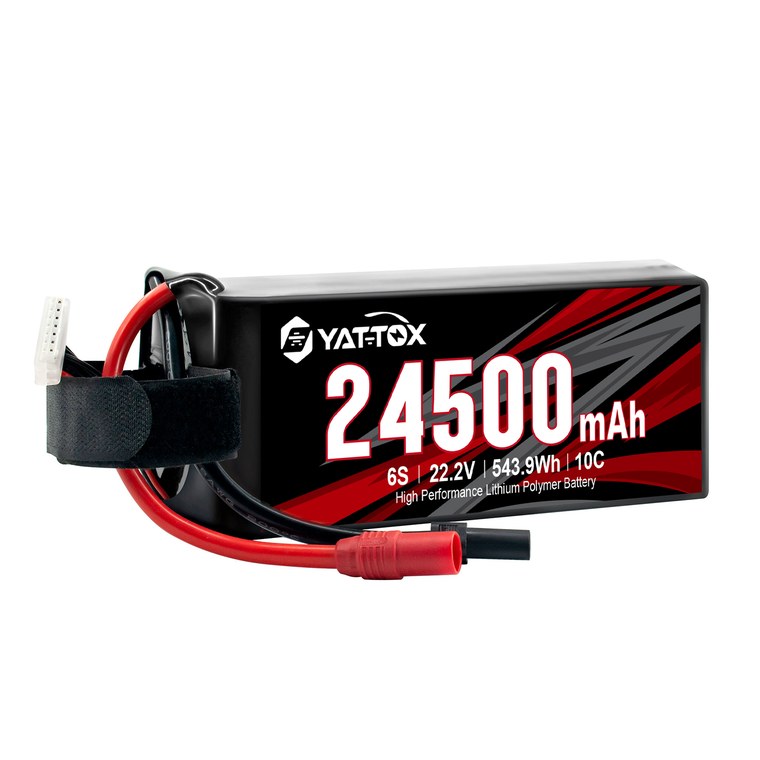
6S 24,500mAh LiPo Battery
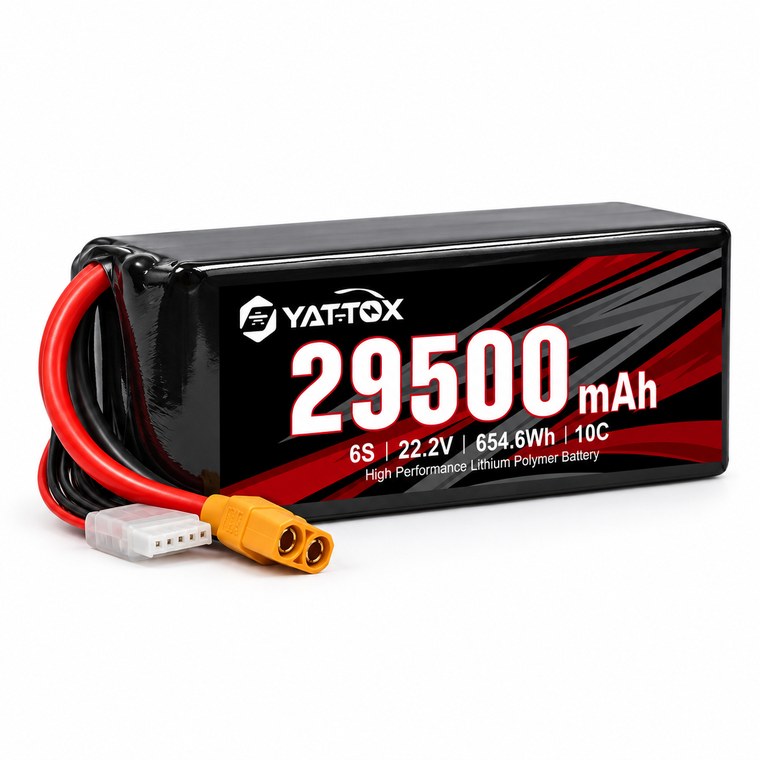
6S 29,500mAh LiPo Battery
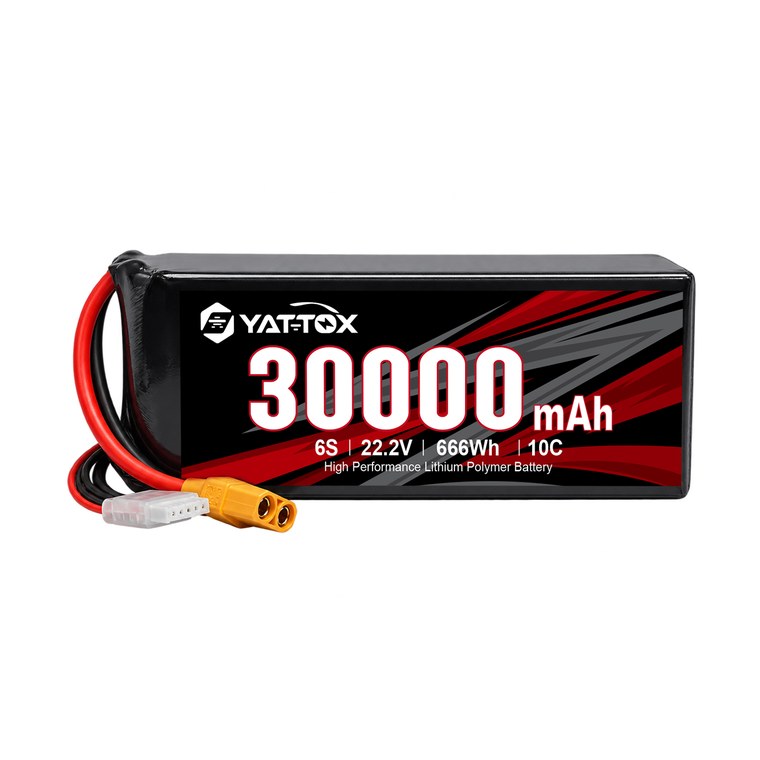
6S 30,000mAh LiPo Battery
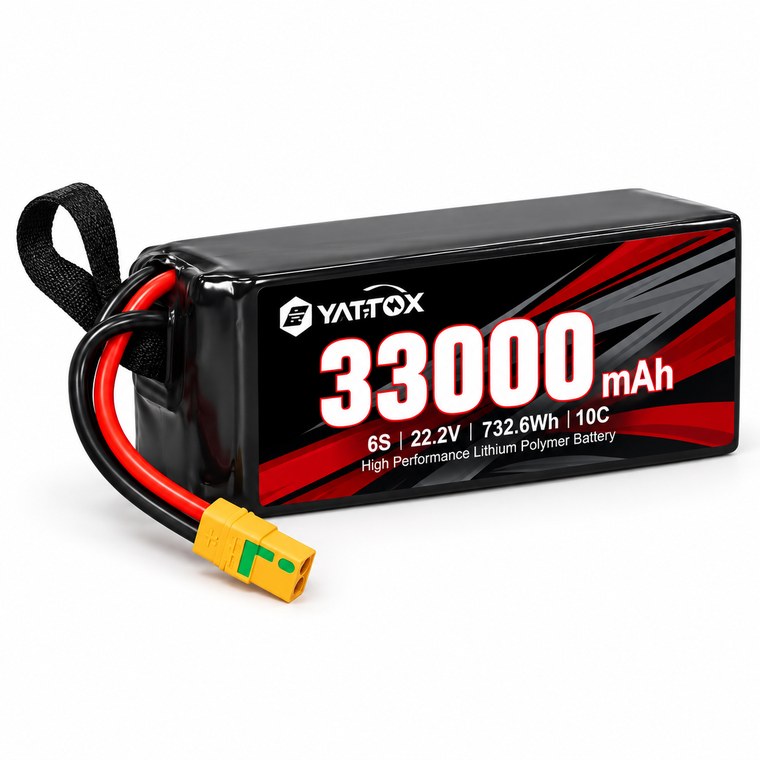
6S 33,000mAh LiPo Battery
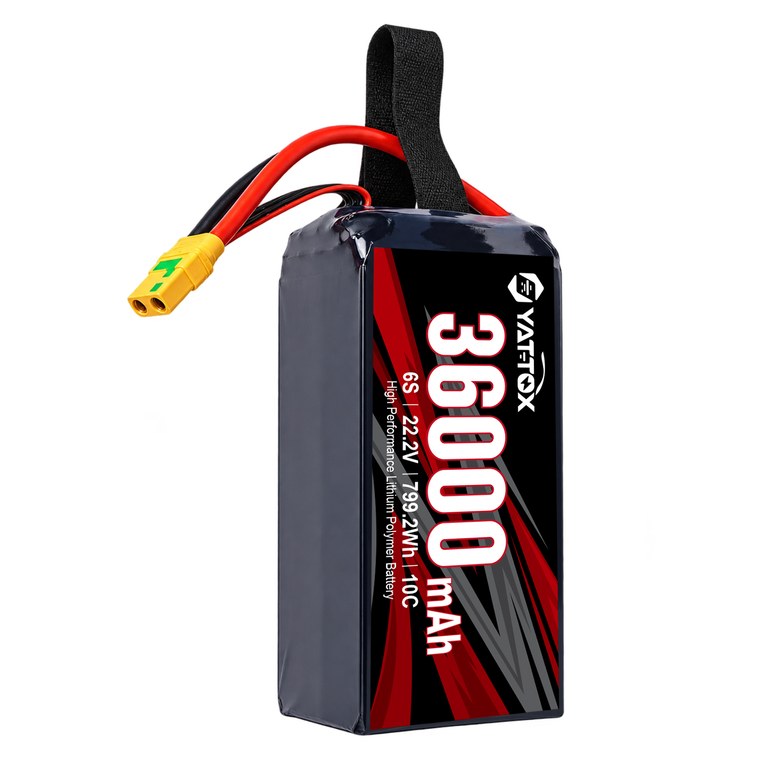
6S 36,000mAh LiPo Battery
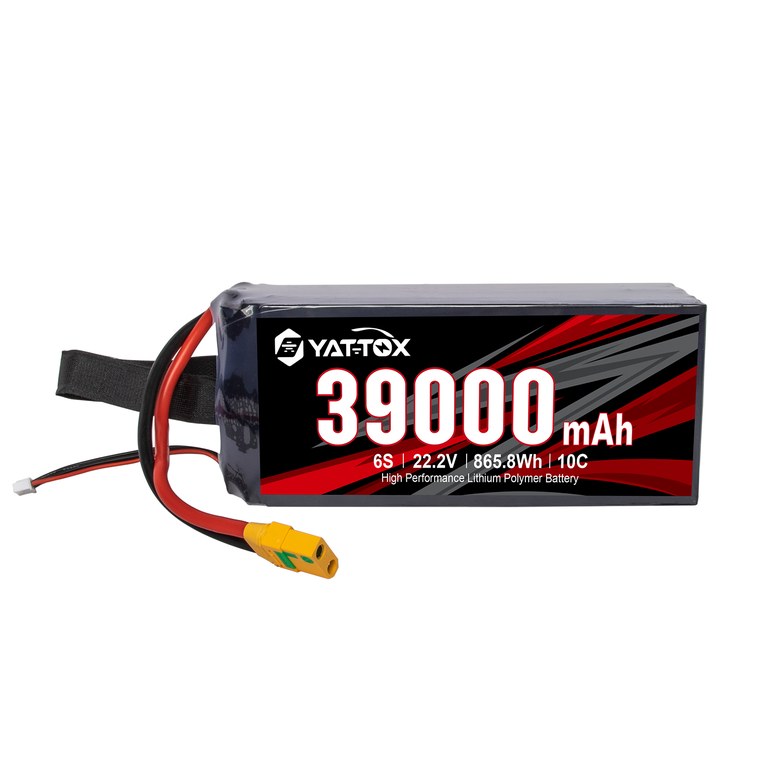
6S 39,000mAh LiPo Battery
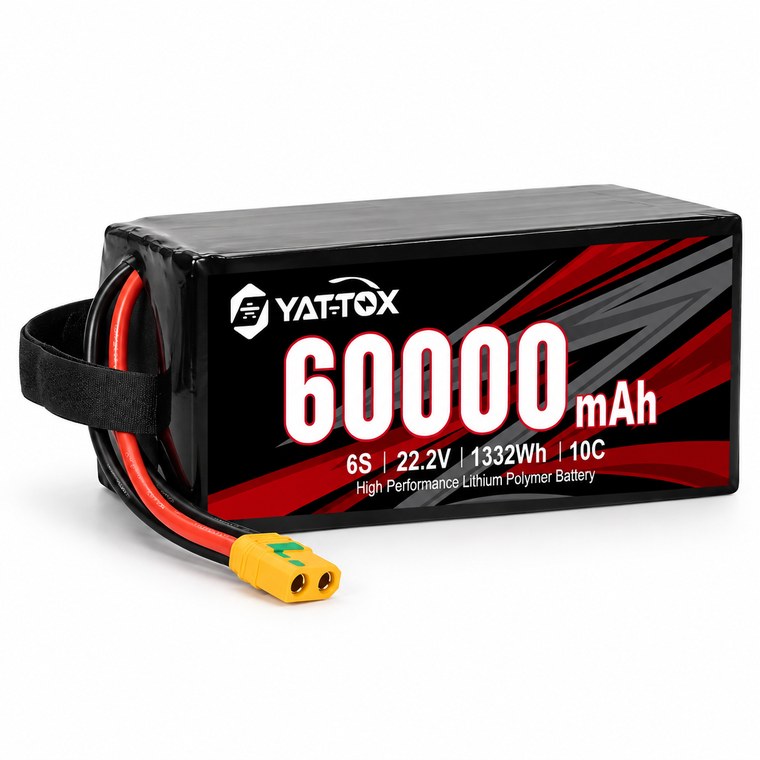
6S 60,000mAh LiPo Battery
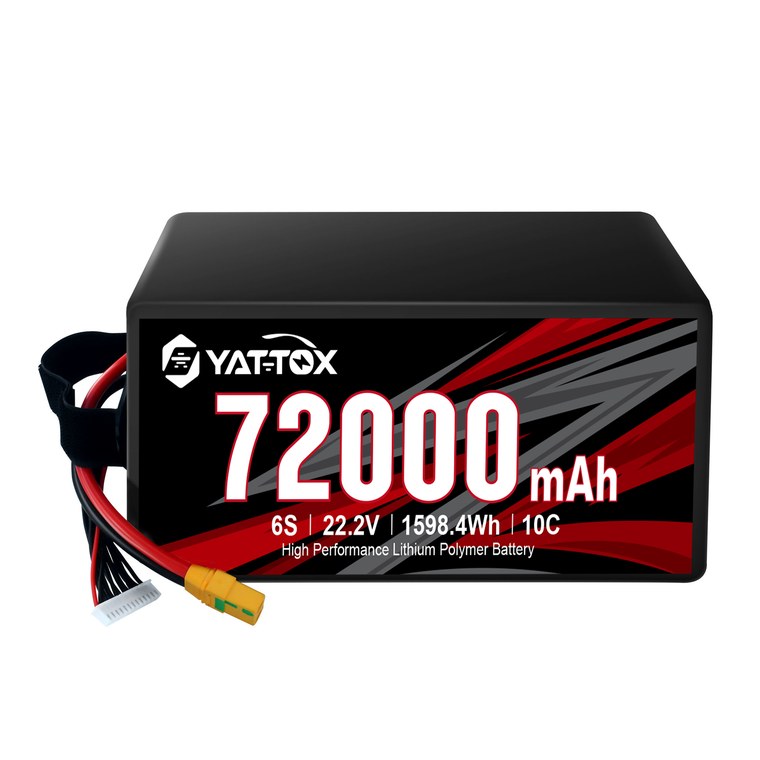
6S 72,000mAh LiPo Battery
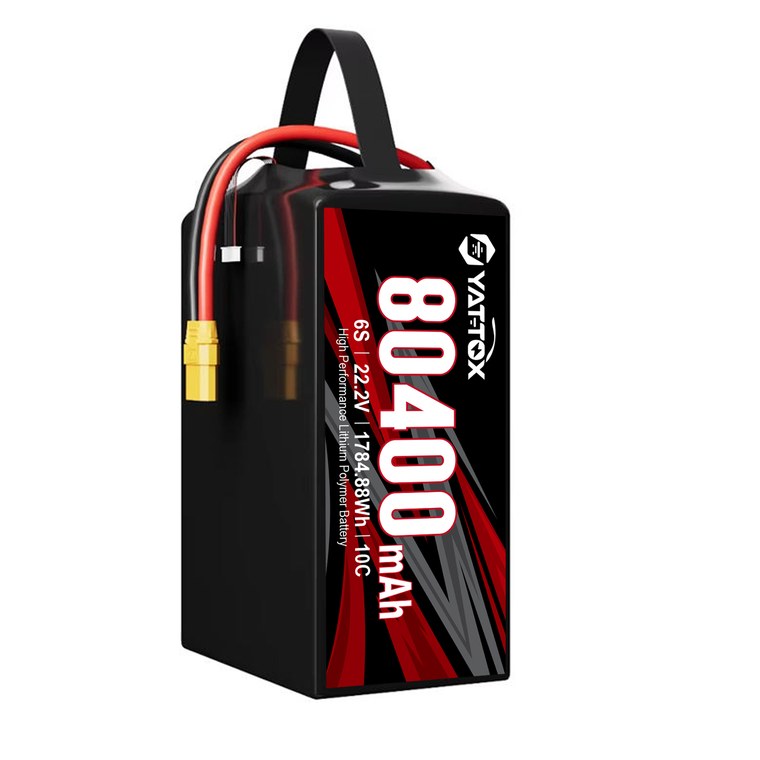
6S 80,400mAh LiPo Battery
Compare Voltage, Capacity and Discharge Specifications
Review the complete specifications for the 14 listed 6S LiPo models. Compare nominal energy, weight, dimensions and connector configuration alongside the shared 22.2V voltage and 10C label rating to assess electrical and mechanical fit.
6S 22.2V LiPo Battery Specification Comparison
| Model | Energy (Wh) | Weight (g) | Dimensions (mm) | Connector | C |
|---|---|---|---|---|---|
| 6S 12,500mAh | 277.5 | — | — | — | 10C |
| 6S 15,000mAh | 333 | — | — | — | 10C |
| 6S 18,000mAh | 399.6 | — | — | — | 10C |
| 6S 20,000mAh | 444 | 1260 | 187×45.4×77 | XT90 | 10C |
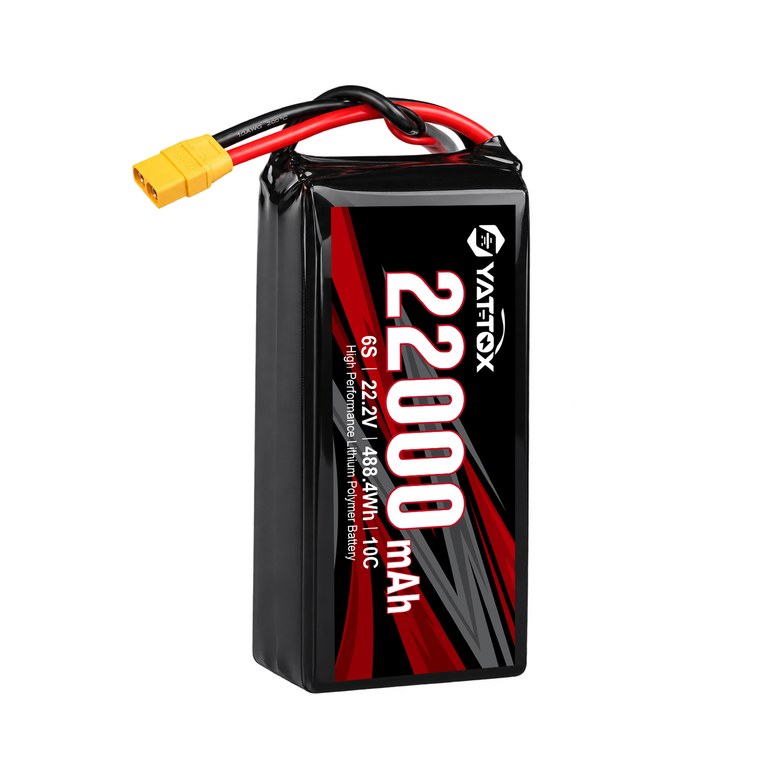
| 6S 22,000mAh | 488.4 | 1542 | 187×77×55 | XT60 | 10C |
| 6S 24,500mAh | 543.9 | — | — | — | 10C |
| 6S 29,500mAh | 654.9 | 1512 | 187×65×77 | XT90 | 10C |
| 6S 30,000mAh | 666 | 1965 | 187×77×67.6 | XT60 | 10C |
| 6S 33,000mAh | 732.6 | — | — | — | 10C |
| 6S 36,000mAh | 799.2 | 2400 | 203×89×68.2 | XT60 | 10C |
| 6S 39,000mAh | 865.8 | 2520 | 203×89×71.2 | XT60 | 10C |
| 6S 60,000mAh | 1332 | 3600 | 233×62.2×123 | XT90 | 10C |
| 6S 72,000mAh | 1598.4 | 4710 | 279×152×56.8 | XT90 | 10C |
| 6S 80,400mAh | 1784.88 | — | — | — | 10C |
All models are nominal 22.2V (6S) LiPo packs. Model dimensions, connector types and mass vary.
How to Choose the Right Battery for Your UAV
Start with your aircraft’s acceptable voltage range and continuous and peak current requirements. Then compare nominal energy, battery mass, installation space and connector type; higher capacity alone does not guarantee longer flight time.
Confirm Voltage and Current
Check the flight controller, ESCs, motors and distribution-system voltage limits. Assess sustained and short-duration power demand.
Balance Energy and Weight
Compare nominal Wh with complete pack mass. Estimate mission energy and required reserve using representative flight conditions.
Verify Installation Fit
Check battery dimensions, mounting space, lead routing and connector type before selecting a pack.
Battery Solutions for Industrial UAV Applications
Select a battery according to the mission’s power profile, payload and available installation space. Agricultural, mapping, inspection and heavy-lift UAVs may require different balances of discharge capability, energy and total weight.

Agricultural UAVs

Mapping and Survey UAVs

Industrial Inspection UAVs

Heavy-Lift and Cargo UAVs
Custom UAV Battery Packs for OEM Projects
For OEM battery enquiries, share target voltage, capacity or energy, operating-current requirements, installation dimensions and connector preferences. YATTOX can use these inputs to review the available 6S models and discuss project-specific requirements.
Start a Custom ProjectElectrical Requirements
Nominal voltage, target capacity or energy, continuous and peak current, charging requirements.
Mechanical Integration
Maximum battery mass, mounting envelope, lead routing, connector type and installation drawing.
Procurement Details
Expected quantity, destination market, development schedule and any existing technical documentation.
Manufacturing, Testing and Quality Assurance
Evaluate battery integration using model identification, electrical ratings, physical fit and relevant test documentation. YATTOX can discuss the specification and verification information appropriate to the proposed battery configuration.
Technical Review
Review model identification, electrical ratings and matching mechanical specifications.
Integration Checks
Confirm pack fit, connector compatibility, charging conditions and current requirements.
Documentation
Discuss model-specific test or transport documents needed for the intended application and destination market.
Explore Related Products and Technical Guides
Explore related battery technologies and engineering guides covering Li-ion endurance considerations, heavy-lift sizing and power-system requirements. These resources support selection alongside the available product specifications.

UAV Battery Packs FAQs
Q1: How do I choose the right UAV drone battery type?
The right UAV drone battery type should be selected based on flight time, payload, discharge current, battery weight and installation space. LiPo batteries are suitable for high-power output, while Li-ion and semi-solid batteries are more suitable for UAV platforms that need longer endurance and higher energy density.
Q2: Should I choose LiPo or Li-ion for my UAV?
UAV LiPo batteries are better for drones that require strong burst power and high-discharge performance. Li-ion UAV batteries are better when longer flight time, higher energy density and better weight balance are the main priorities.
Q3: When should I consider a semi-solid UAV battery?
A semi-solid UAV battery is suitable when a UAV project requires higher energy density, lower battery weight and longer flight time. It is usually considered for advanced UAV platforms where endurance, weight control and flight efficiency are important.
Q4: How do I choose between 6S, 8S and 12S UAV batteries?
6S, 8S and 12S UAV batteries represent different voltage platforms. A 6S UAV battery is often used for smaller drones or lightweight platforms, while 8S and 12S UAV battery packs are more suitable for higher power, heavier payload or longer flight requirements. The final choice should match the drone’s motor system, payload, current demand and target flight time.
Q5: Can one UAV battery provide both long endurance and high discharge performance?
A UAV battery can be designed to balance long endurance and high discharge performance, but the final result depends on cell chemistry, capacity, internal resistance, pack structure and safety margin. Yattox can help evaluate the right balance according to actual UAV power requirements.
Q6: What military UAV battery specifications can Yattox customize?
Yattox can customize military UAV battery specifications such as voltage, capacity, discharge rate, pack size, weight, connector, cable layout, BMS integration and packaging. These options help the battery pack better match the UAV platform’s power system, structure and production requirements.
Q7: What information should I provide for a custom UAV battery pack?
To develop a suitable custom UAV battery pack, you should provide the UAV type, required voltage, target flight time, payload weight, continuous and peak current, battery size limit, connector type and estimated order quantity. This information helps Yattox recommend a more accurate battery design.