


FPV Drone Battery Guide 2026: How to Choose the Right Battery
April 16, 2026
This guide explains what an FPV drone battery is, the main advantages it offers, the most common FPV applications, and how to choose the right battery for FPV drone setups without overcomplicating the process. Whether you fly racing, freestyle, or long-range FPV, this guide will help you make a more confident battery choice.
Table of Contents
What Is an FPV Battery?
An FPV battery is a high-performance power pack designed for first-person-view drones that need fast throttle response, strong burst output, and stable power under aggressive flight. Unlike more general drone batteries, an FPV pack is not chosen only for how long it can keep the drone in the air. It is also chosen for how the quad feels when you accelerate, recover from sharp moves, or pull out of a fast turn.
That is what makes an FPV pack different from a standard battery choice. In many drone categories, endurance is the main goal. In FPV, power delivery matters just as much as flight time. A well-matched FPV drone battery makes the quad feel sharper, more responsive, and more predictable. A poor battery choice can make the same build feel heavy, slow, or inconsistent.
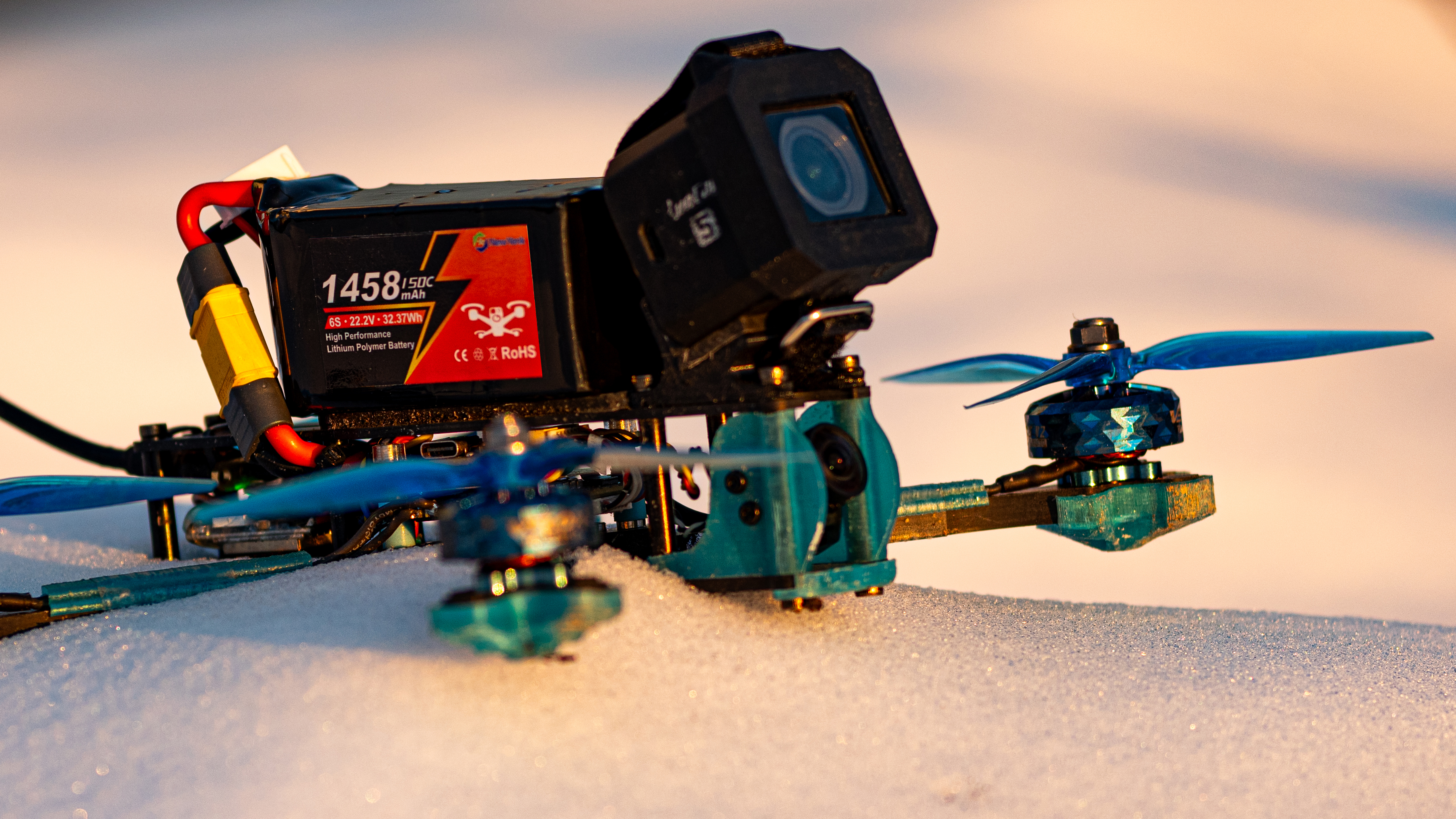
Most FPV pilots are really choosing between two experiences. One is stronger punch, faster response, and better power release. The other is longer flight time and a slightly more relaxed feel. The right battery depends on where you want that balance to sit.
It also helps to understand that an FPV pack is usually a type of FPV lithium battery, built for performance rather than just energy storage. In high-performance FPV applications, strong discharge capability and lower temperature rise under load are especially important, which is why some packs in this category are designed around very high discharge output, including 100C+ performance levels.
Key Benefits of FPV Drone Batteries
Benefit | Why It Matters in FPV |
High discharge performance | Delivers faster throttle response and stronger acceleration |
Strong burst power | Supports sudden current demand during punch-outs and sharp moves |
Lightweight performance | Helps keep the quad agile and responsive |
Lower temperature rise | Improves consistency and stability during demanding flights |
1.High Discharge Performance
The first major benefit of an FPV drone battery is high discharge performance. When you push the throttle hard, you need the pack to respond immediately. In racing and aggressive freestyle, slow or weak power delivery ruins the feel of the drone. A strong FPV pack supports faster acceleration and a cleaner response when you need power right away.
2.Strong Burst Power
The second benefit is strong burst power. FPV drones often move from low load to high load in a split second. That means the battery has to handle sudden current demand without feeling flat or unstable. This is especially important if you like quick punch-outs, fast direction changes, or high-speed flying. Performance-focused FPV battery designs emphasize exactly this kind of output.
3.Lightweight Performance
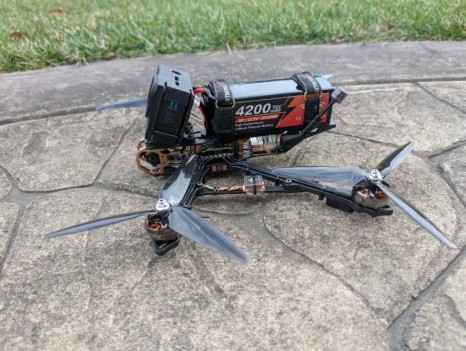
The third benefit is lightweight performance. A battery can add flight time, but it also adds mass. If the pack becomes too heavy, your quad loses some agility and feels less direct in the air. A good FPV lithium battery helps you keep a better balance between energy and control. That is why many FPV pilots prefer a lighter, high-discharge pack over a larger one that only offers extra minutes.
4.Lower Temperature Rise Under Load
Another important benefit is lower temperature rise under demanding use. A battery that runs cooler under high discharge is easier to trust during repeated hard flying. In practical terms, that means more stable performance over the session and a more consistent flying feel. In FPV product lines built for competitive or high-intensity use, lower temperature rise under high-rate discharge is a real advantage, not just a spec on paper.
Common Applications of Battery for FPV Drone
1.FPV Racing
Racing is one of the most demanding FPV applications because every second counts. Pilots need a battery setup that supports quick acceleration, precise cornering, and strong recovery after rapid throttle changes. In this scenario, the battery choice is usually shaped by speed, handling precision, and competitive consistency rather than by maximum flight duration.
2.Freestyle FPV
Freestyle FPV requires a more balanced battery setup. Pilots want enough power for flips, dives, and sharp movements, but they also need a pack that keeps the drone smooth and controllable throughout the session. Here, the focus is not purely on speed or endurance, but on maintaining a stable and enjoyable flying feel during repeated maneuvers.
3.Long-Range FPV
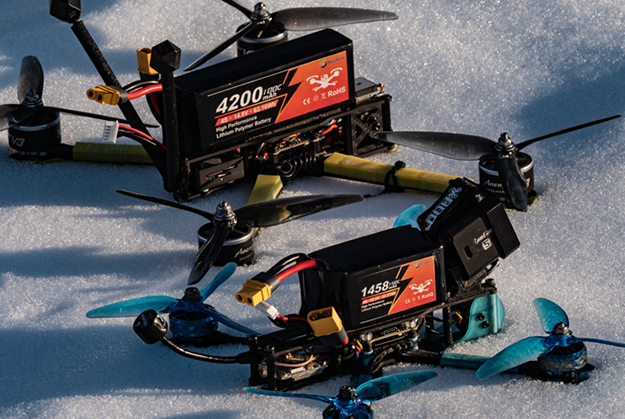
Long-range FPV shifts attention toward efficiency and usable flight time. In this type of flying, pilots often need a battery that can support longer routes without making the drone difficult to manage. The best choice is usually a pack that extends airtime while still preserving stable handling and predictable performance over distance.
4.Performance Flying and Aerial Tricks
FPV batteries are also used in performance-oriented flying, such as aerial tricks, demo flights, and fast recreational runs. These situations place repeated and uneven demands on the power system, so the battery needs to stay consistent through changing throttle input. For this kind of use, pilots often care most about how reliably the drone performs from one maneuver to the next.
5.Why Application Matters in Battery Selection
Battery selection makes more sense when you start from the flying purpose instead of the product label. A pack that works well for racing may not be the best choice for freestyle, and a battery suited to long-range use may feel less ideal in fast technical flight. Once the application is clear, it becomes much easier to narrow down the right battery direction.
How to Choose the Right FPV Lithium Battery
Choosing the right FPV lithium battery is easier when you look at the specs in the right order. Instead of comparing labels at random, start with build compatibility, then move to flight goals, and finally refine your choice by pack size and balance. For most pilots, the best battery is not the one with the biggest numbers, but the one that fits the drone and the way it is meant to fly.
1.Voltage
Start with voltage because it has to match your drone setup. Your motors, ESC, and overall power system determine which voltage range is appropriate. This is the first filter in battery selection. Once the voltage is correct, the rest of the choice becomes much more practical.
2.Capacity
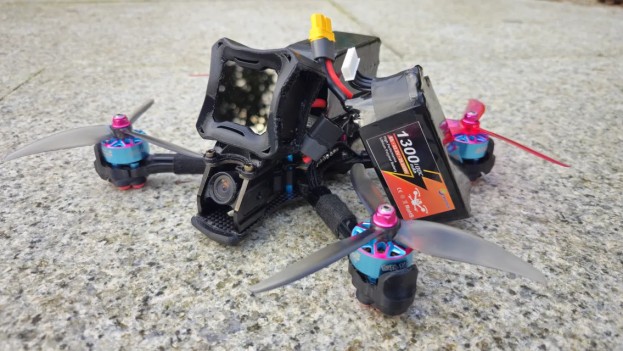
Capacity should be chosen based on how you want the quad to behave in the air. A larger pack may give you more usable flight time, but it can also change the overall feel of the build. For FPV, the goal is usually to find a capacity level that supports your session without making the drone feel less controlled or less efficient.
3.C-Rating
C-rating helps you judge whether the pack matches your flying style. If your build is intended for fast response, repeated throttle changes, or more aggressive flying, discharge capability becomes a more important part of the decision. For less demanding use, balance may matter more than chasing the highest possible rating.
4.Size and Weight
The final step is checking how the battery fits the frame in real use. A pack should mount cleanly, work with the drone’s layout, and keep the overall balance reasonable. Even when the voltage and capacity look right, the battery still needs to make sense as part of the finished build. A good battery for FPV drone setups should feel appropriate both on paper and in flight.
Here is a useful checklist before you buy your next FPV battery:
What to Check | Why It Matters | Best Question to Ask |
Voltage | Must match your build platform | Is this battery compatible with my setup? |
Capacity | Affects flight time and weight | Do I want more airtime or better agility? |
C-rating | Affects punch and response | Do I need stronger burst power? |
Size and weight | Affects fit and balance | Will this pack fly cleanly on my frame? |
Common Mistakes When Buying FPV Batteries
A common mistake when buying FPV batteries is looking only at capacity while ignoring weight, discharge performance, and fit. A battery that seems better on paper may still feel wrong in the air if it is too heavy, delivers weak output, or does not suit the frame. Another issue is choosing without considering the flying style, since racing, freestyle, and long-range FPV each need a different battery balance.
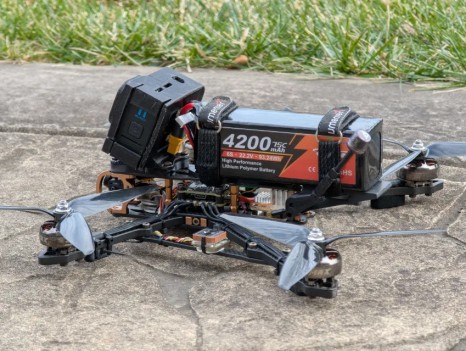
Quick Comparison Table for FPV Battery Selection
Use this simple comparison table to narrow down the right pack direction:
Flying Style | Main Priority | Recommended FPV Battery Direction |
Racing | Fast response and burst power | Higher discharge, lighter pack |
Freestyle | Balanced power and control | Moderate capacity, strong output |
Long-range FPV | Flight time and efficiency | Higher capacity, controlled weight |
General practice | Easy handling and stability | Balanced specs, practical fit |
This table is helpful because it keeps the decision simple. Instead of asking which battery is “best,” you are asking which direction fits your build and your flying goal.
Final Thoughts
A good FPV drone battery should help your drone feel alive in the air. Once you understand what an FPV battery is, where it is used, and how to choose it by voltage, capacity, C-rating, and size, buying the right pack becomes much easier.Visit Yattox to explore FPV battery options for your next build.