


Li-Ion Battery Cell vs Module vs Pack: What Should You Specify?
September 30, 2026
A battery cell, module and pack are not interchangeable purchasing terms. This guide explains how series-parallel configuration, BMS, enclosure, connectors and thermal design differ at each level, and what to specify in a battery RFQ.
Table of Contents
Li-Ion Battery Cell vs Module vs Pack: What Should You Specify?
A battery cell, module and pack are not interchangeable purchasing terms. A cell is the basic electrochemical unit. A module combines multiple cells into a mechanically and electrically connected assembly. A pack integrates the battery assembly with the components required for use in a specific product, which may include a BMS, enclosure, connectors, wiring, sensing and thermal features.
The distinction matters because a cell specification tells you about an individual component, not how the finished battery will behave inside your equipment. Before requesting a quotation, buyers should define whether they need loose cells, a repeatable li ion battery module, or a complete pack ready for system integration.
Battery Cell, Module and Pack: The Short Answer
Although terminology varies between industries and manufacturers, the following structure is a useful starting point.
NI describes a cell as an individual component, while modules and packs are assemblies that require application-oriented evaluation. It also notes that a module may contain cells, connectors, electronics and mechanical packaging, while a pack may add further modules and system components.
These definitions are useful, but they are not universal commercial rules. A compact battery may have no separately replaceable module. In another design, several serviceable modules may be installed inside one large pack. A purchase specification should therefore describe the required hardware and interfaces rather than relying only on the word “module” or “pack.”
| Level | What it normally includes | What it does not automatically prove |
|---|---|---|
| Cell | One electrochemical unit with defined chemistry, voltage, capacity and operating limits | Finished-system voltage, runtime, temperature rise or current capability |
| Module | Multiple connected cells, interconnects and some mechanical support; it may include sensing or local electronics | A complete enclosure, main connector, pack-level protection or equipment compatibility |
| Pack | One or more modules, or a directly assembled cell group, integrated for a particular application | Suitability for every load, environment or certification requirement |
| Battery system | Pack plus charger, host equipment, controls, cooling and operating logic | Safe performance unless the complete system is correctly specified and validated |
How Series and Parallel Connections Change a Battery
Individual lithium-ion cells are connected in series, parallel, or a combination of both to meet the electrical requirements of an application.
Cells connected in series increase voltage. If each cell has a nominal voltage of 3.6 V, a four-cell series configuration has a nominal voltage of approximately 14.4 V. The Ah capacity remains equal to that of one cell when there is only one parallel path.
Cells connected in parallel increase Ah capacity. Four 3 Ah cells connected in parallel form a nominal 12 Ah group at the voltage of one cell.
The basic relationships are:
Nominal pack voltage = cell nominal voltage × number of series groups
Pack capacity in Ah = cell capacity × number of parallel cells
Nominal energy in Wh = nominal voltage × nominal capacity in Ah
For example, four identical 3.6 V, 3 Ah cells contain a nominal total energy of 43.2 Wh. Their configuration changes how that energy is delivered:
| Configuration | Nominal voltage | Nominal capacity | Nominal energy |
|---|---|---|---|
| 4S1P | 14.4 V | 3 Ah | 43.2 Wh |
| 2S2P | 7.2 V | 6 Ah | 43.2 Wh |
| 1S4P | 3.6 V | 12 Ah | 43.2 Wh |
This example illustrates the electrical relationship, not a finished design recommendation. NI uses the same configurations to demonstrate that series count determines voltage and parallel count determines Ah capacity.
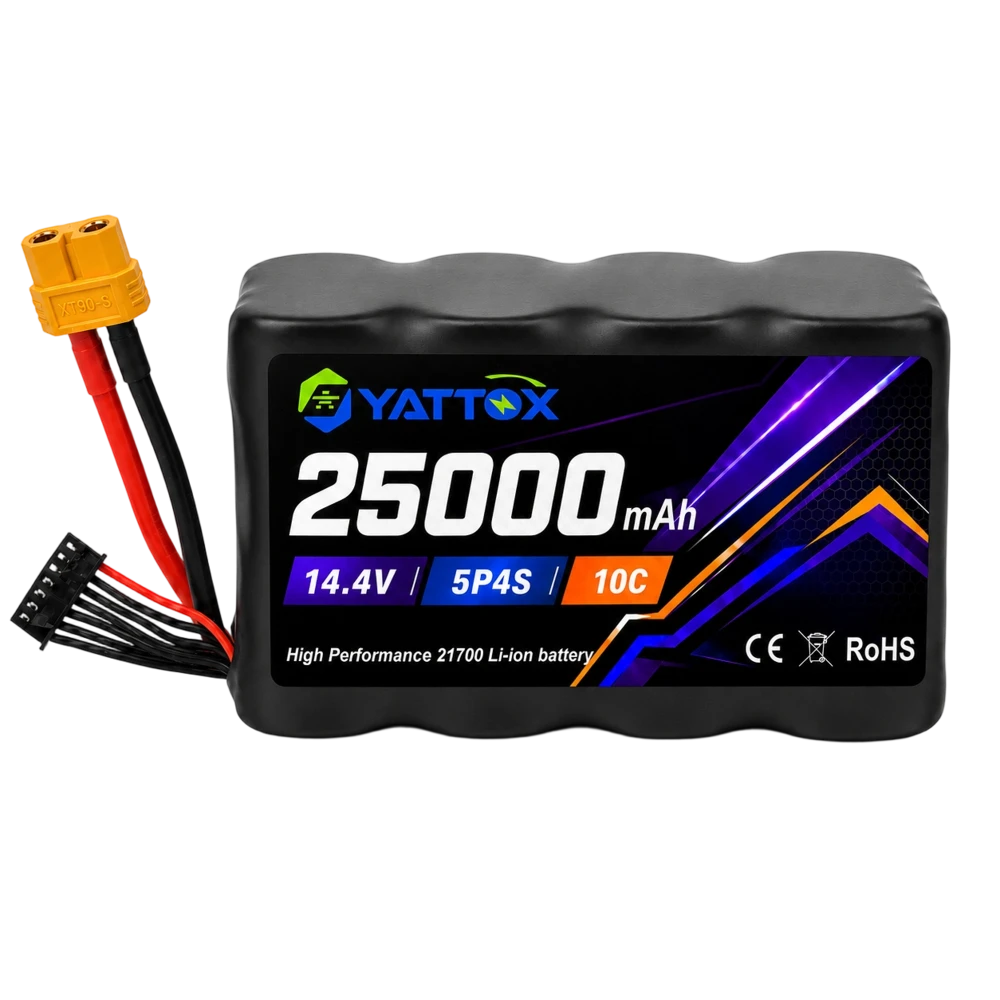
A real 14.4V 25000mAh 5P4S li-ion battery pack: four series groups and five parallel cells produce the voltage and capacity the application requires—configuration is part of the specification, not a detail left to the supplier.
Parallel cells can also share load current, but multiplying a cell’s current rating by the number of parallel paths is only an initial calculation. The usable current of a completed module or pack is also affected by cell matching, interconnect resistance, busbars, welds, wiring, connectors, protection components and heat dissipation.
For this reason, voltage and capacity alone are not enough to specify a battery. A supplier also needs the expected continuous current, peak current, peak duration, load profile and permitted voltage drop. A pure series design such as the 28.8V 5000mAh 8S1P li-ion battery shows how series count alone sets pack voltage.
Where the BMS, Enclosure and Thermal Design Belong
A complete battery cell module pack architecture contains more than cells and series-parallel connections. Each added component solves a different integration problem.
Battery management system
A BMS may monitor cell-group voltage, pack current and temperature. Depending on the design, it may also provide balancing, state estimation, protection logic, fault records or communication with the host equipment.
The location of the BMS is architecture-dependent. A small pack may use one board for the entire assembly. A larger system may collect measurements at module level and send them to a central pack controller. Therefore, neither “the BMS is always inside the module” nor “the BMS exists only at pack level” is universally correct.
When specifying a battery pack BMS, define the functions instead of writing only “BMS required.” Useful requirements may include:
- Number of series cell groups;
- Continuous and peak current, including peak duration;
- Voltage and temperature monitoring points;
- Balancing requirement;
- Required CAN, UART or RS485 communication;
- Charger and host-equipment interface;
- Expected response to a detected fault.
This article does not attempt to decide whether every application needs an onboard BMS. That decision depends on chemistry, load, charging method, operating process and system risk. The important point here is that a BMS in a battery pack must be selected as part of the complete electrical architecture rather than added after the cell configuration is fixed. A related question is covered in does a drone battery pack need a BMS.
Enclosure and mechanical integration
The enclosure defines how the cells and electronics are retained and protected inside the equipment. Its design may depend on available dimensions, mounting direction, vibration, impact, ingress exposure, service access and applicable safety requirements.
Specifying only length, width and height is insufficient when the battery must fit around other components. Buyers should also identify connector position, cable exit direction, mounting points, keep-out zones and whether the pack must be removable.
Connectors, cables and interconnects
The external connector must match the equipment interface and expected electrical load. Wire gauge, cable length, terminal construction and strain relief can affect voltage drop, heating and mechanical reliability.
Internal interconnects also matter. A cell may satisfy its published current requirement while an undersized busbar, weak joint or unsuitable connector limits the completed pack. These parts are among the reasons that cell-level data cannot be treated as pack-level evidence.
Thermal management
Not every battery requires an active cooling system, but every design has a thermal condition. The relevant question is how heat generated by cells, interconnects and electronics will move through the assembly under the real duty cycle.
Thermal provisions may range from cell spacing and heat-conductive interfaces to sensors, airflow or liquid cooling in larger systems. The correct approach depends on power, duty cycle, enclosure, ambient temperature and installation environment.
Why Cell Data Cannot Replace Finished-Pack Data
A cell datasheet is essential for initial selection. It can describe nominal voltage, rated capacity, operating limits and cell-level test conditions. It does not demonstrate how a finished li ion power pack will perform after multiple cells and system components are integrated.
Several changes occur between the cell and pack levels.
First, electrical resistance is added by welds, busbars, wires, fuses, contactors and connectors. This additional resistance can increase voltage drop and heating under load.
Second, cells no longer experience identical thermal conditions. Cells near the centre of an assembly may transfer heat differently from cells near an enclosure wall or cooling surface. Temperature differences can affect current sharing, usable capacity and ageing.
Third, the BMS and protection architecture influence operation. Current-measurement accuracy, temperature-sensor placement, balancing strategy, protection thresholds and communication behaviour can all affect how the battery interacts with the equipment.
Fourth, the mechanical structure introduces new requirements. Vibration, shock, compression, mounting, cable movement and enclosure deformation are not represented by a standalone cell capacity result.
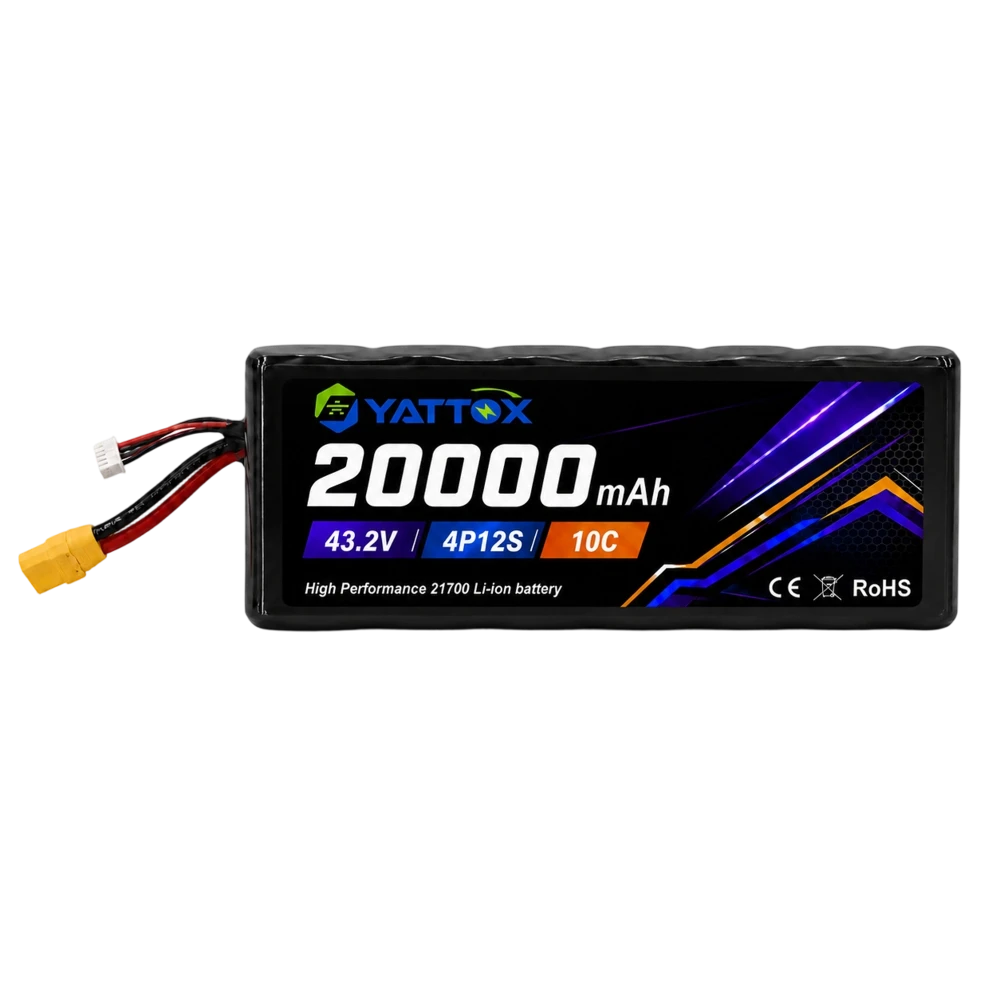
A 43.2V 20000mAh 4P12S configuration: twelve series groups and four parallel cells in one finished assembly. Pack-level behaviour depends on interconnects, sensing and enclosure, not only on the cell datasheet.
NI distinguishes cell testing, which characterises cell chemistry and electrochemical behaviour, from module and pack testing, which evaluates overall performance, BMS operation, cooling and internal heating. Its guidance also identifies module-level checks for connections, temperature sensing and cell balance, followed by pack-level testing of external hardware, safety mechanisms and communication.
The practical conclusion is straightforward: cell data supports component selection, while representative module and pack data supports application decisions.
A procurement team should ask which level was tested, under what temperature and state-of-charge conditions, at what current, for how long, and with which enclosure, BMS, connector and cable configuration.
Should You Buy Cells, a Module or a Complete Pack?
The right purchasing level depends on what your company can design, assemble, test and control.
Cells may offer maximum design flexibility, but they transfer most integration responsibility to the buyer.
Modules are useful when a larger product needs repeatable battery building blocks. However, the buyer still has to define module-to-module connections, pack housing, thermal interfaces, main protection, communication and final-system validation.
A complete pack is generally the clearer purchasing choice when the required deliverable is a battery that connects directly to a defined product interface. The supplier can evaluate the cells, configuration, BMS, wiring, connector and enclosure as one assembly, although the pack must still be validated inside the final equipment.
| Purchase cells when… | Purchase modules when… | Purchase a complete pack when… |
|---|---|---|
| Your team owns the full electrical, mechanical and safety design | Your team needs a repeatable cell assembly but will manage pack-level integration | You need a defined electrical and mechanical interface for the end product |
| You have suitable cell joining, inspection and traceability capabilities | Several identical building blocks will be combined into a larger system | The supplier needs to integrate the BMS, enclosure, wiring and connector |
| You can validate the final assembly and production process | Module replacement or platform reuse is part of the system architecture | You want one party to control compatibility between major pack components |
| Loose-cell flexibility is more important than integration support | Pack-level cooling, contactors or controls remain within your scope | Your internal team does not manufacture and validate battery assemblies |
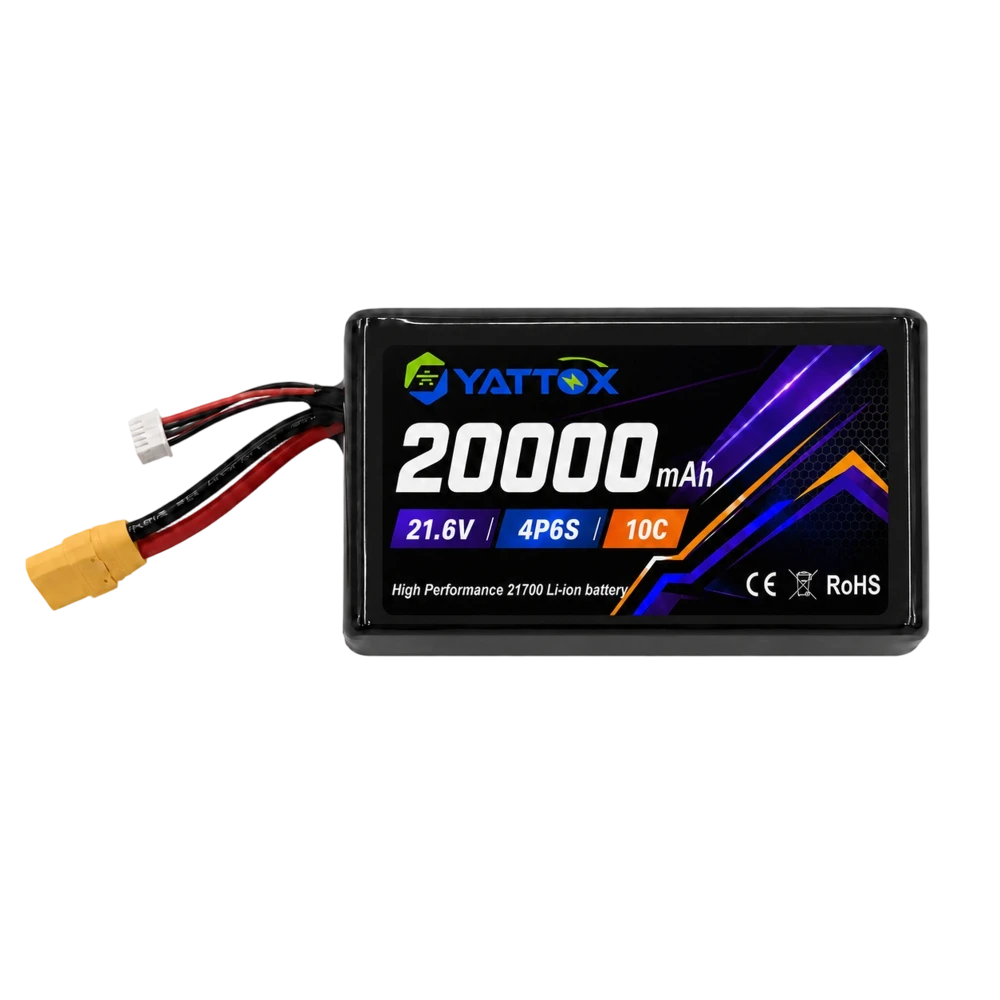
A finished 21.6V 20000mAh 4P6S pack: cells, interconnects, wiring and connector delivered as one assembly that connects to a defined product interface.
What to Include in a Battery RFQ
A productive battery enquiry should begin with the load and installation requirements—not with a preferred cell count copied from another product.
Provide the supplier with:
- Equipment type and normal operating cycle;
- Nominal and permitted operating voltage;
- Required runtime or usable energy in Wh;
- Measured continuous current;
- Peak current and peak duration;
- Maximum dimensions and battery weight;
- Ambient and expected internal temperature range;
- Charging method and charging time target;
- Connector, cable length and cable exit direction;
- BMS monitoring, protection and communication requirements;
- Mechanical mounting and enclosure requirements;
- Prototype and forecast production quantities;
- Required validation, transport and market-access documentation.
If some values are unknown, label them as measurements still to be confirmed. Do not replace missing current data with a general description such as “high power.” A supplier cannot select cells, conductors or protection limits reliably without a defined load profile.
From Battery Requirements to a Buildable Pack
The most important purchasing decision is not whether “module” or “pack” sounds more complete. It is where responsibility for electrical configuration, BMS integration, mechanical structure, thermal behaviour, connection hardware and validation should sit.
Yattox’s lithium-ion battery pack page supports configuration around voltage, capacity, dimensions, enclosure, connectors, cable specifications and BMS functions. That makes it the appropriate next step when a project requires more than loose cells or an undefined module.
Review the available Yattox lithium-ion battery pack options, then provide the operating voltage, Wh requirement, continuous and peak current, dimensions, connector and expected quantity for an initial pack-configuration assessment.