


A drone battery pack does not automatically need an onboard battery management system, or BMS. The right answer depends on the aircraft, the battery chemistry, current demand, charging method, and what happens if the pack disconnects during flight. A lightweight FPV LiPo pack used with a balance charger may be managed very differently from a smart battery designed for an industrial UAV, an inspection platform, or a long-endurance aircraft.
The useful question is not simply, “Is a battery pack BMS safer?” It is, “What must this battery pack monitor, protect, communicate, and control without creating a new flight risk?” For some packs, a BMS adds valuable cell-level monitoring and status information. For others, an unsuitable BMS can add weight, restrict peak current, or create an unwanted in-flight cutoff. The battery, charger, flight controller, and operating process must be assessed as one system.
Short Answer: It Depends on the Drone Battery System
A BMS is often appropriate when a drone battery must provide reliable status information, manage multiple cells through repeated duty cycles, communicate with external equipment, or support a controlled charging and maintenance process. These requirements are common in industrial, commercial, long-endurance, high-voltage, and custom UAV programs.
An onboard BMS is not automatically required for every FPV or hobby LiPo battery. Many conventional high-discharge packs use balance leads and compatible external chargers rather than a full in-pack BMS. In those cases, the pilot, charger, flight controller, and battery-maintenance process perform parts of the management role. That approach only works when the operating system is designed for it and users follow the required charging, storage, inspection, and low-voltage procedures.
The decision is therefore about system architecture rather than a universal rule. A simple pack can be appropriate for its aircraft. A smart pack can add value, but only when its monitoring, protection thresholds, current capability, weight, and communication requirements match the mission.
What a Battery Pack BMS Does in a Drone
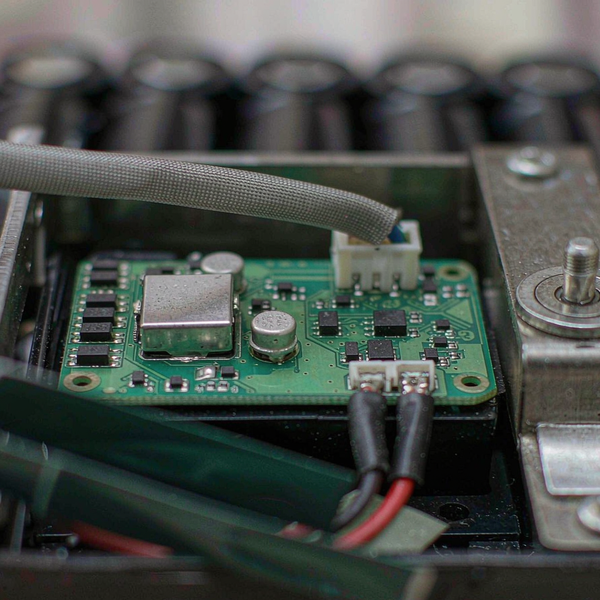
A BMS is an electronic control system inside, or connected to, a rechargeable battery pack. Depending on its design, it may monitor individual cell voltages, pack current, temperature, charge state, and fault conditions. More advanced systems can estimate state of charge, track state of health, log operating data, and communicate with a charger, flight controller, ground station, or maintenance tool.
A BMS does not replace correct cell selection, pack construction, charging procedures, flight-controller low-voltage settings, connector selection, or thermal design. It is one part of the battery system. Its value comes from how well it is integrated with the rest of the aircraft.
| BMS Function | What It Helps Manage | Why It May Matter for UAVs |
|---|---|---|
| Cell voltage monitoring | Overcharge, over-discharge, and cell imbalance risk | Multi-cell packs need visibility into differences between cell groups. |
| Current monitoring | Continuous and peak current conditions | Helps engineers size the pack and protection strategy for the aircraft load. |
| Temperature monitoring | Charging and discharging outside the intended temperature range | Important where climate, payload, or duty cycle affects pack temperature. |
| Cell balancing | Differences in cell-group voltage during charging or maintenance | Can help maintain a more even pack over repeated use, depending on the design. |
| SOC and SOH estimation | Remaining energy and battery condition | Useful for mission planning, fleet operation, and maintenance decisions. |
| Communication | Data exchange through CAN, UART, or RS485 | Relevant when an aircraft or charger needs battery status or controlled interaction. |
| Fault handling | Defined response to abnormal conditions | Must be engineered so protection behavior does not create a worse flight outcome. |
Why FPV, RC, and Industrial UAV Packs Need Different Answers
FPV and High-Discharge Hobby Packs
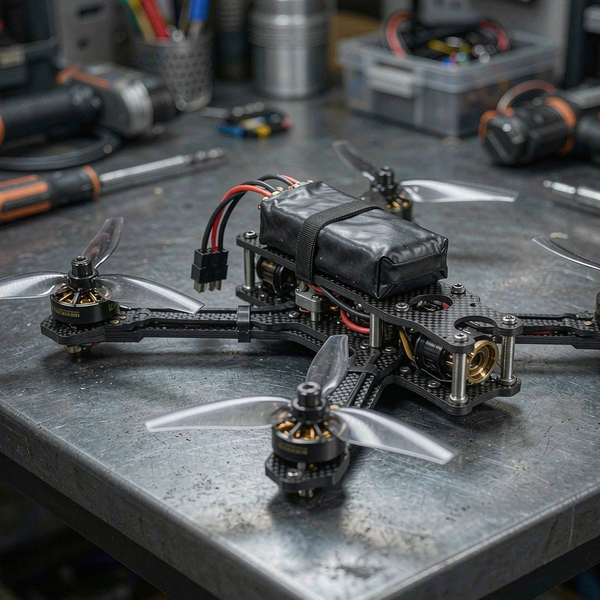
FPV and high-performance RC aircraft usually prioritize low weight, high power delivery, and fast throttle response. A conventional LiPo pack may use a balance connector and rely on a suitable external charger for balance charging and cell-level checks. The flight controller or a low-voltage alarm may help the pilot decide when it is time to land.
Adding a generic low-current protection board to this type of pack can be a poor fit. Drone motors can create high current demand and rapid load changes. If protection hardware is not rated for the pack’s actual continuous and burst current, it can cause voltage drop, excessive heating, or an unintended cutoff. A cutoff that may be acceptable in a low-power device can be unacceptable in an aircraft.
That does not mean FPV packs have no management requirements. They still need correct charging, appropriate storage voltage, physical inspection, cell-balance checks, and discharge limits. The difference is that a simple high-discharge pack may distribute management functions across the charger, aircraft electronics, and pilot workflow rather than placing all functions inside the battery.
Industrial and Enterprise UAV Packs
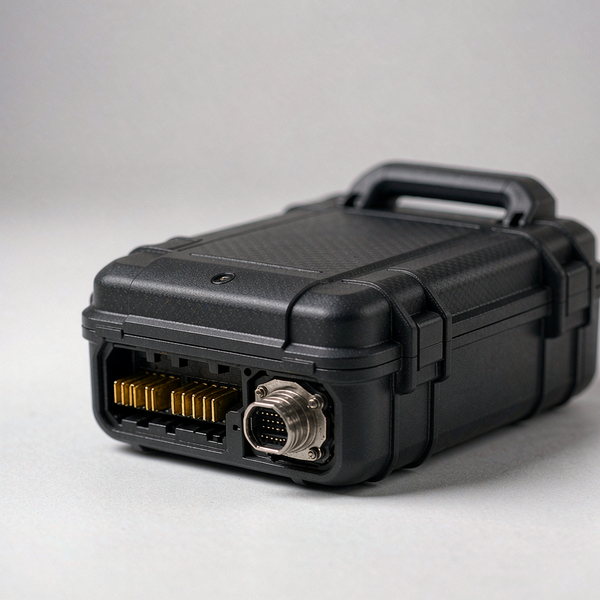
Industrial UAVs often operate under different constraints. A platform used for surveying, inspection, agriculture, public safety, logistics, or recurring fleet missions may need more than a power source. Operators may need a consistent way to assess available energy, battery condition, temperature, cycle history, or fault status before launch.
For these programs, a smart UAV battery pack can be useful because it supports repeatable operation and better decision-making. A BMS may provide information to a charger, a maintenance tool, or an aircraft system. It may also support pack identification, controlled charging, battery-status reporting, or a documented maintenance process.
The design still requires careful engineering. BMS current capability, sensing accuracy, operating temperature range, communication behavior, and fault strategy must be selected around the actual aircraft. A heavy-lift UAV may need a very different current capability and response strategy from a compact mapping drone.
Custom Li-ion and Long-Endurance Battery Packs
Custom Li-ion UAV packs are usually designed around endurance, energy density, weight limits, and flight profile rather than maximum burst discharge alone. Because these packs may use series and parallel cell configurations, custom mechanical layouts, and application-specific connectors, the design review should consider whether the pack needs monitoring, balancing, charge control, or telemetry.
A BMS can be valuable when the system needs pack-level data, controlled charging, or communication with external equipment. It can also matter where a customer needs a defined interface for engineering validation or fleet maintenance. However, a BMS should not be selected only because a pack uses Li-ion cells. The design must account for the aircraft’s actual current draw, peak load, battery-bay dimensions, weight budget, charger, and emergency landing strategy.
Does a Drone Battery Pack Need a BMS? Decision Matrix
The final decision should be made after electrical and mechanical requirements are defined. “Add a BMS” is not a complete requirement. The requirement must explain what data is needed, what fault conditions must be detected, how the aircraft should respond, and what current the pack must support without unwanted restriction.
| Project Condition | BMS Priority | Engineering Question |
|---|---|---|
| Small FPV or RC pack with high burst current and external balance charging | Evaluate carefully; a full onboard BMS may not be necessary | Can the charger, flight controller, and operator safely manage the pack without adding in-flight cutoff risk? |
| Custom Li-ion endurance pack | Often worth evaluating | Does the pack need cell monitoring, controlled charging, telemetry, or maintenance records? |
| Industrial inspection, mapping, agricultural, or logistics UAV | Usually high | Does the operator need reliable SOC, temperature, fault, or service information before and during missions? |
| High-voltage or higher-series-count pack | High | How will the system monitor cell groups, manage imbalance, and handle faults safely? |
| Fleet-operated smart battery system | High | Does the charger, aircraft, or maintenance process require battery communication and identification? |
| Prototype with unknown current profile | Do not choose a BMS first | What are the measured continuous current, peak current, voltage sag, temperature, and landing requirements? |
When an Onboard BMS Adds Real Value
A BMS is most valuable when it solves a defined operational problem. An industrial UAV operator may need a reliable battery-status check before a mission. A smart BMS can help provide information about pack voltage, temperature, estimated remaining charge, and potentially battery condition. A custom pack may need a communication interface so the charger or aircraft can read pack status instead of treating every battery as an unknown power source.
Battery communication is not automatically required, but it becomes more relevant when the pack is part of a managed system. CAN, UART, and RS485 are examples of interfaces that may be used in battery systems. The appropriate protocol depends on the flight controller, charger, ground equipment, data requirements, and electrical architecture. A protocol should never be listed as a feature unless the battery pack, aircraft system, and integration requirements have been confirmed.
A BMS can also support a disciplined service process. If an operator runs multiple packs through repeated missions, battery data may help identify packs that need inspection or retirement. This is particularly relevant when a mission failure has a higher operational cost than replacing a hobby battery.
Why Protection Strategy Matters More Than a Feature List
A BMS is sometimes described only as a safety board that disconnects a battery during over-current, over-temperature, or low-voltage conditions. That description is incomplete for an aircraft. The critical engineering question is what happens after a fault is detected.
An immediate load disconnect may protect cells in some circumstances, but it can also remove propulsion from an aircraft. A UAV battery system should therefore define its protection philosophy around the mission. Some conditions may require warnings, telemetry, controlled derating, landing logic, charge disablement, maintenance alerts, or a defined emergency procedure. The correct response depends on the platform and cannot be copied from an e-bike, power tool, or stationary battery design.
For this reason, engineers should review the BMS alongside the flight controller, ESCs, motors, charger, connectors, isolation strategy, and expected peak current. The BMS must be sized for the system, not added after the pack design is complete.
Information to Define Before Choosing a BMS
For a custom UAV project, providing this information early helps a battery supplier recommend a pack architecture rather than simply adding a BMS because it appears on a checklist.
| Information Needed | Why It Affects the BMS Decision |
|---|---|
| Aircraft type and mission | Determines whether the priority is racing response, endurance, payload, repeatable fleet operation, or another goal. |
| Nominal voltage and cell configuration | Defines the voltage-monitoring range and possible pack architecture. |
| Continuous and peak current | Determines whether the BMS current path and protection settings are suitable. |
| Target flight time and payload | Affects energy requirement, weight budget, and cell selection. |
| Battery dimensions and maximum weight | Determines whether additional electronics and enclosure features are practical. |
| Charger type and charging workflow | Clarifies whether balancing and charge protection occur externally or in the pack. |
| Required communication | Defines whether CAN, UART, RS485, or no data interface is needed. |
| Fault response requirement | Determines whether the system should warn, log, derate, inhibit charging, or take another approved action. |
| Prototype quantity and production quantity | Helps determine whether a custom smart-pack architecture is commercially appropriate. |
Smart BMS vs a Basic Protection Board
A basic protection board may focus on defined voltage or current limits. A smart BMS can add sensing, data processing, communication, SOC estimation, logging, configuration, or maintenance functions. Neither option is automatically better. The appropriate choice depends on what the aircraft needs.
A simple pack may be the better engineering choice when minimal mass and high-discharge performance are the priority and the wider system already manages charging and low-voltage operation correctly. A smart pack may be the better choice when the project needs status visibility, managed charging, communication, repeatable operation, or fleet-level battery control.
The important distinction is that a smart BMS is not just a more expensive protection board. It changes how the battery participates in the aircraft system. That change should be deliberate, documented, and tested.
FAQ
Does every drone battery need a BMS?
No. Some FPV and hobby LiPo packs use external balance charging and aircraft-side low-voltage management rather than an onboard BMS. Industrial, custom, high-voltage, or fleet-operated UAV packs are more likely to benefit from BMS functions, but the decision must be based on the complete system.
Can a BMS reduce drone flight time?
It can add weight, consume a small amount of power, and create electrical or mechanical design trade-offs. Whether the impact is meaningful depends on the pack size, aircraft weight budget, current demand, and functions required.
Is a balance charger the same as a BMS?
No. A balance charger can manage charging and help equalize cell groups during charging. A BMS is a pack-level management system that may monitor, protect, estimate battery state, and communicate during charging, storage, and discharge, depending on its design.
What BMS communication protocol should a UAV use?
There is no universal answer. CAN, UART, and RS485 may be used in battery systems, but the correct interface depends on the aircraft electronics, charger, data requirements, and integration plan. Confirm compatibility before specifying a protocol.
Can a BMS stop a drone in flight?
A protection strategy can affect battery output, which is why UAV BMS behavior must be engineered around the aircraft’s fault-response and landing requirements. Do not use a generic protection board without verifying its current capability and response behavior under real flight loads.
Choosing the Right Battery Architecture for Your UAV
When selecting a battery pack for a UAV project, do not begin with the question, “Should we add a BMS?” Begin with the platform and mission: voltage range, continuous and peak current, endurance target, payload, battery space, weight limit, connector, charging method, and whether the system needs to communicate with a flight controller or ground equipment.
These conditions determine whether the project is better suited to a high-discharge LiPo pack, a long-endurance Li-ion pack, or a smart UAV battery architecture with monitoring and communication. For industrial inspection, mapping, agriculture, logistics, or custom UAV projects, evaluate aircraft current, space, and communication requirements before selecting a battery architecture.
If project requirements are available, share the voltage, endurance, dimensions, connector, and quantity for an initial battery-architecture discussion.
Need a battery architecture review for your UAV?
Tell us your voltage, current, endurance, and payload requirements. Our team can help you decide whether a BMS, smart pack, or high-discharge LiPo architecture fits your aircraft.
Contact Us