


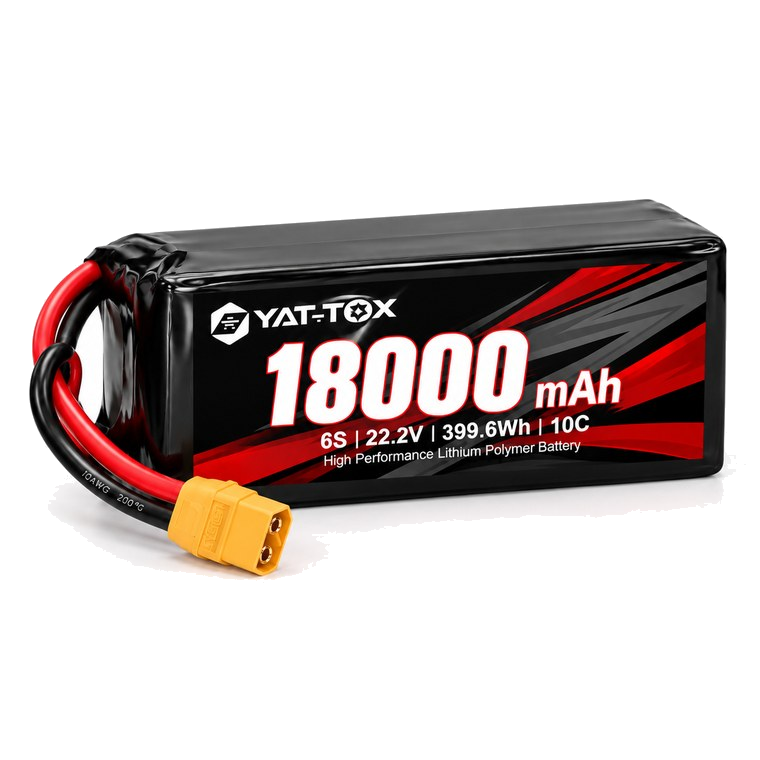
6S 18000mAh 22.2V LiPo Battery
With 399.6Wh of nominal stored energy in a 6S LiPo configuration, this 18Ah YATTOX pack offers a capacity step between the 15Ah and 20Ah options. Its 22.2V nominal voltage and labeled 10C rating provide a starting point for reviewing a UAV power system—not a standalone compatibility or flight-time guarantee.
·Configuration: 6S
·Nominal Voltage: 22.2V
·Capacity: 18,000mAh
·Nominal Energy: 399.6Wh
·Discharge Rating: 10C (label rating)
Where a 399.6Wh Battery Fits in a 6S Lineup
Where a 399.6Wh Battery Fits in a 6S Lineup
This 18Ah option increases nominal energy by 66.6Wh over the 15Ah model, while remaining 44.4Wh below the 20Ah version. Those differences help define a starting range for energy planning; the final choice also depends on pack mass, available space and the aircraft’s duty cycle.
A Capacity Step, Not a Flight-Time Claim
399.6Wh is nominal energy calculated from rated voltage and capacity. Usable energy can be lower under the selected discharge limits and operating conditions. Evaluate energy demand over the full mission, including the required landing reserve.
Assess the Pack as Part of the Aircraft
A higher-capacity pack is only beneficial when the airframe can accommodate its physical size and mass without undermining propulsion efficiency. Compare the actual supplied pack dimensions and weight before selecting this 18Ah configuration.
18000mAh 6S LiPo Technical Specifications
The battery label identifies a 6S lithium-polymer pack with 22.2V nominal voltage, 18,000mAh rated capacity, 399.6Wh nominal energy and a 10C discharge marking. The specifications below describe the labeled electrical configuration.
Discharge Rating and Connector Requirements for the 18Ah LiPo Pack
The 10C marking and 399.6Wh nominal energy describe different electrical properties of this 18Ah pack. Connector choice, cable routing and installed load must be reviewed together with the aircraft power system before a suitable configuration can be established.
Interpret the 10C Marking Carefully
A nominal C-rate can be used in preliminary current calculations, but it does not by itself establish a tested continuous-current rating for the assembled pack. Use manufacturer-approved current and thermal limits when finalizing the propulsion system.
Confirm Connector and Mounting Requirements
Match connector type, polarity, cable routing, restraint method and charging access to the actual delivered pack. Verify the dimensions and weight of this specific model instead of assuming they match neighboring 6S capacities.
Choosing Between 15Ah, 18Ah and 20Ah 6S Packs
All three listed capacities operate on the same 22.2V nominal platform. The 18Ah pack sits between the adjacent configurations by stored energy, making the comparison useful when evaluating energy margin against unconfirmed changes in weight and packaging.
Preparing an 18Ah Pack Request for UAV Integration
For a useful specification review, share the aircraft voltage range, estimated mission power draw, short-duration current peaks, battery compartment constraints and the connector or harness requirement. This information helps define whether the labeled 18Ah configuration can be evaluated for your project.
Electrical Input
Provide nominal and maximum system voltage, typical and peak current, discharge cutoff policy and expected operating conditions.
Mechanical and Connection Input
Include mounting-envelope dimensions, allowable installed mass, connector details, wire orientation and restraint arrangement so the supplied pack can be checked against the aircraft.
Questions About the 6S 18000mAh Battery
These model-specific answers clarify nominal usable energy, mechanical fit, connector requirements and the trade-off between 18Ah and nearby 6S capacity options.
What does 399.6Wh tell a UAV engineer about the 18Ah pack?
It is the nominal energy of the 22.2V, 18Ah configuration. The energy available during a mission will be lower if the system requires a landing reserve or reaches its discharge limit under load. Use the 399.6Wh figure for initial comparison, not as a guaranteed in-flight energy delivery.
Why should pack weight be checked before choosing the 18Ah configuration?
Adding capacity can increase stored energy, but the aircraft must also lift the battery. Assess the confirmed pack mass against takeoff-weight and center-of-gravity limits, then compare mission power demand. The 18Ah model’s weight is not established by the current product image.
What should be checked when selecting a connector for this 18Ah pack?
Verify the UAV-side connector model, polarity, wiring gauge, cable exit direction and operating-current requirements. The product image alone is not sufficient to confirm an electrical connector specification for procurement.
Which mounting measurements matter for this 6S 18Ah battery?
Request the finalized length, width, thickness, lead length and mass, and compare them with the battery bay, straps and center-of-gravity limits. These physical values should be confirmed from the model-specific specification before installation.
What is the energy difference between the 18Ah and 20Ah 6S versions?
At the same nominal 22.2V, the 18Ah pack is labeled 399.6Wh and the 20Ah version 444Wh—a difference of 44.4Wh. The preferable model depends on the verified pack mass, dimensions and usable-energy requirements, not nominal energy alone.
Which aircraft data will help evaluate this 399.6Wh battery option?
Provide the aircraft voltage range, expected current profile, allowable battery mass and installation envelope, connector specification and mission reserve requirement. These inputs allow a technically meaningful compatibility discussion without assuming universal fit.
Other Capacity Choices in the 6S LiPo Range
If the 18Ah configuration does not meet the project’s energy or packaging limits, review the 15Ah and 20Ah alternatives and the wider 6S range. Each capacity should be checked using its own supplied specifications.
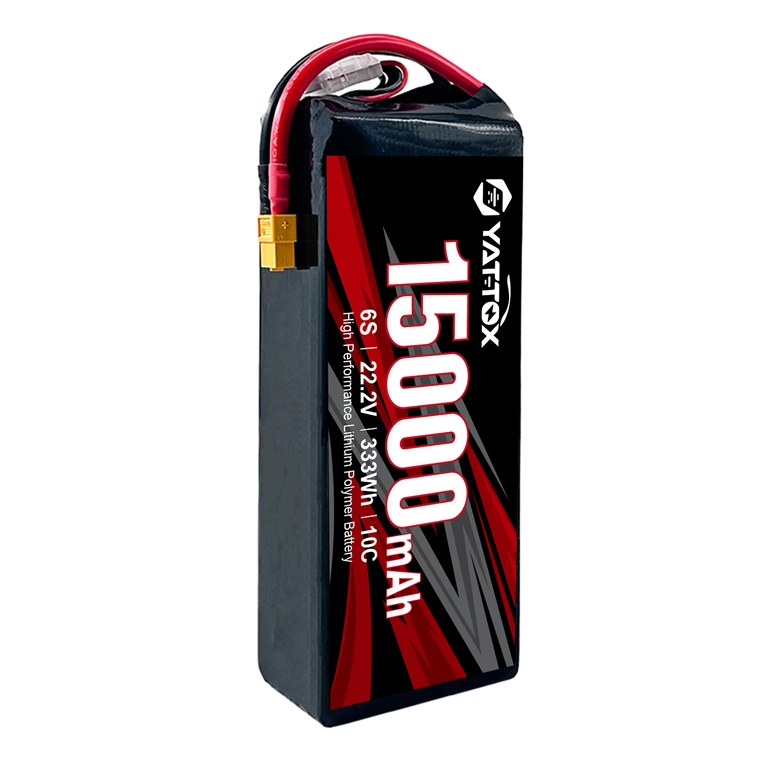
6S 15,000mAh LiPo Battery
22.2V nominal, 333Wh stored energy — a lower-capacity 6S option in this range.
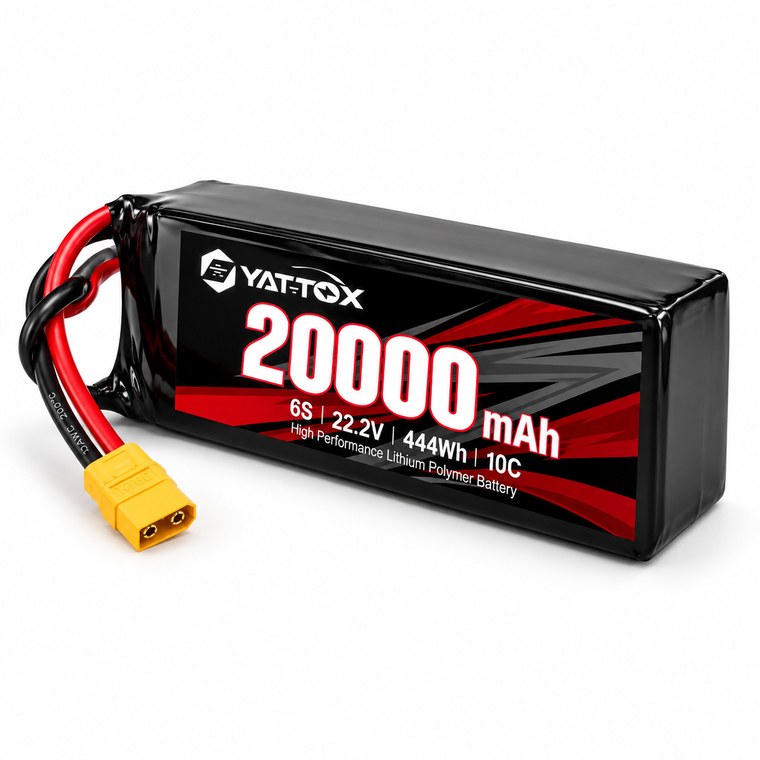
6S 20,000mAh LiPo Battery
22.2V nominal, 444Wh stored energy — a higher-capacity 6S option for longer endurance.
Return to UAV Battery Packs for the full 6S range.
Review the 18Ah Option for Your Project
Share your aircraft’s voltage, load, installation and connection requirements to discuss whether the YATTOX 6S 18,000mAh pack is an appropriate candidate for further evaluation.
Provide your aircraft voltage, current and mounting requirements for a configuration discussion.
Related Products
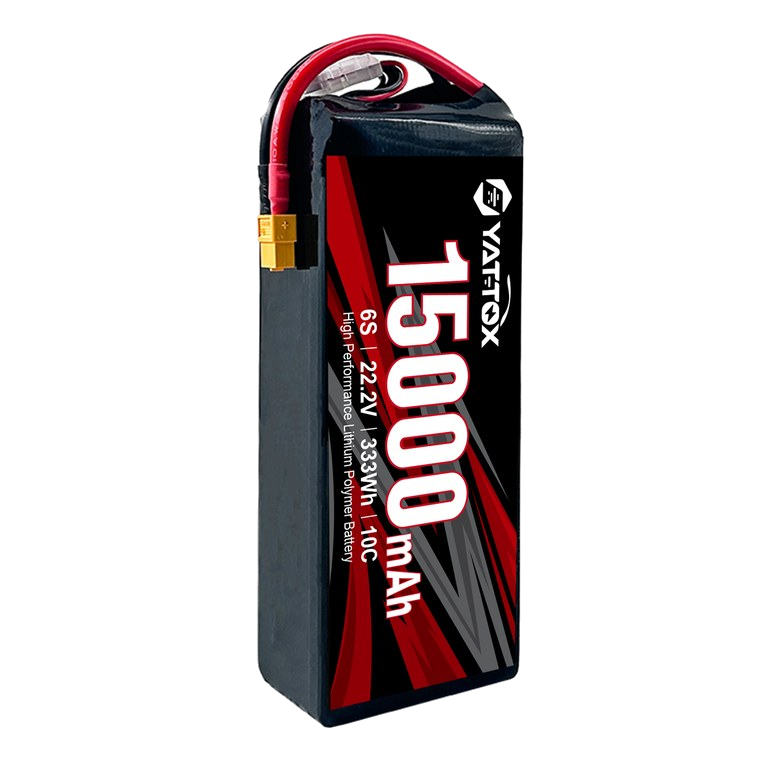
6S 15000mAh 22.2V LiPo Battery
The YATTOX 6S 15,000mAh LiPo pack offers 333Wh of nominal energy at 22.2V. For UAV installations, assess this 15Ah option against aircraft power demand, allowable pack weight and available mounting space before selecting it for a mission.
·Configuration: 6S
·Nominal Voltage: 22.2V
·Capacity: 15,000mAh
·Nominal Energy: 333Wh
·Discharge Rating: 10C (label rating)
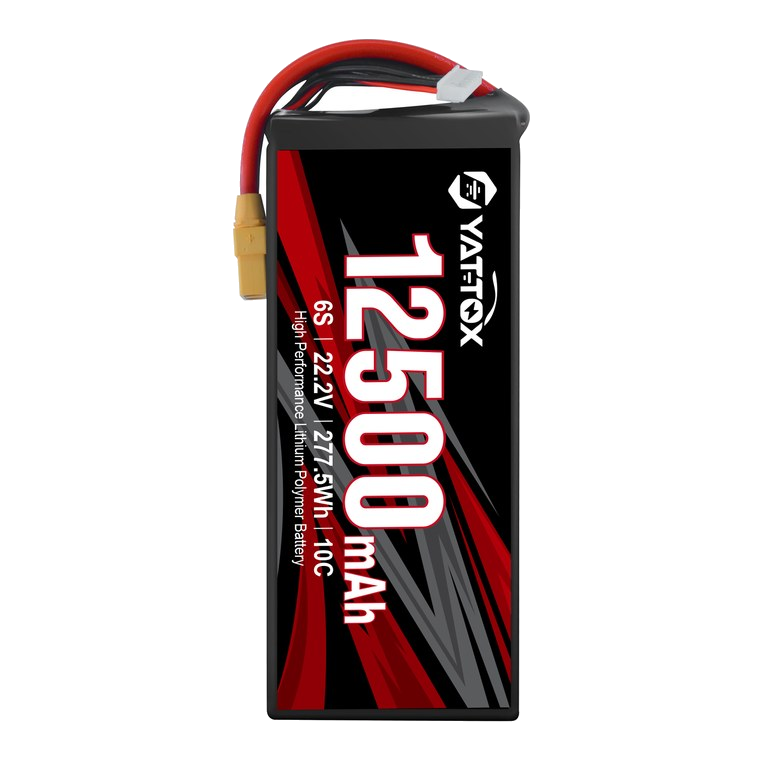
6S 12500mAh 22.2V LiPo Battery
A 6S, 22.2V YATTOX UAV LiPo battery with 12,500mAh nominal capacity, 277.5Wh nominal energy and a 10C label rating, for power-system compatibility evaluation.
·Configuration: 6S
·Nominal Voltage: 22.2V
·Capacity: 12,500mAh
·Nominal Energy: 277.5Wh
·Discharge Rating: 10C (label rating)
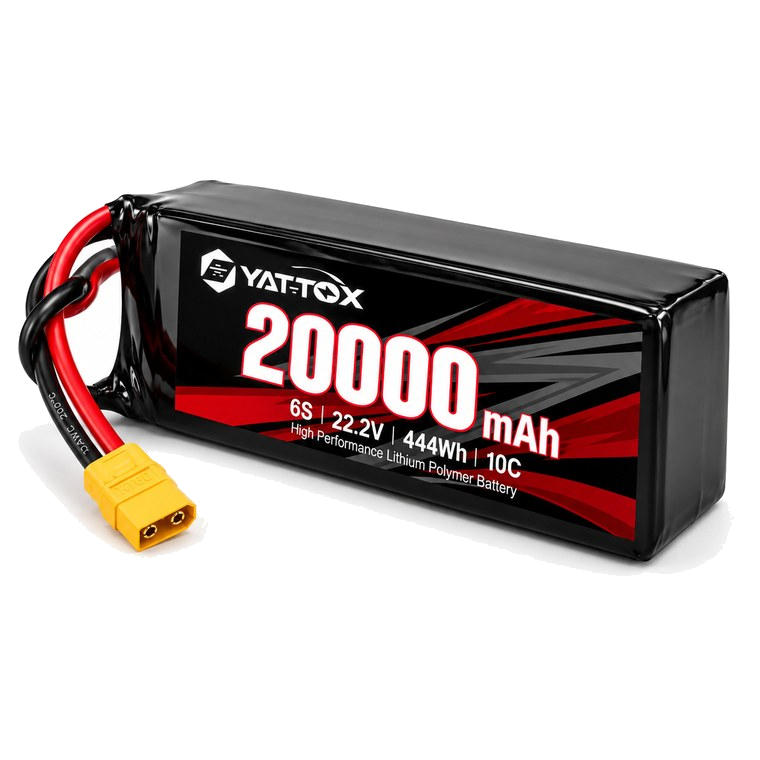
6S 20000mAh 22.2V LiPo Battery
A 6S 22.2V UAV LiPo battery offering 20,000mAh capacity and 444Wh of nominal energy in a 187 × 45.4 × 77mm pack format. With an image-labeled weight of 1,260g, 10C discharge rating and XT90 connector, this configuration can be evaluated against the aircraft’s battery bay, harness and power demand.
·Configuration: 6S
·Nominal Voltage: 22.2V
·Capacity: 20,000mAh
·Nominal Energy: 444Wh
·Discharge Rating: 10C (label rating)
·Pack Weight: 1,260g
·Main Connector: XT90