


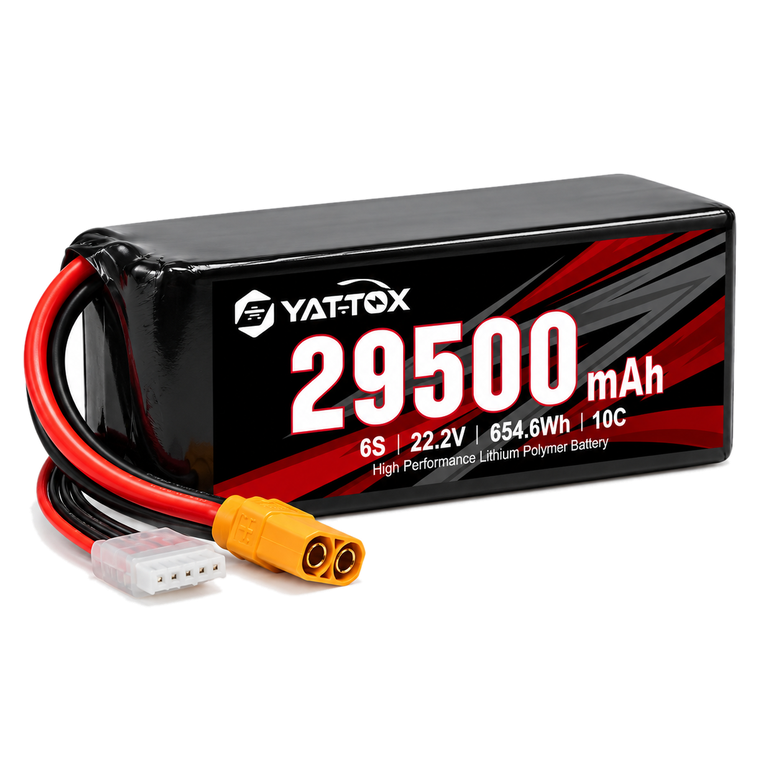
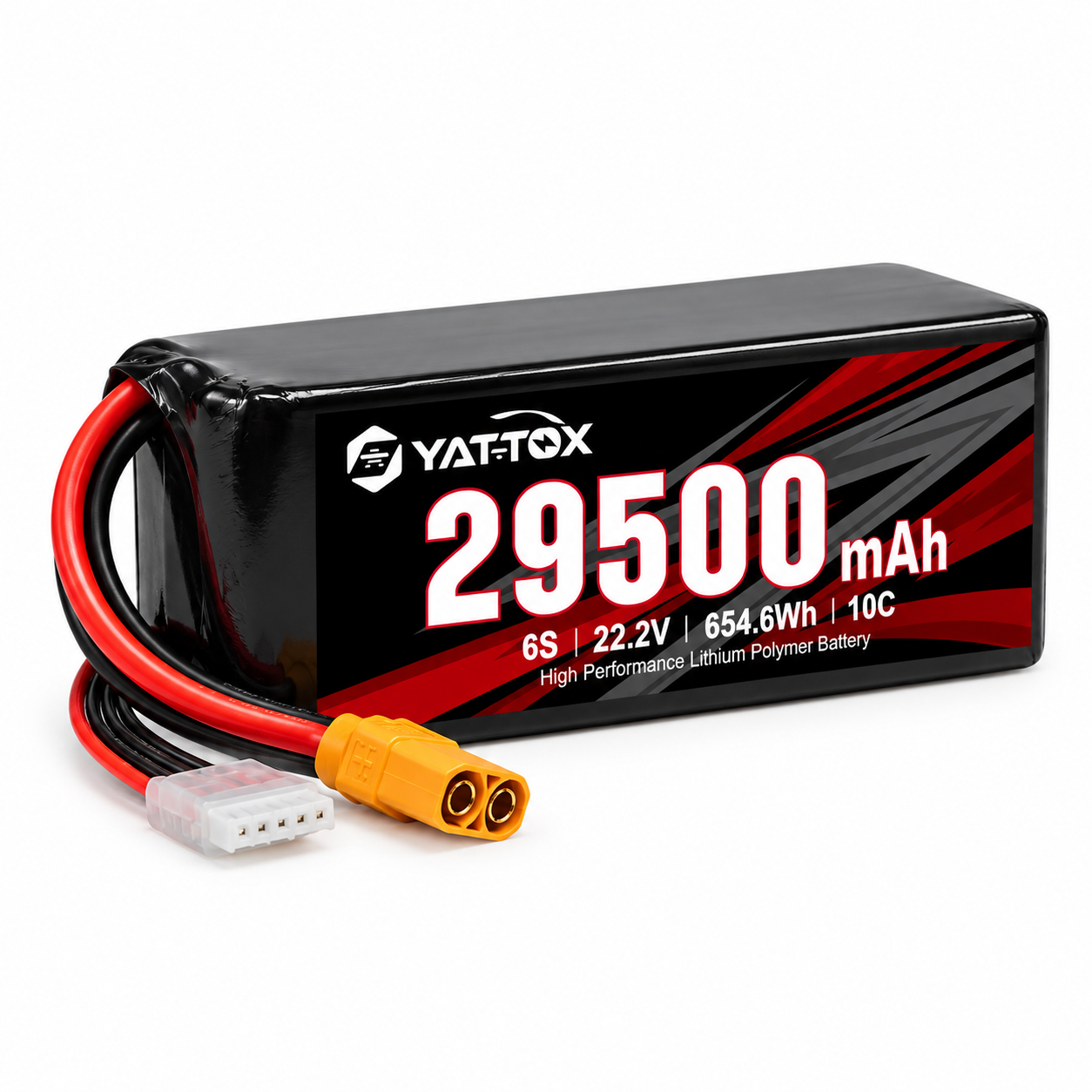
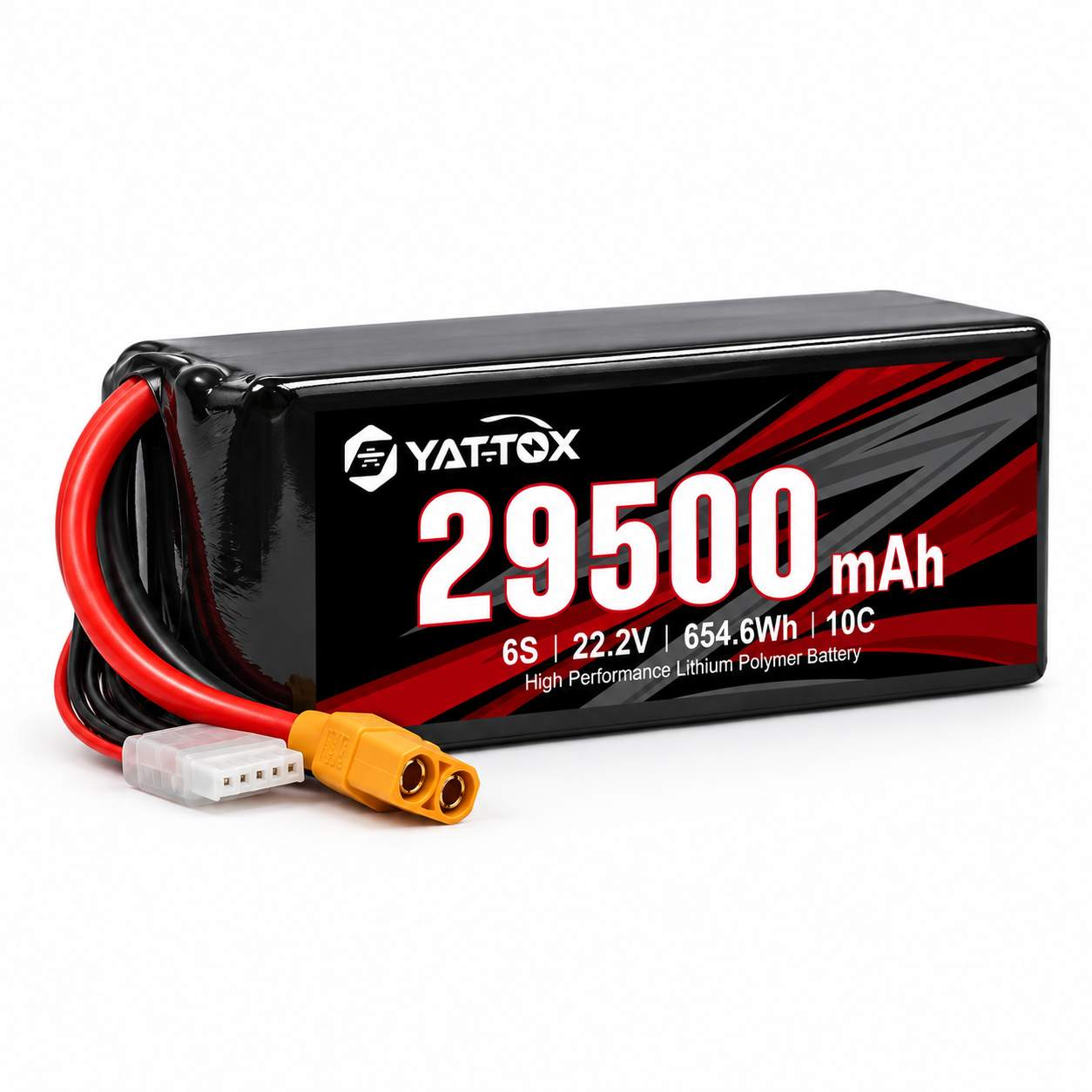
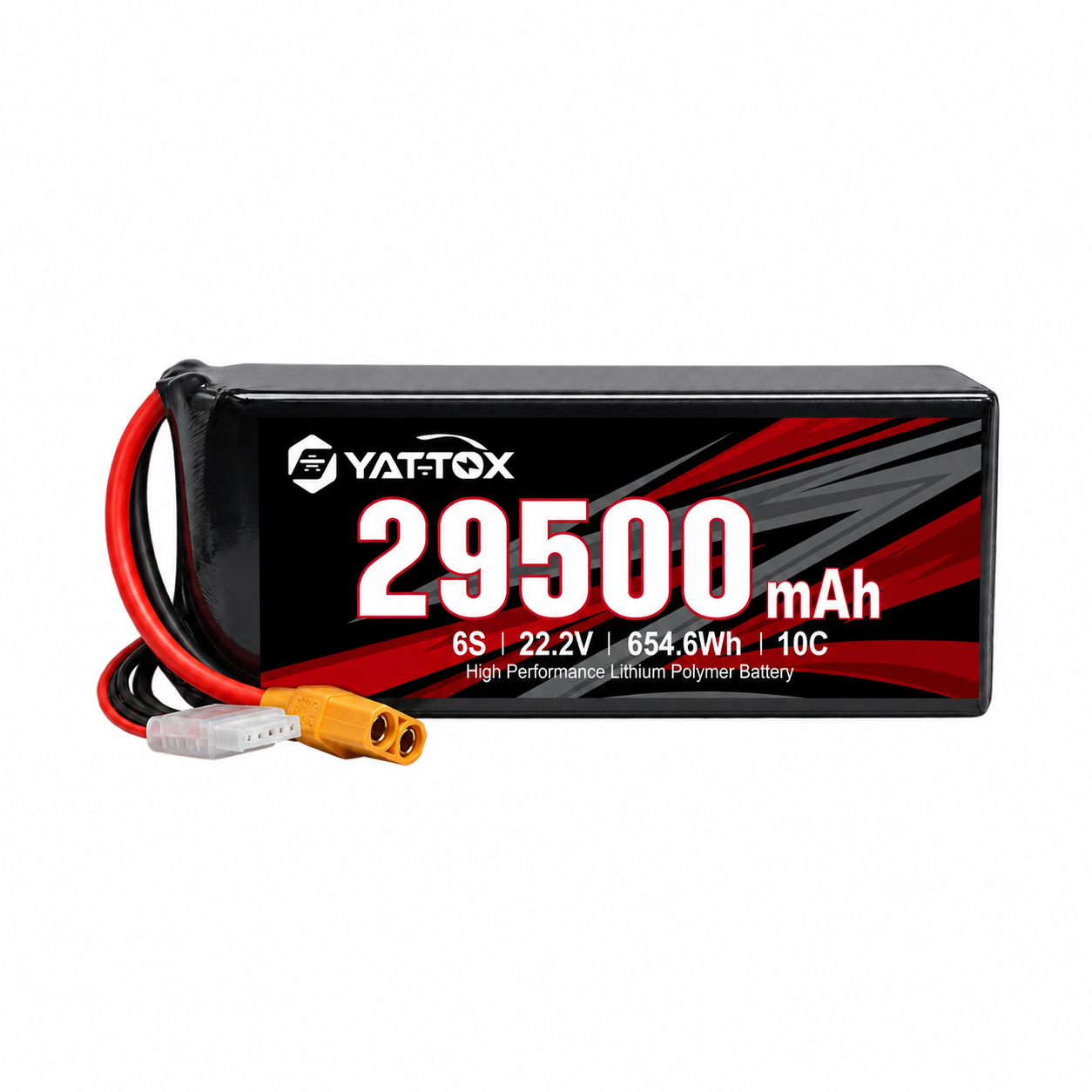
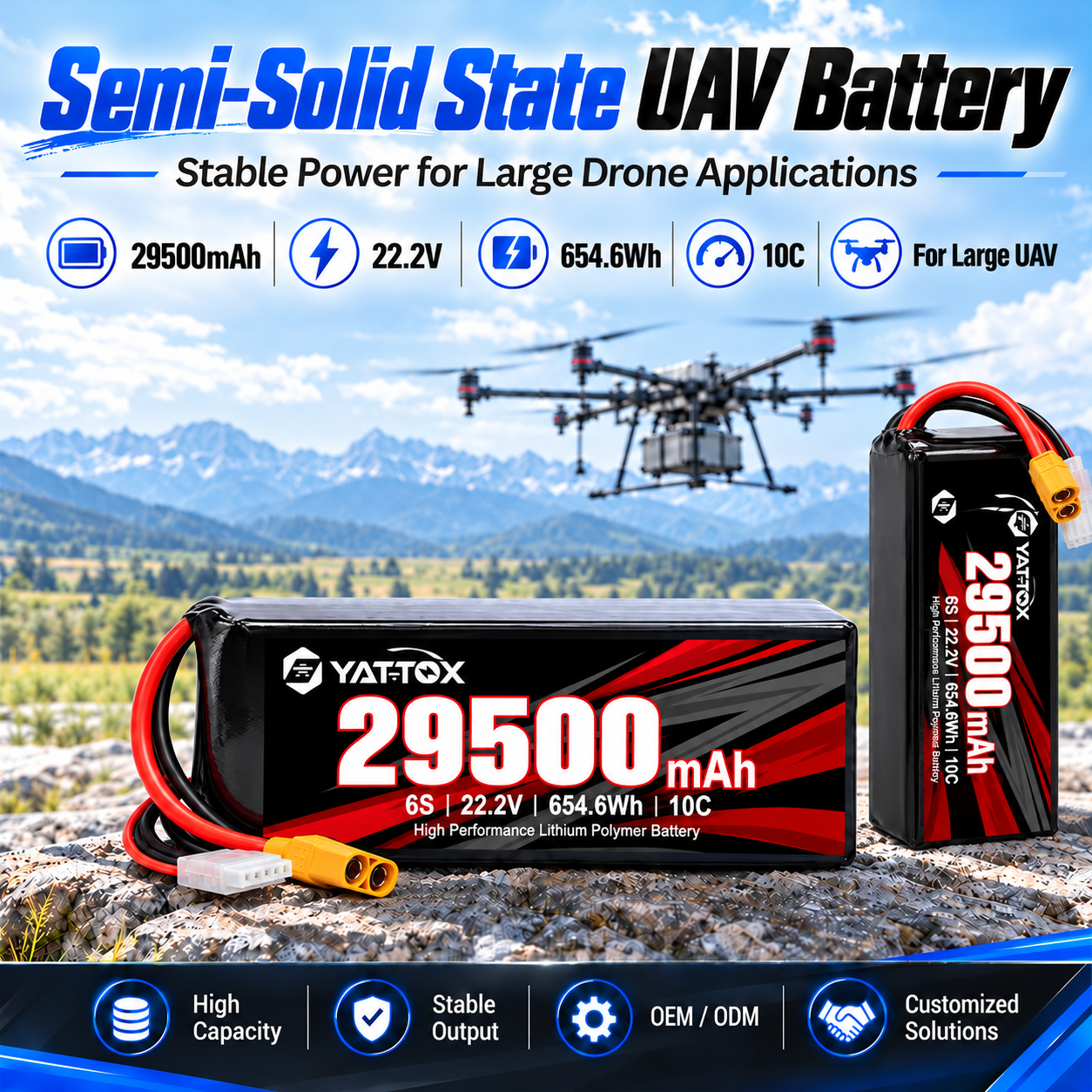
6S 29500mAh 22.2V LiPo Battery
Rated at 22.2V and 654.9Wh, this 6S 29,500mAh LiPo battery features a 1,512g specified pack weight and an XT90 connector. Evaluate its energy requirement, mounting space and charging arrangement before ordering.
·Configuration: 6S
·Nominal Voltage: 22.2V
·Capacity: 29,500mAh
·Nominal Energy: 654.9Wh
·Discharge Rate: 10C (label rating)
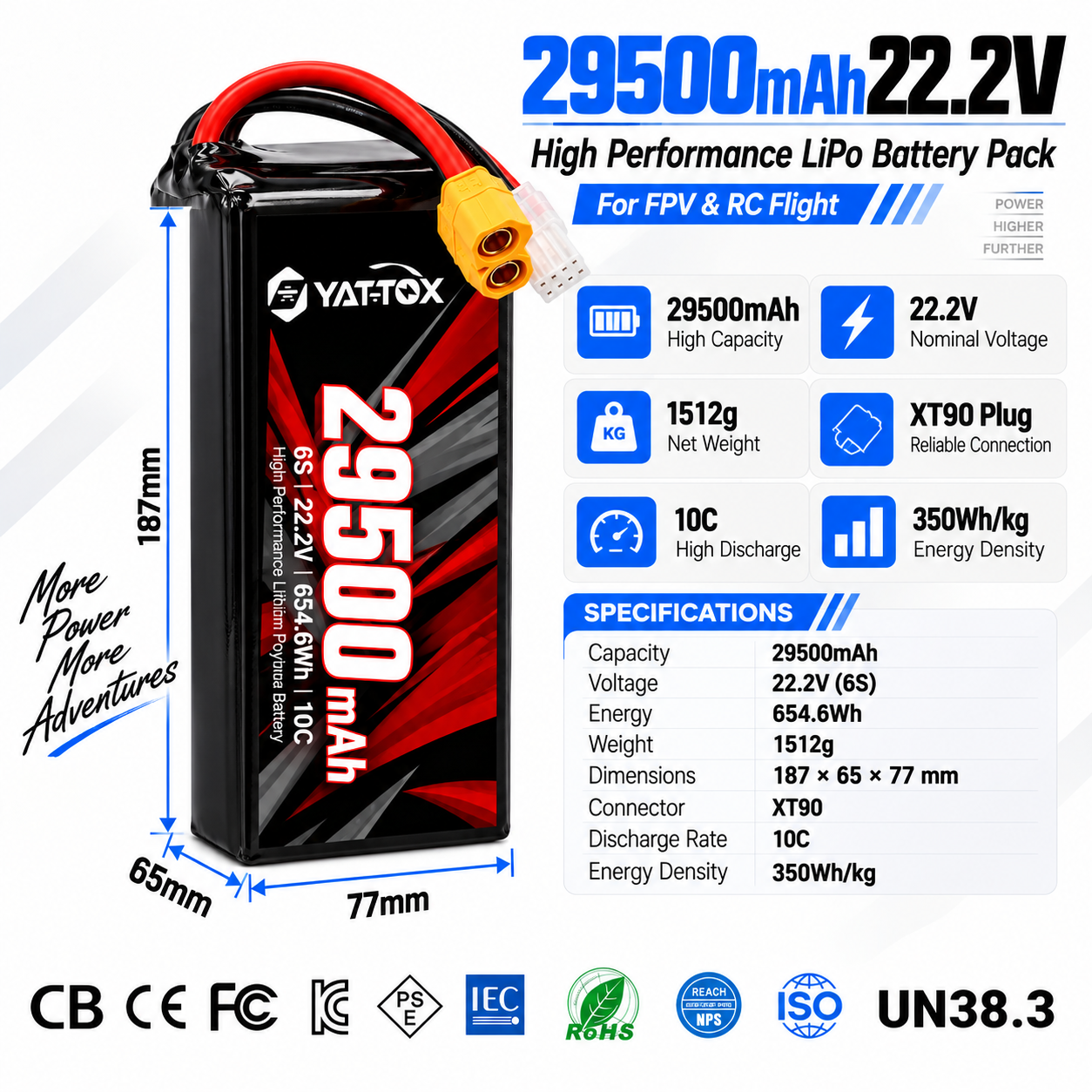
·Net Weight: 1,512g
·Dimensions: 187 × 65 × 77mm
·Main Connector: XT90
654.9Wh and the 1,512g Pack Mass
654.9Wh and the 1,512g Pack Mass
For 6S aircraft projects, 654.9Wh is the nominal energy figure to compare against the planned mission demand. A useful selection also accounts for installed battery mass, permitted takeoff weight, discharge requirements and the pack space available inside the aircraft.
Account for the 1,512g Labeled Pack Weight
The specified net weight is 1,512g. Include the installed battery, mounting hardware and cabling when assessing takeoff mass and center of gravity. A higher nominal energy figure does not, by itself, establish longer flight time.
Identify the Required Energy Reserve
Use the mission power profile, allowable depth of discharge and reserve policy to estimate the energy required from the pack. The printed 654.9Wh is nominal stored energy, not a guaranteed usable output under every flight condition.
6S 29500mAh LiPo Battery Specifications
This model is specified at 22.2V, 29,500mAh and 654.9Wh, with a 10C discharge marking. The table also records its supplied dimensions and connector for electrical and mechanical review.
Weight Distribution and Mounting Space
Compare the 187 × 65 × 77mm pack dimensions and 1,512g specified weight with the aircraft’s usable mounting space and mass limits. Allow for pack restraint, connector access and cable routing.
Mounting Orientation and Center of Gravity
An installed pack changes the aircraft’s mass distribution. Before selecting the mounting position, verify available support surfaces, vibration restraint, cable bend radius and access for service; assess balance using the complete aircraft configuration.
Verify XT90 Access in the Battery Bay
The main connector is specified as XT90. Verify mating-part compatibility, polarity and clearance for the cable path. The connector name alone does not establish system current capability.
Charging and Discharge Checks for the 29.5Ah LiPo Pack
Match the aircraft’s sustained and peak current demand with the pack’s specified discharge conditions. For charging, check that the UAV battery charger supports the required 6S LiPo profile, balance connection and approved settings.
Continuous and Peak Demand
Record propulsion and auxiliary current under representative flight phases rather than relying solely on a summed motor peak figure. Ask for applicable discharge test conditions and confirm the pack, leads and connector meet the system requirements together.
Select a Compatible 6S LiPo Charger
A UAV battery charger for this 6S LiPo pack must support the correct cell-count and chemistry profile, balance connection arrangement and rated charging limits. Confirm the final charge settings with the product specification; the 10C discharge marking is not a charging-rate instruction.
29.5Ah or 30Ah: What Actually Changes?
The 29.5Ah option lies close to the 30Ah model in nominal energy. Compare the figures below together with specified weight and connector details before choosing a configuration.
The 29.5Ah pack carries 111Wh more nominal energy than the 24.5Ah option and 11.1Wh less than 30Ah. Based on the supplied product images, the 29.5Ah and 30Ah packs also have different stated weights and main connectors, so a capacity-only selection would omit important integration details.
Verify the 29.5Ah Configuration Before Ordering
For a technical review, provide the aircraft’s electrical load profile, maximum battery mass, mounting dimensions, wiring connection and charging arrangement. This helps evaluate the 29.5Ah configuration against a defined installation.
Electrical Inputs
Include the planned duty cycle, mission reserve target, electrical interface diagram and charging system. Specify whether the requested figure is nominal or usable energy so the comparison is made on a consistent basis.
Mechanical and Ordering Inputs
Provide installation-space drawings, orientation constraints, handling requirements, sample quantity and estimated purchase volume. Request the latest dimensional and electrical specification before approving installation or volume procurement.
6S 29500mAh Battery FAQs
These answers address the practical differences between a 29.5Ah 6S pack and neighboring capacities, especially battery mass, nominal energy, connector configuration and integration checks.
Why is the stated pack weight important for this 29.5Ah battery?
The image lists 1,512g. Include that mass in the aircraft’s takeoff-weight and balance calculation, together with the mounting hardware and other payload. Without the full aircraft power and mass profile, the effect on endurance cannot be quantified.
Does 654.9Wh mean the UAV can use 654.9Wh during flight?
No. It is the nominal energy rating based on 22.2V and 29.5Ah. Usable energy depends on voltage limits, load, temperature, cell condition and the reserve retained for landing.
How does the 29.5Ah version compare with the 30Ah pack?
Their image-labeled nominal energies are 654.9Wh and 666Wh, a difference of 11.1Wh. The supplied images also list different weights and main connectors, so review installation and electrical compatibility rather than selecting solely by the extra 500mAh.
Can I replace an existing 6S battery with the 29.5Ah pack?
Not based on the 6S label alone. Verify the aircraft’s voltage tolerance, installation dimensions, allowable mass, current profile, connector compatibility, polarity and charging arrangement.
Does the printed 10C rating confirm suitability for my motors?
Not by itself. A C-rate marking should be evaluated with verified discharge conditions, expected sustained and peak current, wiring and connector limits, temperature and duty cycle. Ask for the relevant technical specification.
What should I send to assess whether this pack fits my project?
Share an aircraft power profile, compartment dimensions, allowable battery weight, installation orientation, connector and wiring requirements, charger configuration, and the intended purchase quantity. These details support a meaningful technical review.
Explore Related 6S Options
Review the nearby 24.5Ah and 30Ah options when balancing nominal energy, installed mass and interface requirements. Use the product specifications and aircraft limits to narrow the choice.
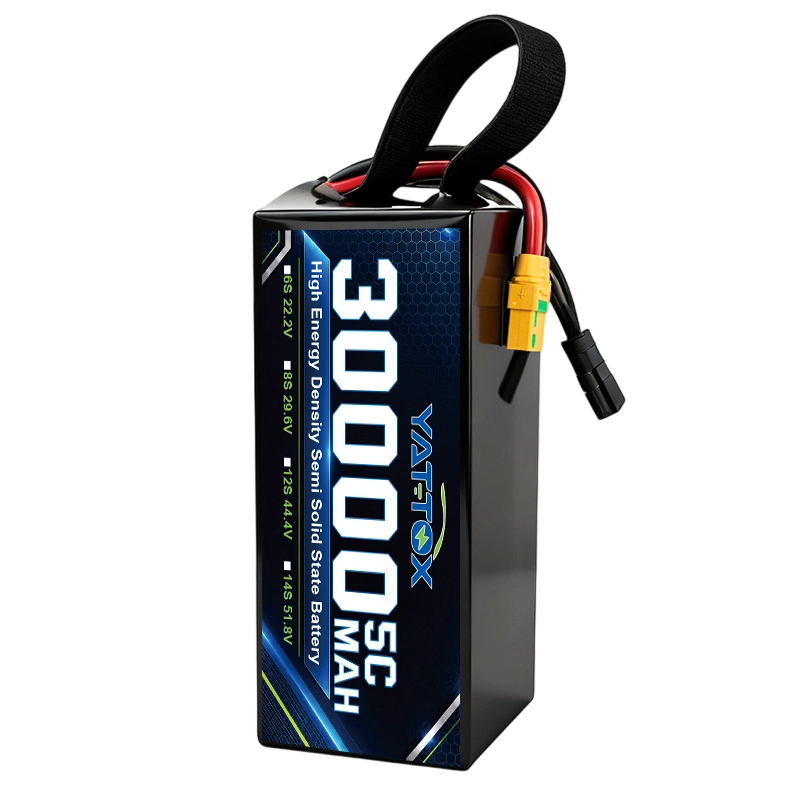
6S 30000mAh LiPo Battery
22.2V · 666Wh · 10C (labeled) — the neighboring higher-capacity option with an XT60 connector.
Explore the YATTOX UAV Battery Range for the full 6S selection.
Review the 29.5Ah Configuration for Your Aircraft
Send your application requirements and the electrical and mechanical constraints of the aircraft to discuss the suitability of the 29.5Ah, 654.9Wh 6S LiPo pack.
Provide your aircraft voltage, current and mounting requirements for a configuration discussion.
Related Products
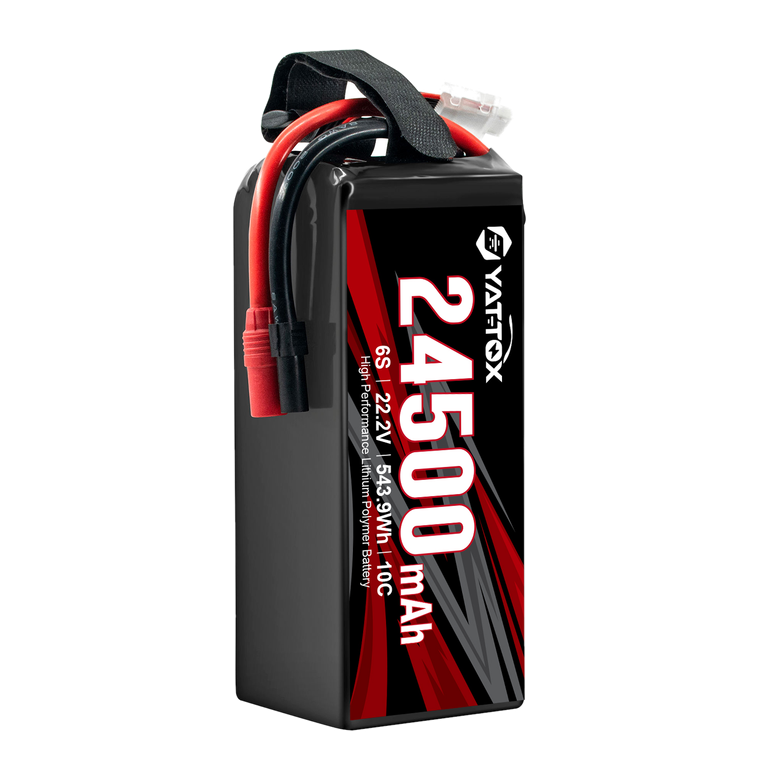
6S 24500mAh 22.2V LiPo Battery
A 24.5Ah UAV LiPo battery with 543.9Wh of nominal stored energy, built on a 6S 22.2V platform and marked 10C. Compare the pack against your aircraft’s energy demand and physical integration requirements before selecting it.
·Configuration: 6S
·Nominal Voltage: 22.2V
·Capacity: 24,500mAh
·Nominal Energy: 543.9Wh
·Discharge Rate: 10C (label rating)
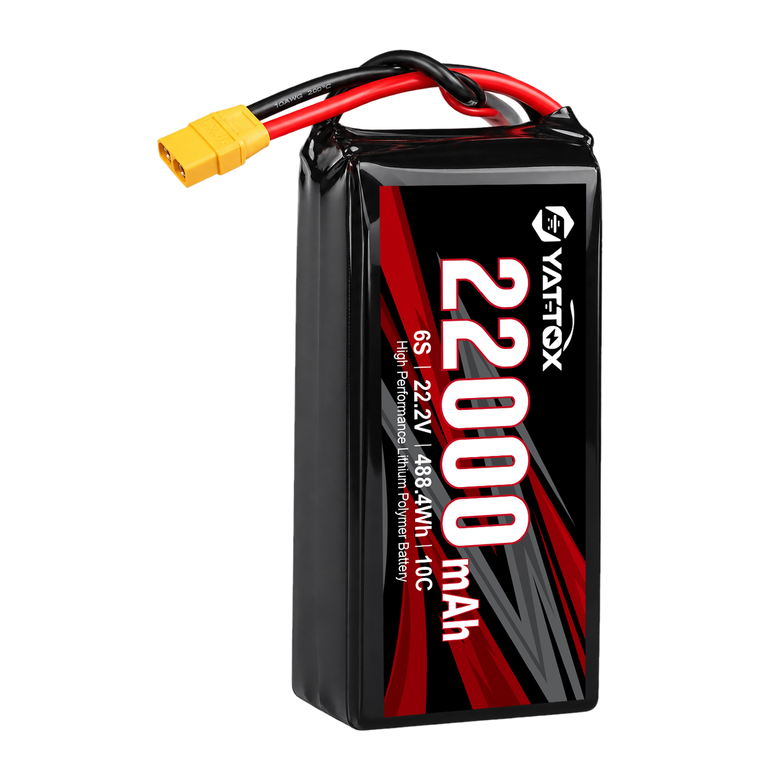
6S 22000mAh 22.2V LiPo Battery
The YATTOX 6S 22000mAh UAV LiPo battery provides 488.4Wh of nominal energy at 22.2V, with a 10C label rating. Its listed 1,542g weight, 187 × 77 × 55mm dimensions and XT60 connector are key considerations when evaluating the aircraft’s energy demand, installed mass and wiring compatibility.
·Configuration: 6S
·Nominal Voltage: 22.2V
·Capacity: 22,000mAh
·Nominal Energy: 488.4Wh
·Discharge Rate: 10C (label rating)
·Pack Weight: 1,542g
·Main Connector: XT60
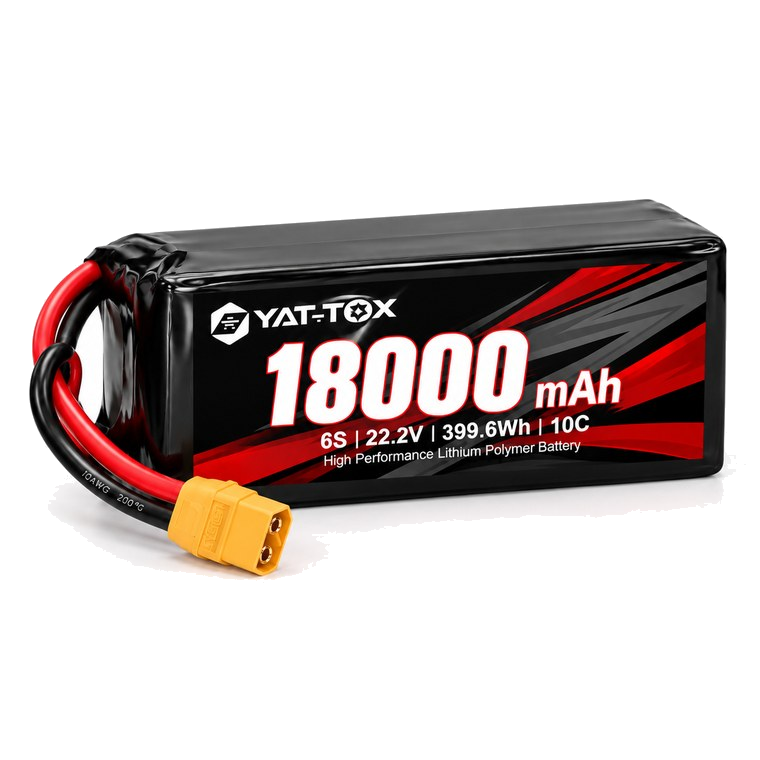
6S 18000mAh 22.2V LiPo Battery
With 399.6Wh of nominal stored energy in a 6S LiPo configuration, this 18Ah YATTOX pack offers a capacity step between the 15Ah and 20Ah options. Its 22.2V nominal voltage and labeled 10C rating provide a starting point for reviewing a UAV power system—not a standalone compatibility or flight-time guarantee.
·Configuration: 6S
·Nominal Voltage: 22.2V
·Capacity: 18,000mAh
·Nominal Energy: 399.6Wh
·Discharge Rating: 10C (label rating)