


Why Is a Custom LiPo Battery Pack Larger Than the Cell It Contains?
November 28, 2026
Why does a LiPo cell fit but the finished pack does not? Explore how protection circuits, wiring, tolerances and enclosure clearance affect OEM battery design.
Table of Contents
A LiPo cell may fit perfectly within the space shown on a device drawing, yet the finished battery pack can still be difficult to install. The protection board may interfere with an internal support, the cable may have nowhere to bend, or a thicker section of the pack may prevent the enclosure from closing.
These problems often become apparent when an OEM project moves from selecting a battery cell to assembling a working device.
A finished LiPo battery pack can be larger than its bare cell because it may include protection electronics, wiring, insulation and external packaging. Its installation also requires appropriate clearance for connectors, mechanical tolerances and the selected pouch cell's dimensional behavior.
For compact electronic equipment, three measurements need to be considered separately: bare cell dimensions, finished battery pack dimensions and the usable space inside the device. Understanding the difference helps prevent mechanical interference before a design reaches production.
| Dimension | What It Includes | Main Design Concern |
|---|---|---|
| Bare cell size | Pouch cell body and separately defined features such as tabs | Initial cell selection |
| Finished pack dimensions | Completed battery assembly with specified electrical and protective components | Maximum physical outline |
| Device installation space | Battery compartment, cable path, connector access and mounting features | Mechanical fit and assembly |
Bare Cell Size vs Finished Battery Pack Dimensions
LiPo battery dimensions are commonly specified as thickness, width and length. These measurements are useful when comparing cells, but they do not always describe the complete assembly that will be installed in a product.
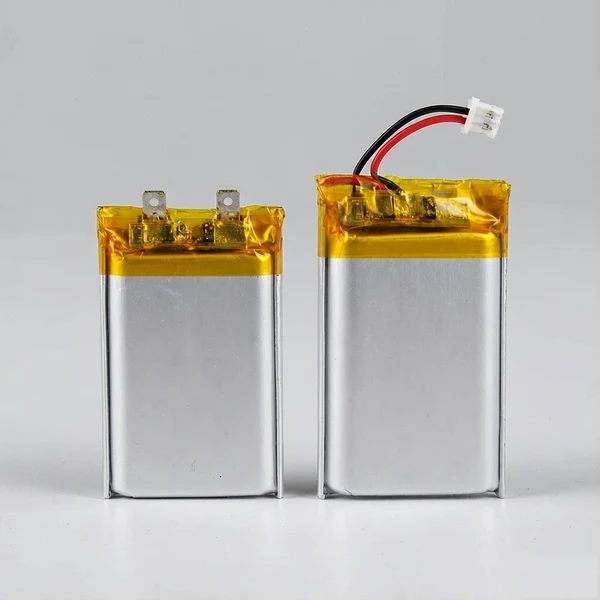
A bare pouch cell has its own physical outline, including the cell body and electrical tabs. Depending on the drawing convention, tabs and sealing edges may be dimensioned separately from the main pouch body.
Once the cell is assembled into a battery pack, additional components may occupy space around it. The finished dimensions depend on how those components are arranged.
The device enclosure introduces another constraint. Even if a finished pack fits within the available length, width and height, there must still be room to position it, route the cables and connect it to the equipment.
A protection board mounted at the tab end may extend the overall length. If it sits against the broad surface of the cell, it may increase local thickness instead.
This is why a battery pack should be evaluated from its finished assembly drawing rather than its cell dimensions alone.
What Changes the Final Size of a LiPo Battery Pack?
The additional components are not necessarily large, but their position can make a significant difference in a compact device.
Protection Circuit and Insulation
Many rechargeable LiPo battery assemblies use a protection circuit module (PCM) to provide functions such as overcharge, over-discharge or overcurrent protection. The required protection arrangement depends on the battery configuration and the equipment.
A PCM takes up physical space, but its effect on the pack's dimensions depends on where it is installed.
Positioning the circuit board near the cell tabs can change the overall length. Placing it over the cell surface can create a thicker area that needs to be considered in the enclosure design.
Insulating tapes, protective films, cushioning materials and outer wrapping may also affect the finished outline. The change is influenced by material thickness, component overlap and assembly construction.
Not every design uses the same components or layout, so there is no fixed amount that can simply be added to the bare cell dimensions to calculate the finished battery size.
Wires, Tabs and Connector Clearance
Wiring presents a different challenge. A battery body may fit inside the compartment while its cables or connector interfere with the surrounding structure.
The wire exit position matters as much as cable length.
For example, a lead exiting directly toward an enclosure wall may need to be redirected before it reaches the device's circuit board. If there is insufficient routing space, the wire may be bent too sharply or pinched during assembly.
Connector housings also require room for mating and handling. A connector that fits into the available cavity may still be inaccessible once the battery is installed.
These details are easy to overlook when the initial enclosure design uses only a rectangular representation of the cell.
For some compact devices, adjusting the cable exit direction or connector location may be more practical than changing the battery cell. Any such adjustment must still meet the electrical, insulation and mechanical requirements of the final design.
Why Does a Battery Fit on Paper but Not in the Device?
The difference often lies between the space shown in an early design and the space actually available during assembly.
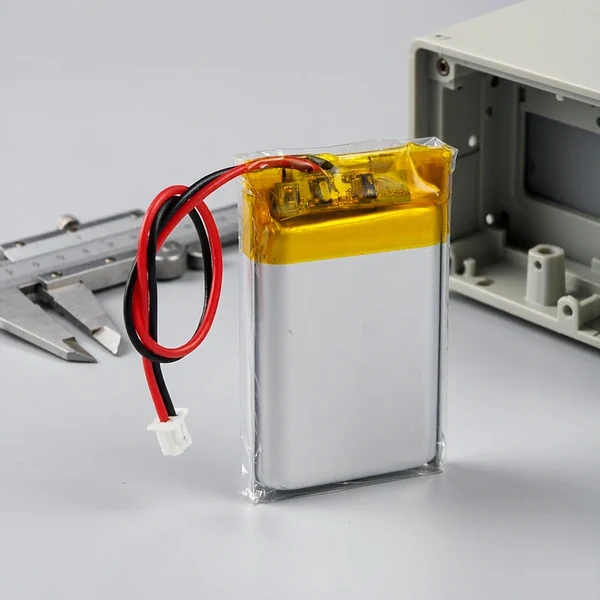
A rectangular battery cavity might appear large enough for the specified cell. Once the enclosure includes mounting posts, internal ribs, screws and adjacent electronic components, the usable area can be smaller or less regular than the original drawing suggests.
The situation becomes more complicated when the completed battery includes components that extend beyond the cell body.
Several installation problems are particularly common.
| Installation Issue | Likely Design Conflict | What Needs to Be Checked |
|---|---|---|
| Battery cannot enter the compartment | Pack outline or insertion path is too large | Maximum finished dimensions and assembly sequence |
| Cover does not close | Local thickness interferes with the housing | Pack cross-section and enclosure height |
| Cable is compressed | Insufficient routing space | Wire exit, bend requirements and strain relief |
| Connector is inaccessible | Incorrect connector position or limited access | Connector orientation and mating clearance |
| Pack contacts internal components | Ribs, screws or mounting features overlap the battery space | Complete mechanical layout |
| Fit varies between samples | Dimensional and assembly variation | Maximum dimensions and tolerances |
Local Thickness and Housing Interference
Overall thickness is not always uniform across a finished LiPo pack.
A protection circuit, overlapping insulation or an electrical connection may create a locally thicker area. That section can interfere with the enclosure even when most of the pack sits comfortably inside the compartment.
The location of the thicker section matters.
If it aligns with a mounting boss or housing rib, the cover may not close correctly. Moving the battery a short distance may not solve the problem if the cell then interferes with another internal component.
A cross-sectional drawing can help identify these conflicts more clearly than a simple length-width-thickness specification.
The enclosure should also avoid sharp edges or mechanical features that could damage the pouch during installation or use.
Cable Routing and Connector Access
The installed battery must remain electrically connected without placing inappropriate stress on its leads.
A cable routed across the top of the pack can consume space needed by the enclosure cover. A connector positioned behind the battery may become inaccessible during assembly or servicing.
Even when the battery fits in its final position, the assembly sequence may introduce another obstacle.
The pack might need to slide past an internal support, rotate into position or be connected to the PCB before the enclosure is closed.
If that path is too narrow, the pack can be difficult to install without stressing its connections.
These conditions should be evaluated using the complete device assembly, not only the empty battery compartment.
The critical question is not simply whether the battery can occupy the available volume. It is whether the complete assembly can be installed correctly and remain compatible with the device's mechanical design.
How Do Tolerances and Pouch-Cell Expansion Affect Fit?
A LiPo pouch cell is not a perfectly rigid component with an unchanging shape.
Its dimensions may vary within manufacturing tolerances, and some dimensional change can occur during charging, discharging and aging.
This makes thickness control especially important when a pouch cell is installed between closely spaced, rigid surfaces.
The amount of clearance required depends on the cell construction, permitted dimensional change, installation conditions and the surrounding mechanical structure.
There is no universal clearance allowance or swelling percentage that applies to every LiPo battery.
A nominal cell thickness can be useful for initial layout, but it may not represent the maximum thickness of the complete battery assembly.
The approved drawing needs to identify which dimensions include protective wrapping, insulation and any locally raised components.
The cell manufacturer's mechanical guidance also matters. Appropriate support for one pouch-cell design should not automatically be applied to another.
Normal dimensional changes permitted by a battery specification must also be distinguished from abnormal swelling or damage. A visibly swollen battery should not be treated as an ordinary installation tolerance problem.
For OEM products, the goal is to define suitable mechanical conditions for the selected battery rather than compensate for uncertainty by choosing an arbitrary clearance.
How Can OEM Engineers Avoid Battery Fit Problems Before Production?
Battery fit is easiest to resolve while the device enclosure and battery arrangement are still being designed together.
Once tooling has been finalized, even a small interference problem may require changes to the housing, internal components or battery configuration.
A practical approach is to complete three checks before production approval.
1. Define the Actual Available Installation Space
Start with the space inside the device rather than selecting a pouch cell solely by its nominal dimensions.
The mechanical layout should account for enclosure walls, internal supports, fasteners, nearby electronics and the intended installation direction.
A usable battery compartment is not always a simple rectangular volume.
Its shape may change along the insertion path, and the available space for wiring may differ from the area occupied by the battery body.
The OEM engineer should identify the maximum usable dimensions along with any restricted areas, connector locations and mounting requirements.
2. Confirm the Maximum Finished-Pack Dimensions
Before the enclosure design is finalized, the battery supplier and OEM team should agree on a drawing of the completed assembly.
The drawing should identify the maximum finished dimensions and the features that affect installation.
For a space-constrained device, a section view or 3D model can help reveal interference between the battery assembly and the enclosure.
The drawing should also distinguish the finished battery outline from any additional clearance that must be provided by the host equipment.
| Design Information | What Should Be Confirmed |
|---|---|
| Finished length, width and thickness | Maximum dimensions of the assembled battery |
| Local thickness | PCM, electrical connections and overlapping protective materials |
| Wire exit | Position, direction, cable size and routing requirements |
| Connector | Type, orientation and mating space |
| Mounting | Approved support and retention arrangement |
| Tolerances | Permitted dimensional variation and measurement conditions |
| Operating conditions | Relevant temperature and mechanical requirements |
3. Test the Completed Pack in the Device
A finished battery sample should be installed in the actual device assembly before production approval.
The check should include the installation sequence, cable routing and enclosure closure—not simply whether the pack fits when placed inside an open housing.
The battery should be inserted without damaging the pouch or its connections. Leads need to follow the intended route, and the cover should close without applying inappropriate pressure to the pack.
Where required, the prototype should also undergo relevant electrical and operational checks.
If the battery design changes later, the fit may need to be reviewed again. Replacing the cell, moving the protection circuit or changing the connector can affect a previously approved assembly.
A single successful fit check is also not a substitute for clearly defined production dimensions. The accepted design must account for the permitted variation of the parts being manufactured.
This approach connects battery selection with device engineering and reduces the risk of discovering mechanical conflicts after tooling or volume production has begun.
Custom LiPo Battery Options for Compact Devices
Limited battery space is a common challenge in portable instruments, wireless terminals, industrial electronic devices and other compact products.
YATTOX provides lithium polymer batteries and custom battery pack solutions for OEM projects with specific electrical and installation requirements.
Customization can involve battery dimensions and shape, voltage, capacity, cable length, wire exit and connector selection, depending on the proposed design.
For an enclosure with limited space, evaluating a battery configuration requires more than the cell's nominal dimensions. The available compartment, electrical load, protective components and final installation method should be considered together.
A different cell geometry may help one project, while a change in the protection-board position or cable arrangement may be more suitable for another.
YATTOX can review these requirements when evaluating custom LiPo battery configurations for OEM equipment.
Explore Lithium Polymer Battery Solutions for LiPo cell and battery options, or review Custom Lithium Battery Pack Solutions for additional pack-level configurations.
The final battery drawing and applicable validation requirements should be agreed upon for the selected project.
Frequently Asked Questions
Does a LiPo battery size code include the protection circuit?
Not necessarily. A size code may identify the nominal dimensions of the pouch cell, but it may not include the PCM, tabs, wires or finished packaging. The applicable drawing should be used to confirm the dimensions of the complete battery assembly.
Should OEM buyers request maximum dimensions or nominal dimensions?
Both can be useful, but maximum permitted finished-pack dimensions are particularly important for checking enclosure fit. The drawing should define the dimensional limits, applicable tolerances and measurement conditions.
Can the cable exit be customized without changing the battery cell?
In some designs, yes. Changing the lead position, routing or connector arrangement may improve integration while retaining the selected cell. The proposed changes must remain compatible with the battery's electrical and mechanical requirements.
Can a custom LiPo battery be made thinner without reducing capacity?
Possibly, but reducing thickness may require changes to the cell's width, length or construction. The available options depend on the required energy, electrical performance, installation space and manufacturable cell designs.
What should be checked when the battery design changes after prototype approval?
Changes to the cell, protection circuit, wiring or connector may affect the approved dimensions and installation arrangement. The updated assembly should be reviewed against the enclosure drawing, and relevant fit and functional checks should be repeated as required.
Final Thoughts
A LiPo battery can meet the dimensions shown in an early design and still fail to fit once the complete pack and device enclosure are assembled.
The solution is to evaluate bare cell dimensions, finished battery pack dimensions and actual installation space as separate requirements.
For compact OEM devices, reviewing the complete battery outline, cable routing, dimensional tolerances and assembly process before production can help prevent avoidable integration problems.
Discuss Your Custom LiPo Battery Requirements
Developing a device with limited battery space?
Share your available battery compartment dimensions, voltage and capacity requirements, operating current, preferred connector and relevant mechanical drawings with YATTOX.
These details can help the team evaluate suitable cell and pack configuration options for your project.