


How to Choose an FPV Battery for Racing Performance
April 27, 2026
In this guide, I keep the focus on racing performance only: what actually matters, what slows a race build down, how to compare packs without overthinking every spec, and how to choose a better battery for FPV drone setups when lap time matters more than airtime.
Table of Contents
Quick Answer: How to Choose an FPV Battery for Racing Performance
If you want the short answer, choose an fpv racing drone battery for response first, not duration.
For racing, the better pack is usually the one that helps your quad feel sharper out of corners, cleaner on throttle recovery, and more stable under repeated full-power bursts. That means you should prioritize usable discharge performance, lower sag, lighter weight, and consistent pack quality before you chase extra flight time. If a battery gives you more seconds in the air but makes the quad feel heavy or lazy, it is probably the wrong race pack.
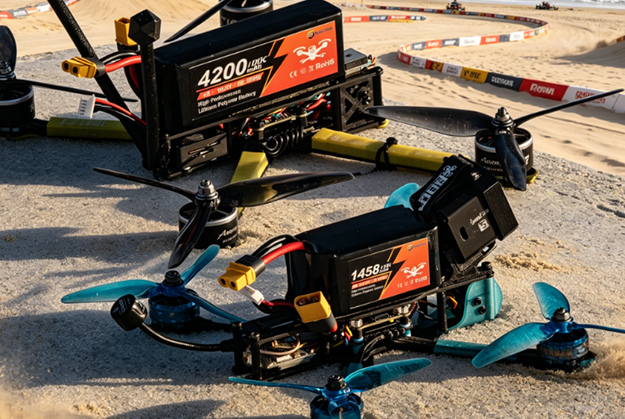
What Actually Matters in Racing Battery Performance
Throttle Response and Corner Exit
In racing, the battery needs to help the quad react the moment you ask for power. What you feel on track is not just “more power,” but how quickly the drone comes back after a throttle cut, how cleanly it drives out of a corner, and whether that response stays sharp lap after lap. That is why I would judge a race pack by recovery, punch, and predictability under load, not by how aggressive the label looks. We build around that kind of use by paying close attention to lower internal resistance, stable current paths, and pack consistency, because those are the things you actually feel in the air.
Low Sag Under Repeated Load
A battery can feel strong on the first hit and still fall apart over a full race run. What matters is how well it holds up when the quad sees repeated bursts, not just a single punch. If voltage drops too quickly, the drone starts to feel flatter, slower, and less linear when you need it most. To reduce that, we focus on cell matching, lower IR deviation, and pack structures that support steadier output under real load rather than one-time headline performance.
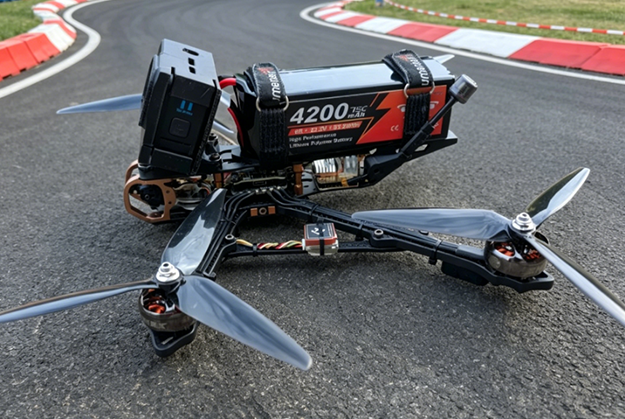
Consistency From Pack to Pack
For racing, one good pack is not enough. You need the next pack to feel close to the last one, otherwise your timing, tune, and confidence all start to move around. That is where production discipline matters. We screen and match cells before pack assembly, test OCV and IR across the line, and keep batch tracking in place so the result is not just a fast pack, but a repeatable one. On race day, that kind of consistency is often more valuable than chasing one extra number on paper.
Weight That Still Makes Sense on Track
A race battery should support the build, not drag it down. Extra capacity can help in other flying styles, but in racing it often costs more than it gives back if the pack becomes too heavy. A heavier quad changes direction less willingly, feels less crisp after corrections, and can lose some urgency on exit. That is why I would rather choose a pack with the right energy-to-weight balance than one that only looks stronger in the spec list. We can optimize dimensions, structure, and weight around the actual application, which matters a lot when the goal is speed with control, not just endurance.
How to Choose Between 4S and 6S for Racing FPV
Choose by Track Feel, Not Just by Habit
When people compare 4S and 6S for racing, they often treat it like a simple upgrade path. In reality, the better choice depends on how you want the quad to feel on track. Racing is all about response, recovery, and consistency under repeated load, so the real question is not which voltage sounds stronger, but which setup helps you stay faster and more controlled through a full run. That is why I would always start from throttle feel and race behavior first, then look at the numbers.
Where 6S Usually Makes More Sense
For many racing builds, 6S makes sense because it can deliver the same power at lower current. In practice, that often helps the quad feel cleaner on throttle, more stable through repeated hard sections, and less stressed when you keep pushing lap after lap. It can also make heat and sag easier to control when the rest of the system is matched properly. This is one reason we pay close attention to real load behavior, cell matching, and pack consistency during development, because higher-voltage setups only show their advantage when the pack stays stable under race conditions, not just in theory.
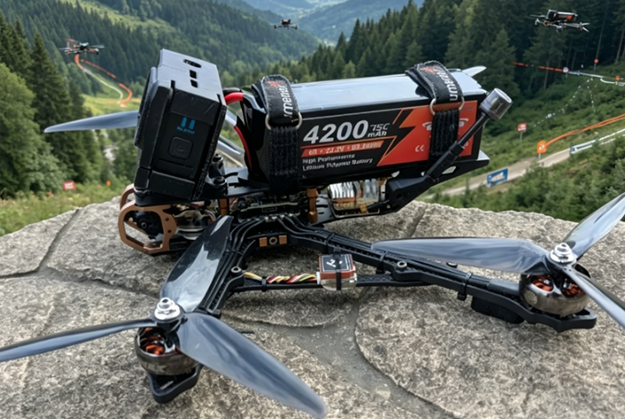
When 4S Is Still the Right Choice
That does not mean 4S is outdated. A well-matched 4S race setup can still feel excellent, especially when the build is designed around it and the pilot prefers a more direct, familiar response. In some cases, 4S can still be the better answer if you want simpler tuning, a lighter overall system demand, or a platform that already feels right without moving to a higher voltage. The key is not to choose 4S because it is easier, or 6S because it is newer. The key is to choose the setup that gives you the most usable speed and confidence on your actual track.
The Smarter Way to Decide
If you are unsure, compare the two in terms of what you actually need from the quad. If you want smoother power delivery, less current stress, and stronger consistency through repeated hard laps, 6S is often the more race-focused direction. If your build is already well sorted on 4S and delivers the response you want, there is no reason to force a change just to follow trend. For racing, the better platform is always the one that stays predictable when you are pushing for lap time.
How Much Capacity Is Too Much for a Racing Build
More Capacity Does Not Always Help
In racing, a bigger battery is not always an advantage. More mAh may extend flight time, but it can also make the quad feel less sharp on track. Once the pack becomes too heavy, the drone usually loses some of the quickness and precision that matter most in racing.
Choose Enough, Not the Most
The better approach is to choose enough capacity for the run, not the highest number available. A race pack should give you stable power from launch to finish without adding unnecessary weight. In most cases, the right battery is the one that supports the full run cleanly while keeping the quad fast and responsive.
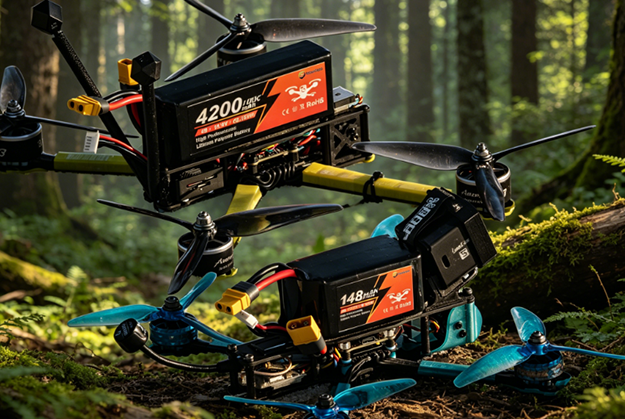
Weight Still Shows Up in Lap Feel
Extra battery weight is easy to notice in racing. The quad may feel slower to rotate, less willing to recover, and harder to keep precise through technical sections. If that happens, the extra capacity is no longer helping. For racing, the best result usually comes from a pack that keeps the build light, direct, and easy to control.
Why C-Rating Alone Does Not Choose the Right FPV Battery
A high C-rating does not automatically mean a better racing fpv battery. What really matters is how the pack performs under actual load, especially in terms of voltage stability, sag control, and consistent output through repeated throttle use. In racing, the better battery is usually the one with stronger real-world discharge behavior, lower internal resistance, and more stable pack quality, not simply the one with the most aggressive number on the label.
Quick Comparison Table for Racing Battery Selection
Here is a simple decision table you can use before buying your next pack:
Racing Need | What to Prioritize | What to Avoid |
Faster corner exit | Lower sag, quicker throttle feel | Oversized capacity |
Better lap consistency | Stable output, matched cells | Inconsistent batch quality |
Cleaner full-throttle pulls | Strong usable discharge | Inflated rating claims |
More predictable handling | Lower battery weight | Heavy packs that blunt response |
Safer race-day reliability | Good connectors and QC | Weak lead or connector design |
If you want help narrowing this down to your race build, send Yattox your frame size, motor KV, prop size, ESC setup, and preferred voltage platform. That is enough to start a practical battery recommendation.
Common Mistakes When Picking FPV Batteries for Racing
Choosing by Capacity First
A common mistake is treating higher mAh as the safer option. In racing, extra capacity often means extra weight, and that weight can make the quad feel slower and less precise. What looks better on paper may feel worse on track.
Trusting the Label Too Much
Printed specs do not tell the full story. A battery can look strong by rating, yet still sag early, heat up quickly, or feel inconsistent in real use. For racing, real output always matters more than headline numbers.
Ignoring Consistency
A good race pack should feel reliable from run to run. If one battery feels strong and the next one feels different, tuning and confidence both suffer. Consistency is part of performance, not a bonus.
Using the Same Logic for Every Build
Not every racing quad needs the same battery direction. Frame layout, motor setup, prop choice, and track style all affect what works best. The better choice is the one that matches your own build, not someone else’s setup.
Final Takeaway
If you race FPV, choose your fpv racing drone battery for response, sag control, consistency, and sensible weight before you choose it for duration. The best race pack is the one that helps your quad stay fast where it matters most: on throttle recovery, through turns, and across repeated laps.
Ready to choose a faster, more consistent racing pack instead of guessing by labels? Contact Yattox with your race build details and get a more practical battery direction for your next FPV setup.