


What Battery to Use for FPV Drone?
April 16, 2026
This guide helps you match the right FPV drone battery to the way you actually fly, so you can choose faster and avoid the most common mistakes.
Table of Contents
Quick Answer: What Battery to Use for FPV Drone?
The short answer is this: choose an FPV battery by drone application first, then fine-tune it by specs.
For 5-inch racing FPV, go with a lighter high-discharge pack.
For 5/6-inch freestyle, choose a balanced pack with stable output and practical capacity.
For 2.5/3.5-inch cinematic FPV, prioritize stable voltage and smooth flight.
For micro FPV, keep the battery light and avoid oversizing.
For long-range FPV, focus on energy efficiency, low sag, and reliable discharge.
For heavy-lift FPV, look for sustained output and good thermal stability.
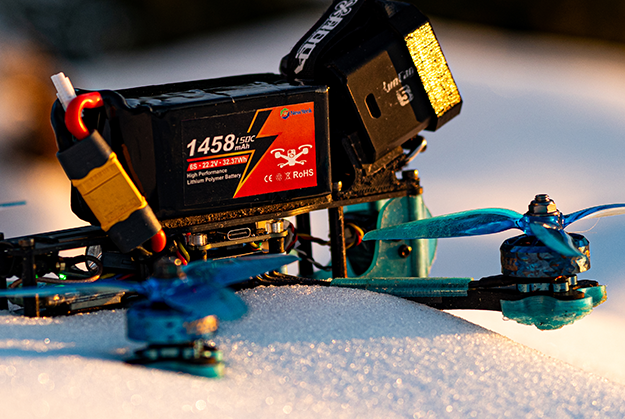
There is no single best battery for FPV drone use. The right choice depends on how the drone is built and how it is flown. That is why Yattox separates FPV battery solutions by real applications such as racing, freestyle, cinematic, micro, long-range, and heavy-lift FPV.
Quick FPV Battery Selection Table
FPV Application | Better Battery Direction | Suggested Starting Point |
5-inch racing | Higher-discharge, lighter pack | Competition Performance series, 3S/6S 1300–1550mAh, 100C |
5/6-inch freestyle | Moderate capacity, low-sag pack | 1450–1550mAh direction |
2.5/3.5-inch cinematic | Stable-output pack | Smooth-output FPV pack direction |
Micro FPV | Small efficient pack | Avoid oversized capacity |
Long-range FPV | Higher-capacity efficient pack | Endurance-focused pack direction |
Heavy-lift FPV | Continuous-discharge pack | Load-focused battery direction |
Best Battery Direction by FPV Drone Type
5-Inch Racing FPV
For 5-inch racing FPV, I would start with our “competition performance drone battery series”. For this type of build, the most practical direction is 3S or 6S packs in the 1300–1550mAh range with 100C output. That combination makes more sense when your goal is faster response, cleaner acceleration, and sharper corner exits.
5/6-Inch Freestyle FPV
For 5/6-inch freestyle, I would go with a more balanced setup instead of chasing the most extreme pack. Freestyle needs strong output, but it also needs control and consistency through repeated punch-outs, dives, and quick recoveries. In most cases, the 1450mAh to 1550mAh range is a more natural fit because it gives you enough power to keep the quad lively without making it feel overly heavy.
2.5/3.5-Inch Cinematic FPV
For 2.5/3.5-inch cinematic FPV, I would focus on stable voltage and smoother power delivery. This type of flying is less about aggressive punch and more about clean movement, precise control, and steady footage. A battery that keeps output consistent will usually do more for the flight experience than one chosen only for higher burst numbers.
Micro FPV
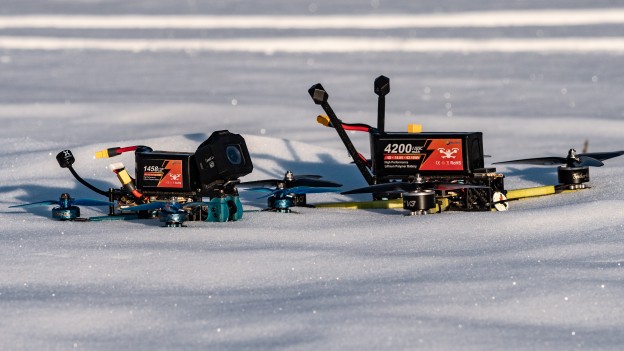
For micro FPV, the best approach is usually the simplest one: keep the battery light. Once the pack gets too large, the drone can lose efficiency and feel less responsive. A smaller pack that stays efficient and runs cooler in normal use is often the better choice for this category.
Long-Range and Heavy-Lift FPV
For long-range FPV, I would focus on efficiency, low sag, and stable discharge over distance. For heavy-lift FPV, the priority shifts to sustained output and thermal stability under load. These two setups may both look power-hungry, but they solve different problems, so the battery choice should be different as well.
Best Battery Direction by Flying Style
If you are choosing between packs, flying style is often the quickest way to narrow the answer.
For Racing
For racing, go lighter and faster. The better choice is usually the pack that helps the quad stay sharp through gates, corners, and repeated throttle changes, even if it gives you less total flight time.
For Freestyle
For freestyle, look for a pack that feels balanced from takeoff to landing. You want enough power for quick moves and recoveries, but you also want the session to feel smooth instead of overly aggressive or too short.
For Cinematic and Casual FPV
For cinematic or casual flying, choose a battery that keeps the quad steady and predictable. In this kind of use, clean control and a calmer power feel usually matter more than pushing the strongest output possible.
For Long-Range
For long-range FPV, choose the pack that supports distance without turning the drone into a heavy platform. A good long-range setup should feel efficient, manageable, and dependable over a longer route.
Which Specs Matter Most?
Once you know how you want the drone to fly, use the specs only as a way to confirm the right direction.
Voltage
Check voltage first because it sets the battery platform your build can run. This is the basic compatibility check before you compare anything else.
Capacity
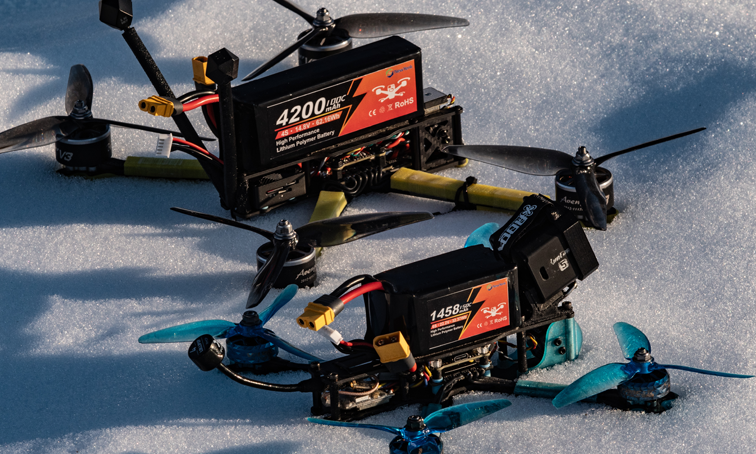
Use capacity to decide how much flight time you want to trade for extra weight. A bigger pack can help you stay in the air longer, but it may also make the quad feel less agile.
Discharge Performance
Use discharge performance to judge how demanding the build can be under throttle. If your flying style depends on quick power delivery, this becomes a more important part of the decision.
Weight and Fit
Use weight and fit as the final filter. The pack should mount properly, suit the frame, and still make sense once everything is assembled on the drone.
Conclusion
If you want more than a generic answer, Yattox is set up to help you narrow the choice down faster. The brand highlights tested burst C-rating verification, ultra-low IR matching, stable voltage output, reinforced lead design, and end-to-end in-house production for FPV batteries. It also supports parameter and specification communication for different FPV applications, works directly through 3 self-owned factories, runs ISO-certified workshops with 95% automation, 100% OCV inspection and IR testing, ships to 50+ countries, and offers 3–7 days rapid prototyping for project support.
Ready to stop guessing and choose the right FPV battery for your exact build? Send Yattox your drone type, flying style, target flight time, and connector requirements today, and get a faster, application-matched recommendation from a direct manufacturer built for real FPV performance.