


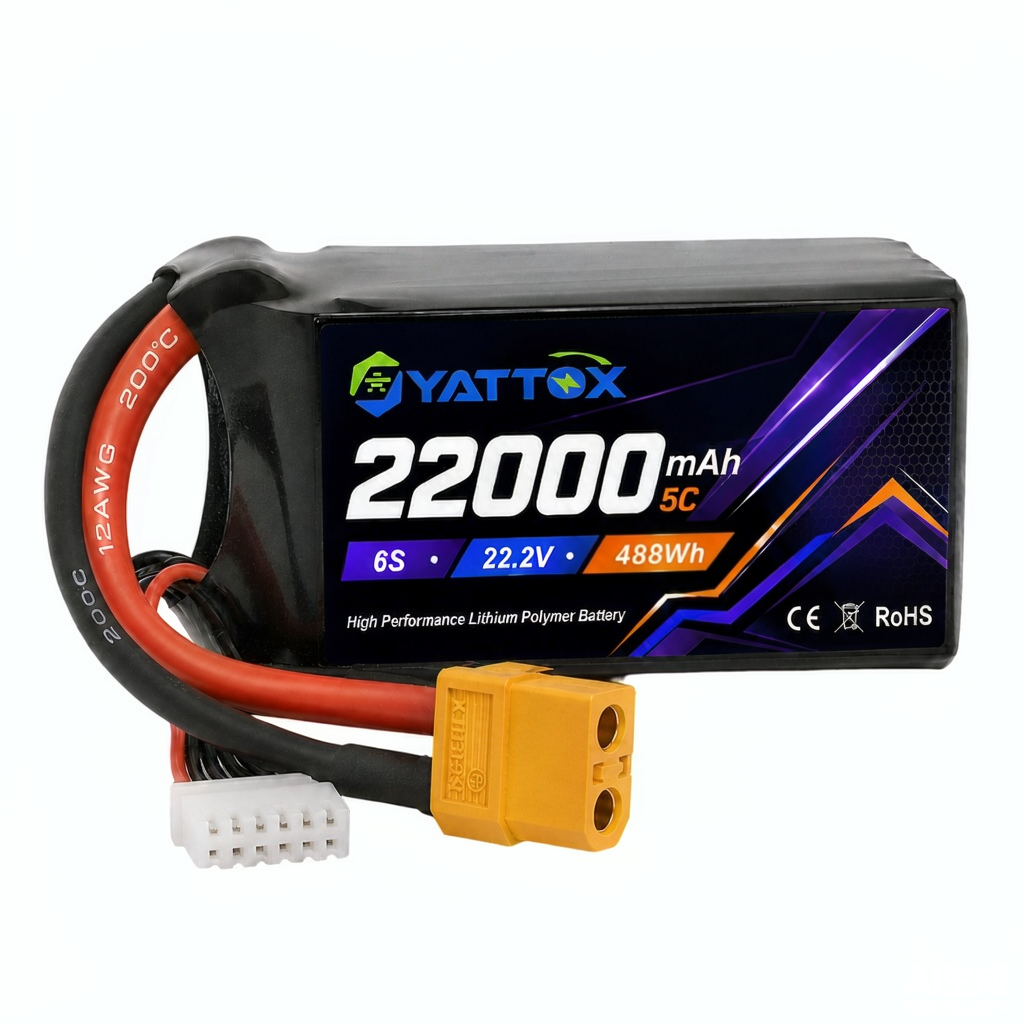
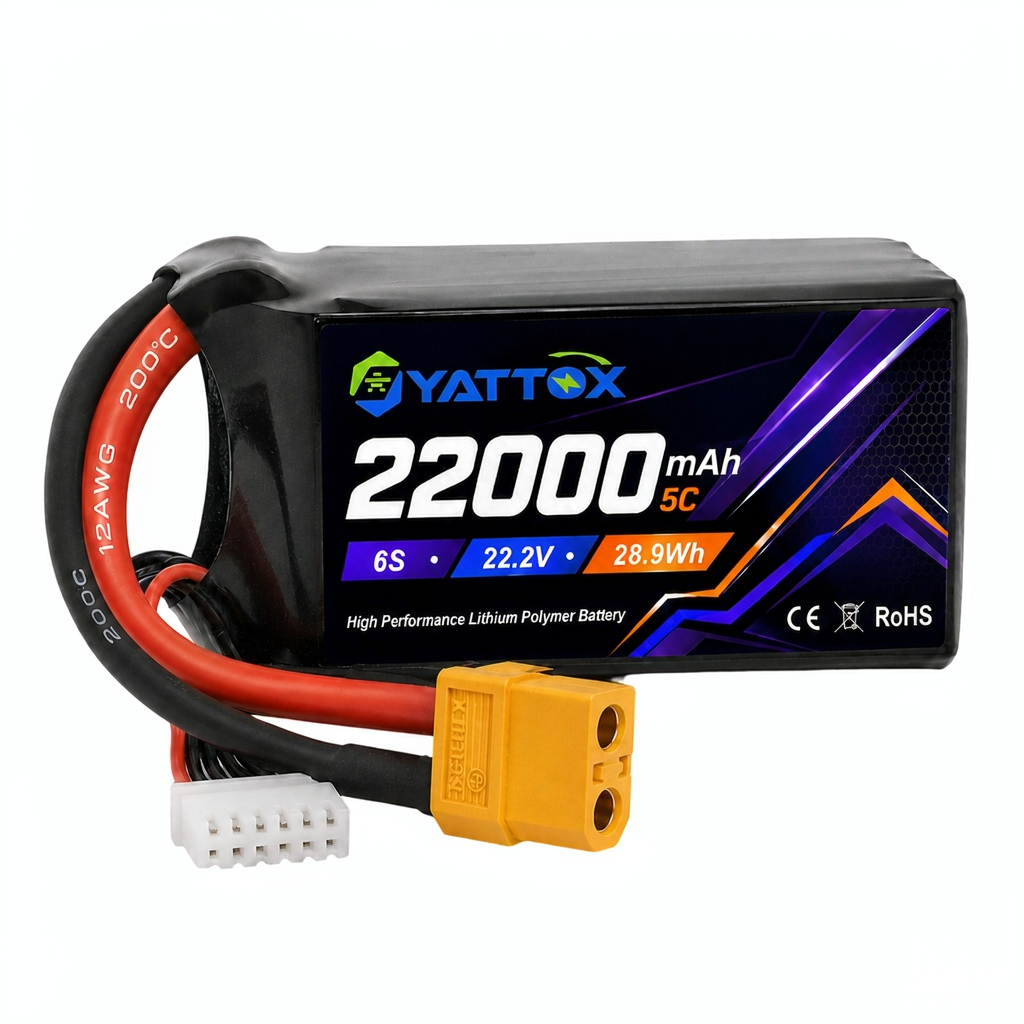
6S 60000mAh 22.2V LiPo Battery
YATTOX's 6S 60000mAh LiPo battery provides 1332Wh of rated energy on a 22.2V platform. At this capacity, current demand, power connections and cable routing deserve attention alongside battery-bay space and mounting arrangements.
·Configuration: 6S
·Nominal Voltage: 22.2V
·Capacity: 60,000mAh (60Ah)
·Rated Energy: 1332Wh
·Discharge Rate: 10C (label rating)
60Ah LiPo Battery for UAV Power Integration
A 60Ah LiPo Battery for UAV Power System Planning
With a nominal capacity of 60Ah, this 6S lithium polymer battery provides 1332Wh of rated energy on a 22.2V platform. At this capacity, current demand, power connections and cable routing deserve attention alongside battery-bay space and mounting arrangements.
Evaluate the Complete Battery Configuration
Capacity is only one part of battery selection. At 60Ah, the pack mass of approximately 3,600g and its dimensions must be assessed against the aircraft weight allowance, payload plan and installation space before selection.
Plan at System Level
Use the stated electrical and mechanical specifications as a starting point, then confirm the final fit, current demand and electrical compatibility against the aircraft before volume procurement.
22.2V 6S LiPo Battery Specifications
The main electrical and physical specifications of this 60,000mAh LiPo battery are listed below. Weight and dimensions are approximate reference values; check the final battery dimensions and mounting clearances when planning integration.
Battery Weight and UAV Payload Planning
At approximately 3,600g, a 60Ah battery becomes a significant part of the aircraft takeoff weight. The practical question is how the complete battery configuration fits the aircraft weight and payload limits.
Battery Mass in the Weight Budget
Include the battery, mounting hardware, cables and all mission equipment when calculating takeoff weight. Confirm the actual mass against the final production specification.
Payload Capacity and Battery Weight
Check how the selected battery affects the remaining allowance for cameras, sensors, spraying equipment or other payloads. The actual allowance depends on the airframe, propulsion system and maximum takeoff weight.
Energy Versus Battery Mass
Compare rated energy with mass as one part of system evaluation. A higher nominal energy figure does not by itself establish longer flight time. Do not treat a competitor energy-density figure as a specification of this LiPo product.
Aircraft-Level Validation
Confirm thrust margin, power consumption and operating reserve using the aircraft manufacturer data and representative tests.
Battery Installation Dimensions and Space Requirements
Before selecting a 60Ah battery, compare its approximate dimensions of 233 × 62.2 × 123mm with the aircraft battery compartment and mounting arrangement. Check the available length, width and height, including clearance for cables and connectors.
Secure Mounting and Access
Confirm the battery can be restrained against movement and vibration without interfering with nearby components. Allow additional clearance for the cable exit, XT90 connection and retaining hardware.
Custom Platform Integration
For custom UAV platforms, evaluate the battery together with the tray, straps, wiring route and center-of-gravity requirements. Use the final production dimensions when checking installation fit.
Power Distribution and Wiring Requirements
At 60Ah, electrical load sets the power distribution requirements. Review the connector, cable routing and current demand together as one electrical setup before installation.
XT90 Connection and Polarity
An XT90 connector is listed as the main power connection. Check the mating connector, polarity, cable routing and expected current before installation. Do not select a connector based only on color or appearance.
Cable Routing and Current Demand
Keep the red and black power leads clear of sharp edges, moving parts and heat sources. Compare propulsion current demand with the documented discharge limits and review protection devices as part of the electrical setup.
10C Label and Discharge Limits
The 10C marking is a labeled rating, not a verified continuous or peak current figure. A 60Ah capacity multiplied by 10C equals 600A mathematically, but that calculation is not proof of a discharge current rating.
Charging a 6S Lithium Polymer Battery
Use a charger designed for lithium polymer batteries and compatible with a 6S cell configuration. Follow the battery manufacturer charging instructions and the charger operating guidance.
Check Before Charging
Verify the cell count, charging mode, balance lead connection and permitted charging current. Use the specified balance-charging procedure where required, and charge in a monitored area.
Do Not Infer From Capacity
Do not determine charging current or charging time from capacity alone. Follow the battery documented charging limits.
FAQ About the 6S 60,000mAh LiPo Battery
Answers cover 1332Wh rated energy, the 10C marking, XT90 connection, mounting space, charging and quotation requirements.
What is the nominal energy of a 6S 60,000mAh LiPo battery?
At 22.2V and 60Ah, the rated energy is 1332Wh. Actual usable energy varies with load, voltage limits and operating conditions.
Does the 10C label confirm 600A continuous discharge?
No. A 60Ah capacity multiplied by 10C equals 600A mathematically, but that calculation is not proof of a continuous or peak current rating. Use the applicable discharge specifications for system design.
What connector does the 60Ah pack use?
An XT90 connector is listed for the main power connection. Check the mating connector, polarity, cable routing and expected current before installation.
How much mounting space does the pack need?
Pack dimensions are approximately 233 × 62.2 × 123mm. Provide additional clearance for the cable exit, XT90 connection and retaining hardware, then check the finished assembly against the battery compartment.
Can I charge it with any 6S charger?
Use a charger that supports 6S lithium polymer batteries and follows the pack charging limits. Confirm the balance connection, charge mode and permitted current; cell count alone is not sufficient.
What details help YATTOX prepare a quotation?
Share the UAV voltage range, expected current demand, installation drawing, allowable pack mass, connection requirements, charging arrangement and quantity. Include any sample or drawing approval needs.
Explore Related 6S Options
Compare nearby capacities when balancing nominal energy, installed mass and interface requirements.
Explore the YATTOX UAV Battery Range for the full 6S selection.
Discuss Your 60Ah Project Requirements
Planning a UAV project around a 60Ah configuration? Share your aircraft configuration, payload target, installation space and electrical requirements with YATTOX.
Provide voltage, capacity, operating current, payload target, installation space, connector requirements and project quantity for a configuration discussion.
Related Products
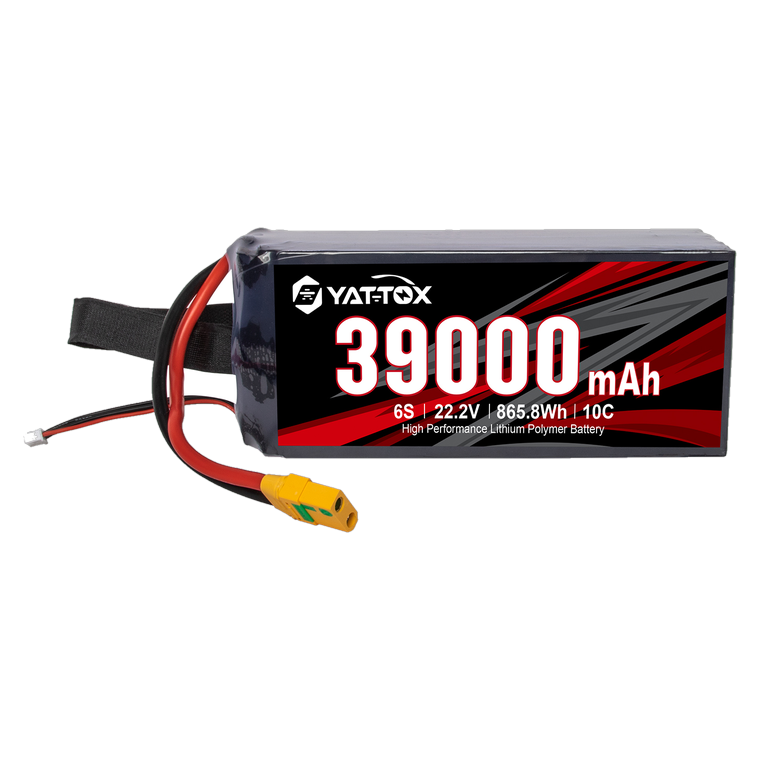
6S 39000mAh 22.2V LiPo Battery
The YATTOX 6S 39,000mAh lithium polymer battery provides a 22.2V nominal platform with 865.8Wh of rated energy. Review its capacity, physical fit and electrical requirements when evaluating a battery configuration for your UAV project.
·Configuration: 6S
·Nominal Voltage: 22.2V
·Capacity: 39,000mAh (39Ah)
·Rated Energy: 865.8Wh
·Discharge Rate: 10C (label rating)
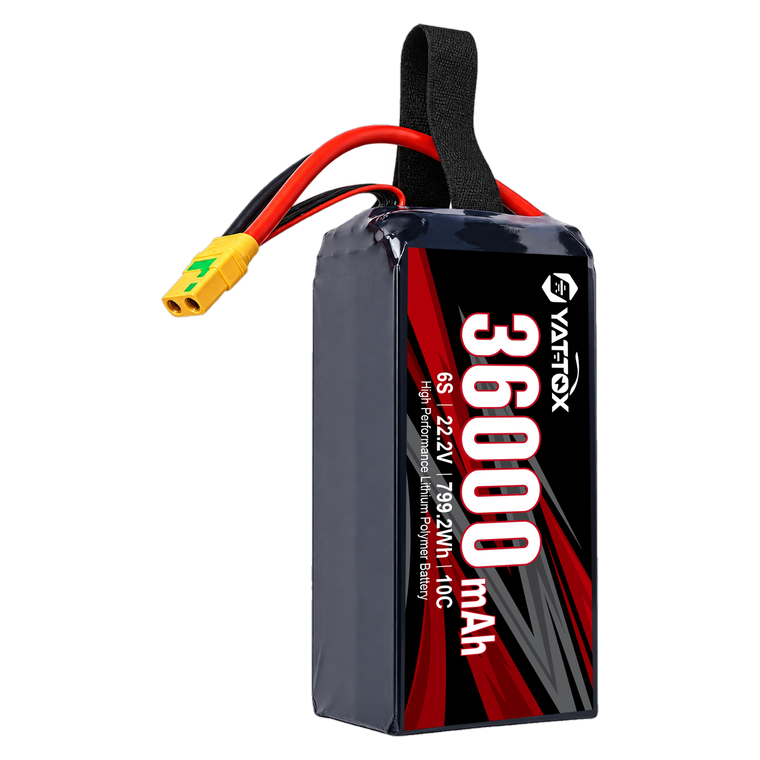
6S 36000mAh 22.2V LiPo Battery
Rated at 22.2V with 799.2Wh of nominal energy, this 6S 36,000mAh lithium polymer battery carries a labeled 10C discharge rate. It is designed for UAV power applications where capacity, voltage and system compatibility must be evaluated together.
·Configuration: 6S
·Nominal Voltage: 22.2V
·Capacity: 36,000mAh (36Ah)
·Rated Energy: 799.2Wh
·Discharge Rate: 10C (label rating)
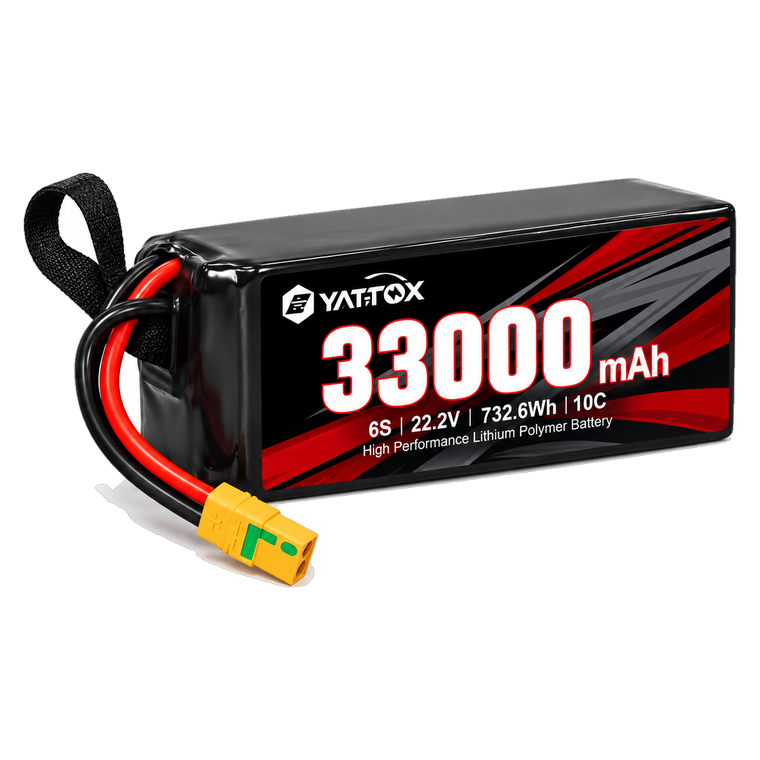
6S 33000mAh 22.2V LiPo Battery
Rated at 22.2V with 732.6Wh of nominal energy, this 6S 33,000mAh LiPo battery carries a labeled 10C discharge rating. Confirm charging, current and installation requirements against your aircraft before ordering.
·Configuration: 6S
·Nominal Voltage: 22.2V
·Capacity: 33,000mAh (33Ah)
·Nominal Energy: 732.6Wh
·Discharge Rate: 10C (label rating)