


If you use FPV drones, RC aircraft or other weight-sensitive high-performance systems, you may have seen batteries labeled LiHV alongside standard LiPo packs. A LiHV battery is a high-voltage lithium-polymer battery designed to operate at a higher maximum charge voltage than a conventional LiPo cell. In common FPV and RC applications, a standard LiPo is typically rated around 3.7V nominal and 4.20V fully charged, while a common LiHV cell is rated around 3.8V nominal and can be charged to 4.35V.
That voltage difference can provide more usable energy and a higher starting voltage without necessarily increasing pack size, which is why LiHV batteries are especially common in micro FPV drones and other applications where weight and performance matter. It does not, however, mean that LiHV is automatically better than LiPo. Charger compatibility, electronics voltage limits, current demand, battery life and the way the aircraft or RC system is used all need to be considered before switching.
What Is a LiHV Battery?
LiHV stands for Lithium High Voltage. In the FPV and RC market, the term generally refers to a lithium-polymer cell formulated to tolerate a higher charge cut-off voltage than a standard 4.20V LiPo.
The most familiar LiHV configuration is approximately 3.8V nominal and 4.35V fully charged per cell. High-voltage lithium-polymer technology is not limited to that single specification, however. Some manufacturers also produce 3.85V/4.40V, 3.95V/4.45V and other high-voltage cell platforms. The voltage printed on the battery or specified by its manufacturer should therefore take priority over a generic assumption that every LiHV cell uses exactly the same limits.
For most FPV pilots comparing a conventional LiPo with a LiHV pack, the practical distinction is much simpler: the LiHV pack can start the flight at a higher fully charged voltage.
LiHV vs LiPo: What Is the Main Difference?
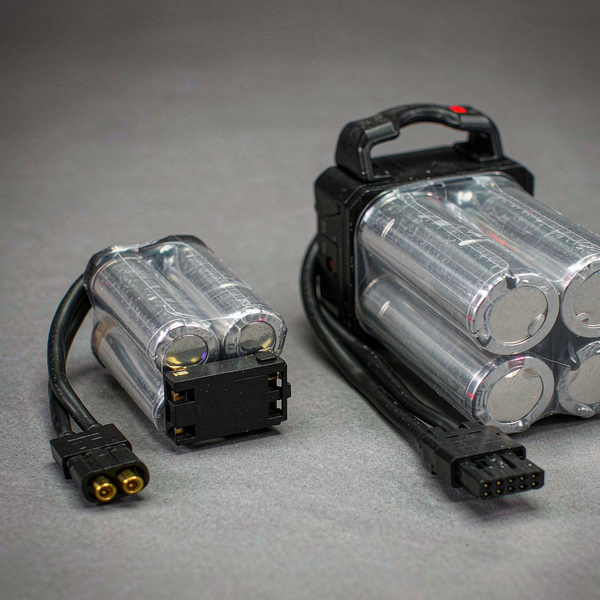
LiHV and standard LiPo batteries belong to the same broader lithium-polymer family, so they can look almost identical from the outside. Their most important difference is the voltage range they are designed to operate within.
The 4.20V versus 4.35V difference may look small on a single cell, but it becomes more noticeable as cells are connected in series. A 1S standard LiPo reaches 4.20V fully charged, while a typical 1S LiHV reaches 4.35V. On a 6S pack, those maximum voltages become approximately 25.2V and 26.1V respectively.
That means LiHV selection is not only a battery decision. The complete electrical system must tolerate the higher fully charged pack voltage.
| Comparison | Standard LiPo | Common LiHV |
|---|---|---|
| Typical nominal voltage per cell | 3.7V | 3.8V |
| Typical maximum charge voltage | 4.20V/cell | 4.35V/cell |
| Charger requirement | Standard LiPo mode | LiHV-compatible mode for full charge |
| Starting voltage | Lower | Higher |
| Energy available at similar size | Depends on cell design | Can be higher |
| FPV use | Widely used across racing, freestyle and larger platforms | Particularly common in micro FPV and performance-focused builds |
| Electronics compatibility | Broad | Full-charge voltage must be checked |
| Cycle life | Depends on cell design and use | Can experience greater degradation when repeatedly operated at maximum voltage |
| Cell Count | Standard LiPo Fully Charged | Typical LiHV Fully Charged |
|---|---|---|
| 1S | 4.20V | 4.35V |
| 2S | 8.40V | 8.70V |
| 3S | 12.60V | 13.05V |
| 4S | 16.80V | 17.40V |
| 6S | 25.20V | 26.10V |
How Does the Higher LiHV Voltage Affect FPV and RC Performance?
Electric motors respond to supplied voltage, so a higher pack voltage can increase motor speed and available power when the motor, ESC and overall system are designed to accept it. This is one reason LiHV packs are attractive for FPV aircraft where pilots want stronger initial throttle response or more performance without simply fitting a larger and heavier battery.
The difference is usually most noticeable near the beginning of the discharge cycle, when the LiHV pack starts at its higher voltage. Independent FPV testing has found that this advantage becomes smaller as the battery discharges and the operating voltage moves closer to that of a conventional LiPo.
It is therefore inaccurate to assume that a LiHV battery makes a drone dramatically faster throughout the entire flight. Actual performance still depends on motor KV, propellers, ESC limits, current draw, battery internal resistance, aircraft weight and the characteristics of the particular cells being compared.
Does a LiHV Battery Provide More Flight Time?
Potentially, but the answer depends on the batteries being compared.
Because LiHV cells operate across a higher voltage range, they can provide more usable energy than a conventional cell of similar physical size when the cell design is optimized for that higher voltage. High-voltage lithium-polymer manufacturers commonly position this as an energy-density advantage, and independent FPV testing has also found examples where similar-weight LiHV packs delivered more measured capacity than comparable conventional LiPo packs.
That does not mean every LiHV pack will automatically fly longer than every LiPo pack. Flight time depends on total watt-hours, battery weight, discharge efficiency and how much power the aircraft consumes. Comparing only mAh can be especially misleading because voltage is also part of the energy equation.
For an FPV build, the useful question is therefore not simply “Does LiHV have more capacity?” but “Does the additional usable energy offset the pack's weight while still meeting the current demand of this aircraft?”
Does LiHV Have a Shorter Cycle Life Than LiPo?
There is no universal cycle-life number that can be applied to all LiHV batteries. Cell chemistry, charge voltage, discharge depth, current, operating temperature, storage state of charge and manufacturing quality all affect how quickly a lithium battery loses capacity.
Operating lithium cells at higher states of charge generally places more stress on the cell, so repeatedly charging a LiHV battery to its maximum rated voltage can affect long-term capacity retention. In one controlled FPV-oriented 100-cycle comparison, the tested LiHV pack lost more measured capacity than the conventional LiPo pack, although that result applies to the specific batteries and test conditions rather than every LiHV product on the market.
This is why broad statements such as “LiHV lasts 300 cycles” or “LiHV always has a shorter life than LiPo” are not reliable without a defined cell specification and test method. Buyers comparing batteries for repeated commercial or RC use should request cycle-life data under relevant charge voltage, discharge rate and temperature conditions.
Can You Charge a LiHV Battery With a LiPo Charger?
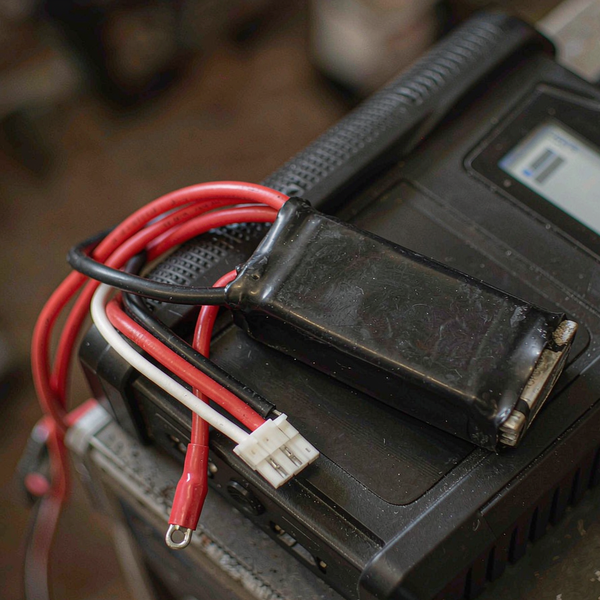
The charger matters because the charge termination voltage is one of the defining differences between LiPo and LiHV.
To charge a typical 4.35V LiHV battery to its full rated voltage, the charger needs a dedicated LiHV or high-voltage lithium setting that supports that voltage. Charger specifications should be checked rather than assuming that every modern balance charger supports LiHV. Dedicated battery chargers, for example, may list 3.8V nominal and 4.35V full-charge settings separately from their standard 3.7V/4.20V LiPo mode.
A LiHV battery can generally be charged only to 4.20V per cell if its manufacturer permits it. This does not use the full high-voltage operating window, so some of the additional available energy is left unused. Oscar Liang's LiHV testing likewise notes that LiHV cells can be operated at the lower LiPo charge voltage, although the pack will not deliver its full rated capacity.
The opposite situation is much more important: a standard 4.20V LiPo must not be charged to 4.35V simply because the charger has a LiHV setting. A conventional LiPo was not designed for that higher termination voltage, and overcharging increases the risk of swelling, overheating, permanent cell damage or thermal failure.
Can You Replace a LiPo Battery With LiHV?
Sometimes, but physical fit and connector compatibility are not enough to make the replacement safe.
The first specification to check is the maximum voltage seen by the entire system. A LiHV pack with the same cell count as a LiPo pack will have a higher voltage when fully charged.
The ESC is not the only component that matters. Flight controllers, voltage regulators, video transmitters, receivers, servos and other electronics may also be exposed directly or indirectly to battery voltage.
If a system has been designed close to the upper limit of a standard LiPo configuration, the additional LiHV voltage may remove part of its electrical safety margin. The correct approach is to confirm the manufacturer's supported input range for the complete system before using the higher-voltage pack.
Is LiHV Better for FPV Drones?
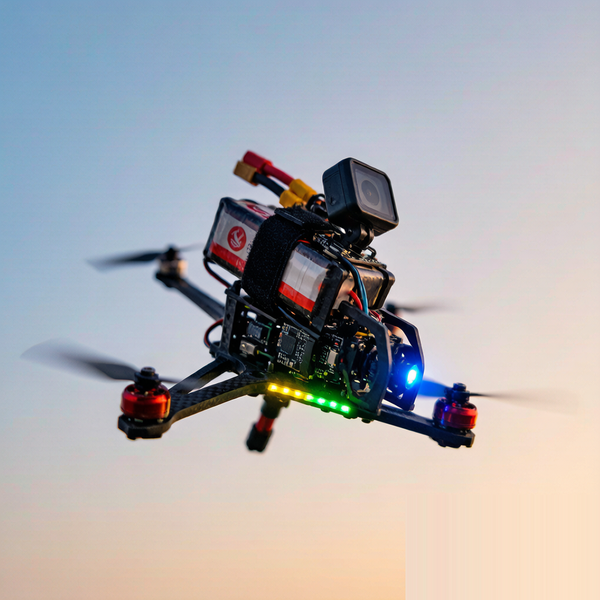
LiHV is particularly useful when an FPV platform benefits from additional voltage or energy without accepting much additional battery mass. This helps explain its popularity in 1S Tiny Whoops and other micro FPV platforms, where even small changes in weight and voltage can noticeably affect flight behavior. Current FPV testing and product surveys show LiHV to be especially common in this segment.
For larger FPV drones, the decision is less automatic. Racing and freestyle builds already operate at high current, and a pilot needs to consider cell quality, actual voltage sag, discharge capability, pack weight and replacement cost rather than choosing LiHV based on nominal voltage alone.
If you are selecting an FPV Battery, treat LiHV as one possible voltage platform rather than a universal upgrade. The pack still needs to match the motors, ESC, frame, target flight style and charger.
Is LiHV Useful for RC Cars, Aircraft and Other RC Systems?
The same principles apply to RC vehicles, airplanes and helicopters, but their operating demands can be very different.
An RC racing car may benefit from higher voltage and strong power delivery, while an RC airplane may place greater importance on pack weight, energy capacity and center of gravity. Helicopters can impose sustained high-current loads that make discharge capability and heat management just as important as nominal voltage.
Before selecting an RC Battery, check whether the motor, ESC and onboard electronics support the LiHV pack's maximum charged voltage and whether the battery can supply the required continuous and peak current.
The label “LiHV” alone does not tell you whether a battery is suitable for a particular RC model.
LiHV Battery Decision Matrix
For users deciding between LiHV and standard LiPo, the choice is easier when the system requirement is evaluated first.
This is also why battery selection should not stop at the chemistry category. The broader guide to different drone battery types helps distinguish LiPo and LiHV from Li-ion, semi-solid and other UAV battery approaches when the mission requirement goes beyond FPV performance.
| Your Priority or System Condition | Direction to Investigate |
|---|---|
| Existing system is designed only for standard LiPo voltage | Stay with standard LiPo unless compatibility is confirmed |
| Charger does not support LiHV mode | Standard LiPo is simpler |
| Micro FPV / Tiny Whoop where weight is critical | LiHV is worth evaluating |
| Need slightly more voltage without increasing cell count | LiHV may be suitable |
| Electronics have limited voltage headroom | Check specifications before using LiHV |
| Maximum battery service life is the primary objective | Compare actual cycle data rather than assuming LiHV is better |
| High-current racing or freestyle use | Compare real discharge performance, internal resistance and weight |
| Long endurance is the main objective | Compare Wh, total pack weight and discharge efficiency rather than chemistry name alone |
What Should You Check Before Choosing a LiHV Battery?
A LiHV pack should be evaluated as part of the complete power system. Voltage is the first filter, but it is not the only one.
Temperature limits deserve particular attention because there is no single operating temperature that applies to all LiHV batteries. Low-temperature formulations, high-rate FPV cells and general-purpose high-voltage pouch cells can have substantially different ratings. The cell or pack datasheet should therefore be used instead of applying a generic LiHV temperature range.
| Parameter | What to Confirm |
|---|---|
| Cell specification | Nominal voltage and maximum charge voltage stated by the manufacturer |
| Cell count | 1S, 2S, 3S, 4S, 6S or another configuration |
| Maximum pack voltage | Whether every connected component can tolerate the fully charged voltage |
| Capacity | Required runtime without excessive additional mass |
| Continuous current | Normal motor and system load |
| Peak current | Acceleration, punch-outs, takeoff and other high-load events |
| Pack weight | Effect on handling, thrust-to-weight ratio and flight time |
| Dimensions | Physical fit and center-of-gravity requirements |
| Connector and wiring | Current capability and compatibility |
| Charger | Correct LiHV charge profile and balance charging capability |
| Operating conditions | Temperature, vibration and intended duty cycle |
LiHV Battery Safety and Storage
LiHV and LiPo batteries require many of the same basic precautions because both are high-energy lithium-polymer systems. Physical damage, excessive current, overcharging, deep over-discharge and inappropriate storage can all contribute to swelling, degradation or thermal failure.
The additional concern with LiHV is choosing the correct voltage profile. A charger should be set according to the battery's actual specification, not according to appearance or connector type. Standard LiPo and LiHV packs can look almost identical, so batteries used in the same workshop should be clearly identified.
Leaving lithium-polymer batteries fully charged for extended periods can also accelerate degradation. Where supported by the battery manufacturer and charger, packs that will not be used soon should be returned to the specified storage condition rather than left at maximum charge.
Frequently Asked Questions
1. Is LiHV the same as LiPo?
LiHV is generally considered a high-voltage variation within the lithium-polymer battery family. A conventional LiPo is commonly rated around 3.7V nominal and 4.20V fully charged, while a typical FPV-oriented LiHV is around 3.8V nominal and 4.35V fully charged. Exact specifications still depend on the cell.
2. Can I use a LiHV battery in a LiPo drone?
Only when the drone's ESC, flight controller and other voltage-sensitive electronics can accept the LiHV battery's higher fully charged voltage. Using the same cell count does not mean both packs have the same maximum voltage.
3. Can I charge LiHV to only 4.20V?
A 4.35V-rated LiHV battery can generally operate below its maximum charge voltage if permitted by the battery manufacturer, but charging it only to 4.20V leaves part of its available energy unused. Do not reverse this logic by charging a standard 4.20V LiPo to 4.35V.
4. Does LiHV always provide longer flight time?
No. LiHV can provide more usable energy in a similar size or weight, but real flight time depends on watt-hours, battery mass, aircraft efficiency, current draw and flight style. A poorly matched LiHV pack can perform worse than a correctly selected LiPo.
5. Does a LiHV battery have a shorter lifespan?
It can experience faster capacity degradation when repeatedly operated at higher maximum voltage, but there is no universal LiHV cycle-life figure. Cell design, temperature, charge rate, discharge depth, storage conditions and operating current all influence battery life.
6. Is every 3.8V LiPo a LiHV battery?
A 3.8V nominal lithium-polymer cell is commonly associated with a high-voltage platform, but you should confirm the specified maximum charge voltage rather than identify the chemistry from nominal voltage alone. A 3.8V/4.35V specification is a common LiHV configuration.
Should You Choose LiHV or Standard LiPo?
Choose according to what the system actually needs rather than treating LiHV as the next generation of every LiPo pack.
LiHV deserves consideration when additional voltage or usable energy is valuable and the aircraft, RC platform and charger are designed for the higher charge voltage. Standard LiPo remains a practical option when broad compatibility, established charging equipment and straightforward system integration are more important.
For FPV and RC projects, the most useful comparison starts with the required cell count, maximum system voltage, continuous and peak current, target capacity, pack dimensions, weight limit and connector. Once those parameters are defined, you can determine whether a conventional LiPo or high-voltage configuration provides the better engineering fit.
If you are developing a custom FPV Battery or RC Battery, send your voltage range, capacity target, maximum current, dimensions, weight limit, connector and charger requirements. Yattox can evaluate the battery configuration around the actual power system rather than relying on a chemistry label alone.