


How Semi-Solid-State Batteries Are Changing the Drone Industry
June 29, 2026
This article explores what semi-solid-state batteries are, how they compare with traditional drone batteries, their advantages and limitations, and their potential impact on FPV, commercial, and industrial UAV systems. It also explains where this technology can be applied today and how it may shape the future of drone power systems.
Table of Contents
What Is a Semi-Solid-State Battery?
A semi-solid-state battery is a hybrid energy storage technology positioned between traditional Li-ion/LiPo batteries and fully solid-state batteries. It uses a mixed electrolyte structure to improve safety and stability while maintaining efficient ion movement.
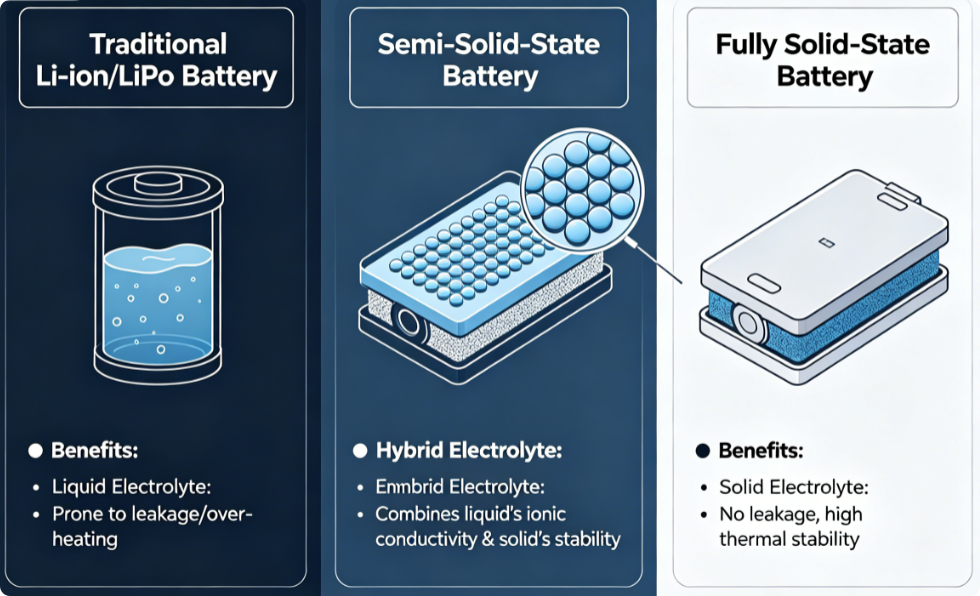
Compared with standard drone batteries like LiPo and Li-ion, it reduces the amount of flammable liquid electrolyte, aiming to enhance safety and energy performance at the same time.
Because of this balance between safety and efficiency, semi-solid-state batteries are considered a promising next-generation power option for drones and other high-demand applications.
Semi-Solid-State vs Traditional Drone Batteries
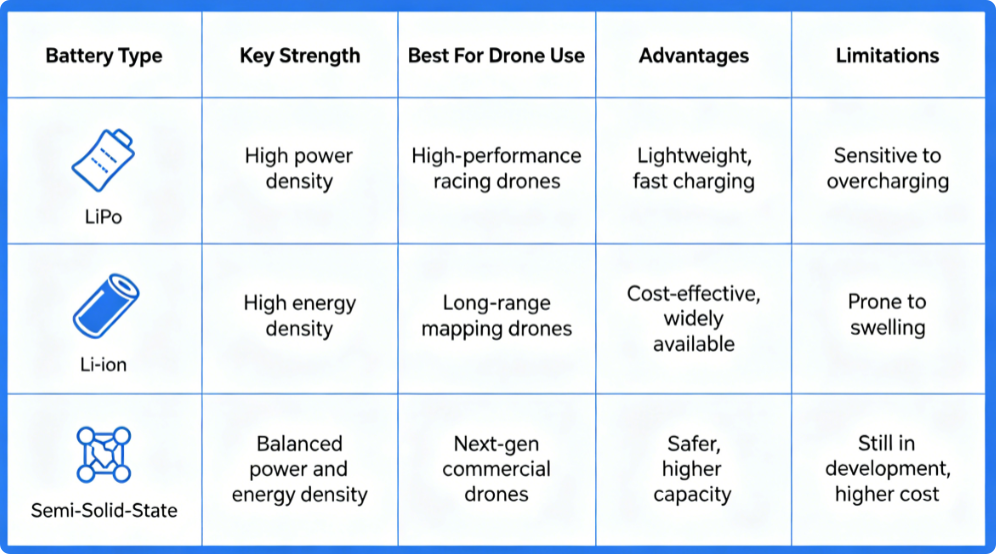
Battery Type | Key Strength | Best For Drone Use | Advantages | Limitations |
LiPo | High power output | FPV racing & freestyle drones | Strong burst power, high discharge rate, widely used | Lower safety, shorter flight time |
Li-ion | High energy density | Long-range & endurance drones | Longer flight time, stable performance, efficient energy use | Lower burst power, not suitable for aggressive flying |
Semi-Solid-State | Balanced safety & energy density | Future UAV systems (early-stage adoption) | Improved safety, higher energy potential, better thermal stability | High cost, limited availability, lower discharge vs LiPo |
Semi-solid-state batteries aim to balance the trade-offs between LiPo’s high power output and Li-ion’s long endurance. However, in current drone applications, no single battery type fully replaces the others, as each is optimized for different flight performance requirements.
Semi-Solid-State Drone Battery Advantages
1.Higher energy density potential in semi-solid-state drone batteries
Semi-solid-state battery technology is generally expected to improve energy density compared to conventional Li-ion and LiPo systems. In current industry research and prototype data, energy density improvements are typically estimated in the range of 10% to 30% higher Wh/kg, depending on the electrolyte formulation and cell design.
For drone applications, this improvement means that the same battery size could potentially deliver longer flight time or allow a lighter battery to achieve the same endurance. This is particularly important for long-range and industrial UAV systems where endurance efficiency is a key performance metric.
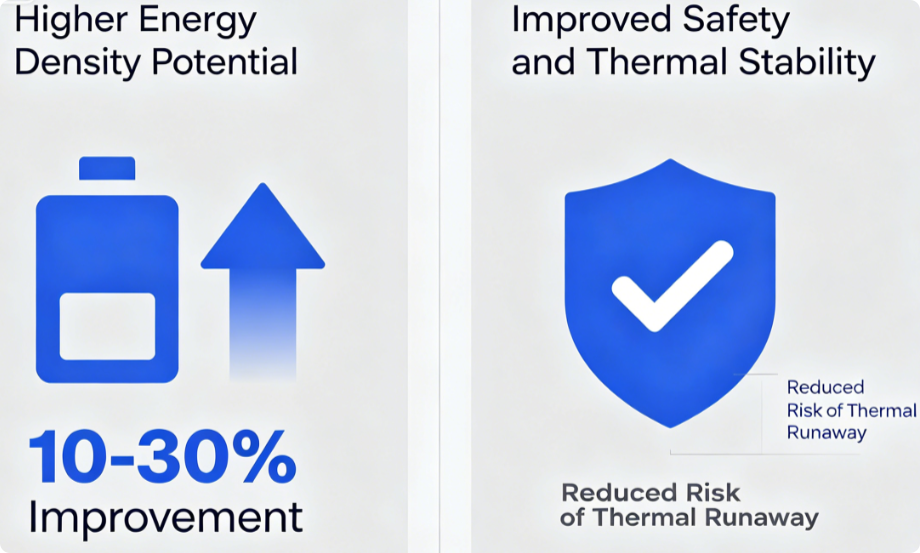
2.Improved safety and thermal stability in semi-solid-state drone batteries
One of the key advantages of semi-solid-state batteries is improved thermal and chemical stability. By reducing the proportion of flammable liquid electrolyte, the risk of thermal runaway is significantly reduced compared to traditional LiPo systems.
In many lab-scale tests and early commercial prototypes, semi-solid-state cells have shown better heat resistance and more stable performance under high discharge conditions. This allows them to maintain safer operation in demanding environments such as high-load UAV missions, continuous flight operations, and elevated temperature conditions.
Semi-Solid-State Drone Battery Limitations
1.High cost and limited production of semi-solid-state drone batteries
Semi-solid-state battery technology is still in an early commercialization stage, and current manufacturing processes are more complex than traditional Li-ion or LiPo production. As a result, production costs remain high, and large-scale mass adoption in the drone industry is still limited. Most available products are currently in prototype or early pilot-use stages rather than full consumer deployment.
2.Lower discharge performance compared to LiPo drone batteries
While semi-solid-state batteries improve energy density and safety, they are not yet optimized for high discharge rates required in FPV drones. Compared with LiPo batteries, which can deliver very high burst currents for aggressive acceleration and rapid throttle changes, semi-solid-state systems typically provide more moderate power output, making them less suitable for racing and freestyle FPV applications.
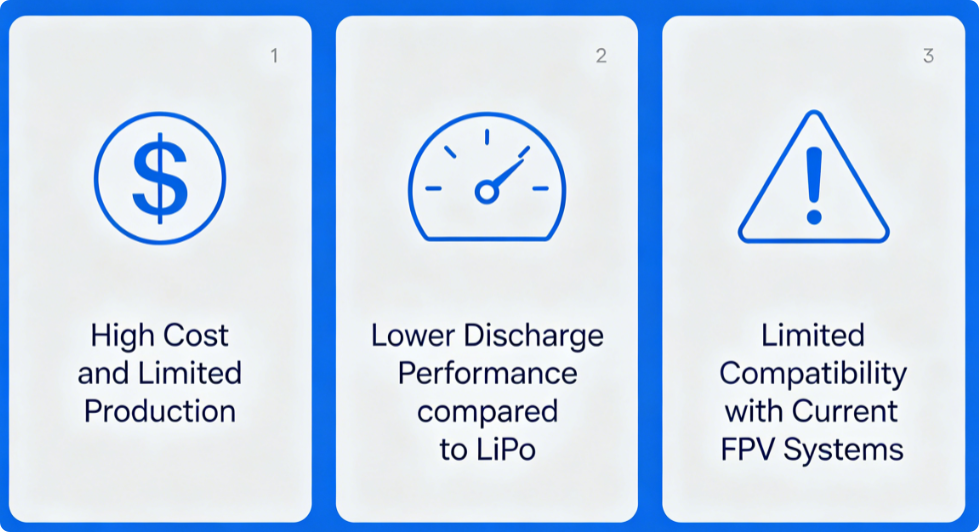
3.Limited compatibility with current FPV drone battery systems
Most FPV drones, ESCs, and power distribution systems are currently designed around LiPo standards such as 4S and 6S configurations. Semi-solid-state batteries do not yet follow a unified format in terms of voltage curves, discharge behavior, or connector standards, which limits direct plug-and-play compatibility with existing FPV platforms.
Impact of Semi-Solid-State Drone Batteries on the Drone Industry
1.Improving drone flight endurance in future UAV systems
Semi-solid-state batteries have the potential to significantly improve flight endurance by increasing energy density compared to conventional LiPo and Li-ion systems. In practical UAV applications, even a moderate gain in energy density can translate into longer mission time, reduced charging frequency, and improved operational efficiency for continuous drone deployment.
2.Enabling longer-range UAV systems
One of the most promising impacts is on long-range drone operations. Higher energy density and improved thermal stability make semi-solid-state batteries well-suited for endurance-focused missions such as aerial surveying, mapping, and infrastructure inspection, where extended flight range and stability are more important than burst power output.
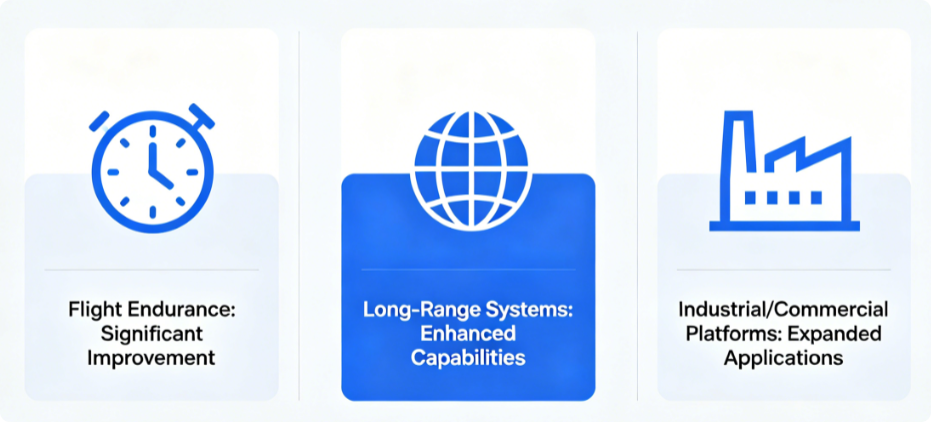
3.Driving upgrades in industrial and commercial drone platforms
In industrial and commercial applications, semi-solid-state technology could enhance reliability and safety in environments that require frequent or long-duration flights. This includes logistics drones, inspection UAVs, and automated aerial monitoring systems, where consistent energy performance and reduced thermal risk are key operational advantages.
4.Limited impact on racing FPV drones
Despite its advantages, semi-solid-state battery technology is expected to have limited short-term impact on racing and freestyle FPV drones. These applications require extremely high discharge rates and rapid power delivery, which current LiPo batteries still outperform. As a result, FPV racing systems will continue to rely on traditional LiPo technology for the foreseeable future.
Use Cases: Where Semi-Solid-State Drone Batteries Can Be Applied Today
1.Long-range drones (most suitable)
Semi-solid-state batteries are best suited for long-range UAV systems where endurance is the main priority. Early-stage data suggests an energy density improvement of around 10%–30% (Wh/kg) compared to conventional Li-ion batteries, which can translate into longer flight time or extended mission range depending on payload and drone size. This makes them particularly valuable for missions where efficiency matters more than peak power output.
2.Surveying and mapping UAVs
For surveying and mapping, consistent flight time and wide coverage are essential. Typical professional mapping missions last around 20–40 minutes, so even moderate gains in energy efficiency can reduce the number of landings and battery changes required. This improves overall workflow efficiency and allows larger areas to be covered in a single operation.
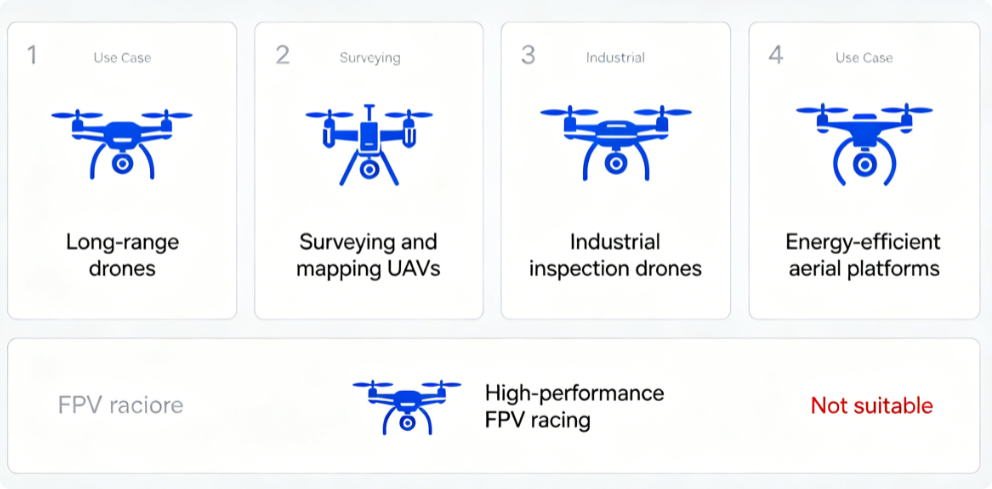
3.Industrial inspection drones
Industrial UAVs used in infrastructure inspection often operate in demanding environments such as power lines, pipelines, or wind farms. These missions involve repeated or continuous flights, often in high-temperature conditions above 40°C. Semi-solid-state batteries offer better thermal stability, which can improve operational reliability and reduce performance degradation under sustained load.
4.Energy-efficient aerial platforms
In applications such as environmental monitoring, agriculture, and data collection, drones prioritize endurance and stability over speed. Compared to conventional LiPo systems, semi-solid-state batteries can improve overall energy efficiency by reducing internal energy loss during long-duration, low-intensity flights. This results in more stable performance across extended missions.
5.Not suitable for high-performance FPV racing
High-performance FPV racing drones require extremely high discharge rates and instant power delivery, often involving short bursts of very high current. Current semi-solid-state batteries are not designed for this level of output, meaning they cannot yet match LiPo performance in racing or freestyle FPV scenarios where throttle response and power spikes are critical.
Future Outlook of Drone Battery Technology
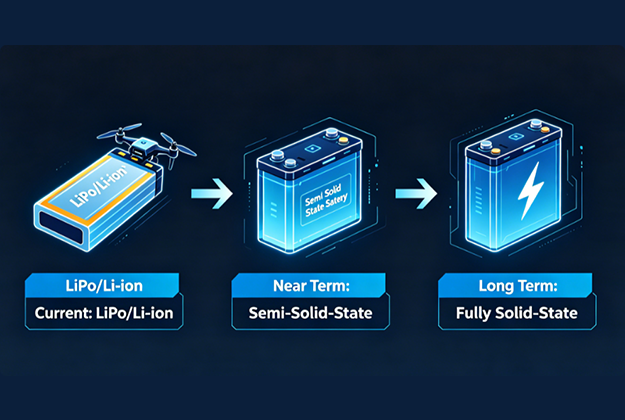
Drone battery technology is gradually evolving from LiPo and Li-ion toward semi-solid-state systems, with each step improving safety, energy density, and flight endurance. In the near term, LiPo and Li-ion will remain the mainstream for most drone applications, especially FPV and long-range systems.
Looking ahead, semi-solid-state batteries are expected to play a growing role in endurance-focused UAVs, while fully solid-state batteries represent the long-term direction for higher safety and energy efficiency in next-generation drone platforms.
Conclusion
Semi-solid-state batteries represent an important step in the evolution of drone power technology, bridging the gap between conventional lithium-based batteries and future solid-state systems. While they are not yet suitable for high-performance FPV racing, their advantages in energy density, safety, and thermal stability make them highly promising for long-range and industrial UAV applications.
For reliable UAV battery solutions and technical support, contact Yattox to explore suitable power systems for your drone applications and project requirements.