


For many RC enthusiasts, battery upgrades are one of the first improvements considered after using a vehicle for a period of time.
Most beginner and entry-level RC cars come with NiMH batteries because they are simple, reliable and easy to maintain. However, as users look for faster acceleration, stronger power response and longer driving time, many start considering whether switching to a LiPo battery is worthwhile.
The question is not simply whether LiPo batteries are more powerful than NiMH batteries. The more important question is whether your RC car can actually benefit from the upgrade.
A successful upgrade depends on several factors, including the motor, ESC, drivetrain, battery size and driving style.
This guide explains the real differences between LiPo vs NiMH for RC cars, what changes after upgrading, and what you should consider before making a NiMH to LiPo conversion.
LiPo vs NiMH for RC Cars: What Changes After an Upgrade?
The biggest difference between LiPo and NiMH batteries is how they deliver power during operation.
A traditional RC car NiMH battery has been widely used because it offers stable performance and simple maintenance. For casual driving, beginner models and users who prefer easy operation, NiMH batteries remain a practical choice.
A RC car LiPo battery, on the other hand, is designed for higher energy density and stronger power delivery. Compared with NiMH batteries, LiPo packs can maintain voltage more consistently when the motor demands higher current.
In real driving situations, this difference is usually noticed through acceleration response and overall vehicle performance.
| Comparison | NiMH Battery | LiPo Battery |
|---|---|---|
| Power delivery | Stable but lower output | Stronger and more consistent |
| Weight efficiency | Heavier for similar capacity | Higher energy density |
| Voltage stability | Drops more under heavy load | Maintains voltage better |
| Maintenance | Easier to manage | Requires proper charging and protection |
| Typical users | Beginners and casual drivers | Performance-focused RC users |
However, upgrading to LiPo does not automatically transform every RC car into a faster vehicle. The battery is only one part of the complete power system.
If the motor, ESC or drivetrain limits performance, the improvement may be smaller than expected.
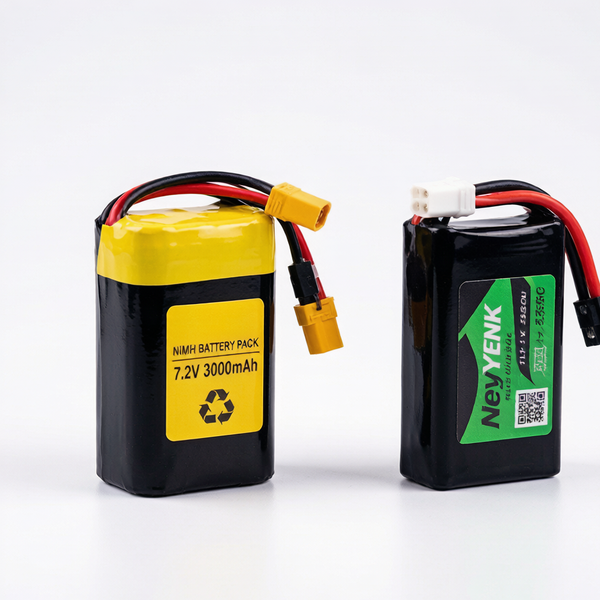
7.2V NiMH vs 2S LiPo: Is the Performance Difference Noticeable?
One of the most common upgrade questions among RC users is whether a 7.2V NiMH battery can be replaced with a 2S LiPo battery.
This comparison is popular because many traditional RC cars use 7.2V NiMH packs, while 2S LiPo batteries are widely used in modern RC applications.
Although the voltage values appear similar, the driving characteristics are different.
A 7.2V NiMH battery is mainly designed for reliable and simple operation. It can provide enough power for normal driving but may experience more noticeable voltage drop when the motor requires high current.
A 2S LiPo battery can provide more stable voltage output during acceleration. This means the motor can receive power more consistently, resulting in a more responsive throttle feeling and stronger acceleration.
For example, when driving a brushless RC car, switching from NiMH to LiPo can create a noticeable improvement because the vehicle electronics are usually capable of using the additional power.
However, before making the upgrade, users should confirm that the ESC supports LiPo batteries and that the vehicle components can handle the increased power output.
The goal is not simply installing the highest-performance battery, but finding the right balance between battery capability and vehicle design.
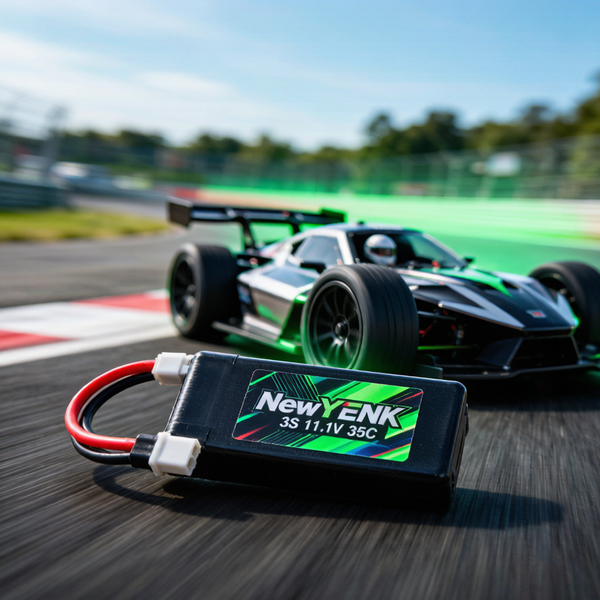
What Should You Consider Before a NiMH to LiPo Conversion?
A NiMH to LiPo conversion involves more than replacing the battery pack.
The first thing to check is the ESC compatibility. Many newer ESC systems support LiPo batteries and include low-voltage protection, but some older models may not.
LiPo batteries require protection against excessive discharge. Without proper ESC settings or battery management, the battery may lose performance or become damaged.
The motor and drivetrain should also be considered.
A higher-performance battery can deliver more current, which may increase stress on mechanical components. After upgrading, users should pay attention to motor temperature, ESC temperature and overall vehicle behavior.
Battery size is another practical consideration. The new battery must fit the available battery compartment, and the connector, cable position and mounting method should match the RC vehicle.
For this reason, choosing an RC battery should always start with understanding the vehicle requirements rather than only looking at capacity or discharge ratings.
Does a LiPo Battery Really Make an RC Car Faster?
Many users assume that installing a LiPo battery automatically increases maximum speed.
In reality, a battery upgrade mainly improves power delivery and acceleration. Maximum speed depends on the entire RC system.
The motor specification, gear ratio, ESC capability, tires and vehicle weight all influence final speed.
A LiPo battery can help an RC car reach its performance potential faster because it provides stronger and more stable power output.
For a brushless RC vehicle with a suitable ESC, the improvement can be significant.
However, for a basic brushed RC car with limited electronics, the difference may be less noticeable.
This is why battery upgrades should be considered as part of a complete system upgrade rather than a single-component replacement.
When Is a NiMH Battery Still a Better Choice?
Although LiPo batteries provide higher performance potential, NiMH batteries are still suitable for many RC users.
A NiMH battery may be the better choice when simplicity is more important than maximum performance.
For beginners, casual drivers or users who do not want to manage additional charging requirements, NiMH batteries remain convenient.
They are also a reasonable option for older RC models that were not designed around LiPo technology.
The best battery choice depends on how the vehicle is used.
A racing enthusiast may benefit from LiPo performance, while someone who drives occasionally in the backyard may prefer the easy ownership experience of NiMH.
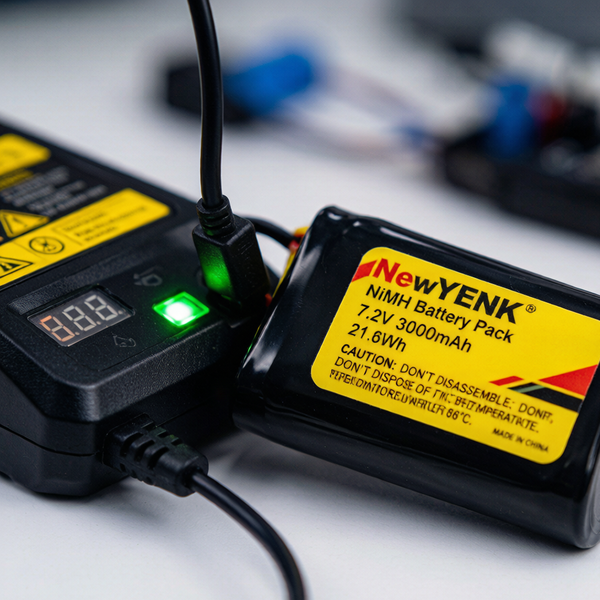
Why Is LiPo Cutoff Important for RC Cars?
One important difference between NiMH and LiPo batteries is battery protection.
Unlike NiMH batteries, LiPo batteries should not be discharged below a safe voltage level. This is why many RC systems use LiPo cutoff for RC car applications.
Low-voltage cutoff helps prevent excessive battery discharge by automatically limiting operation when the battery reaches a certain voltage level.
For LiPo users, proper battery management is essential.
This includes using a suitable LiPo charger, selecting the correct ESC settings, avoiding deep discharge and storing batteries properly when they are not being used.
With proper management, LiPo batteries can provide consistent performance over many driving sessions.
How to Choose the Right RC LiPo Battery After Upgrading?
Once you decide that upgrading to LiPo is suitable, the next step is choosing a battery configuration that matches your RC vehicle.
Voltage should always match the ESC and motor requirements. Using a battery with unsuitable voltage can create compatibility issues.
Capacity affects runtime and weight. A larger battery can provide longer driving time, but additional weight may affect handling.
Discharge capability determines how effectively the battery can provide current during acceleration and high-load operation.
Yattox provides different RC LiPo battery configurations for various performance requirements, including:
2700mAh 4S 14.8V 35C LiPo Battery
4000mAh 4S 14.8V 35C LiPo Battery
5200mAh 4S 14.8V 35C LiPo Battery
These options support different requirements for battery size, runtime and power output across RC applications.
FAQ
Can I replace a 7.2V NiMH battery with a 2S LiPo battery?
In many cases, yes, but you should confirm that the ESC supports LiPo batteries and that the vehicle components can handle the additional power output.
Is LiPo always better than NiMH for RC cars?
Not always. LiPo batteries provide better performance potential, but NiMH batteries remain a practical choice for beginners, casual driving and older RC systems.
Do I need a special charger for RC LiPo batteries?
Yes. LiPo batteries require chargers designed specifically for lithium batteries, including balance charging functions.
What is LiPo cutoff for an RC car?
LiPo cutoff is a protection feature that prevents the battery from being discharged below a safe voltage level during operation.
Conclusion
The decision between LiPo vs NiMH for RC cars depends on your vehicle, driving style and performance expectations.
A LiPo upgrade can provide stronger acceleration, better power consistency and improved driving response. However, the benefits are only noticeable when the battery matches the motor, ESC and overall RC system.
For compatible vehicles, a NiMH to LiPo conversion can be one of the most valuable upgrades available. For casual users or older RC models, staying with NiMH may still be the better option.
Before upgrading, evaluate your RC setup carefully and choose a battery configuration that fits your actual performance needs.