


The Right RC Buggy Battery for On-Road, Off-Road and Bashing Setups
August 18, 2026
How to choose the right RC buggy battery for on-road racing, off-road driving and bashing. Compare capacity, discharge, voltage and size, and explore customized RC battery solutions.
Table of Contents
The Right RC Buggy Battery for On-Road, Off-Road and Bashing Setups
Introduction
Choosing the right battery is an important step when building or upgrading an RC buggy.
Different driving environments create different battery requirements. An on-road racing buggy usually focuses on lightweight performance and fast response, while an off-road buggy needs stable power delivery when driving through grass, dirt or uneven terrain. For bashing, durability and balanced performance are often more important than maximum output.
Because of these differences, there is no single battery configuration that works best for every RC buggy.
The right RC buggy battery should match the vehicle platform, motor system, driving style and expected runtime. This guide explains how to select a suitable battery for RC buggy applications for racing, off-road driving and bashing setups.
What Should You Consider When Choosing an RC Buggy Battery?
Selecting an RC buggy battery requires more than choosing the largest capacity available.
The battery needs to work together with the entire vehicle system. Factors such as voltage, capacity, discharge capability, physical size and weight all influence the final driving experience.
| Selection Factor | Impact on RC Buggy Performance |
|---|---|
| Voltage | Determines compatibility with the vehicle power system |
| Capacity | Affects driving time before recharging |
| Discharge capability | Influences acceleration and power response |
| Battery size | Determines whether the pack fits the vehicle |
| Weight | Affects handling and overall balance |
For example, a high-capacity battery can provide longer runtime, but additional weight may reduce agility in racing applications. On the other hand, a smaller battery may be more suitable when quick response and handling are the priority.
The best battery choice is not based on one specification, but on how the RC buggy is actually used.
Choosing the Right Battery for Different RC Buggy Driving Styles
RC buggy applications can generally be divided into three categories: on-road racing, off-road driving and bashing.
Each driving style has different priorities when selecting a battery.
On-Road RC Racing Setup
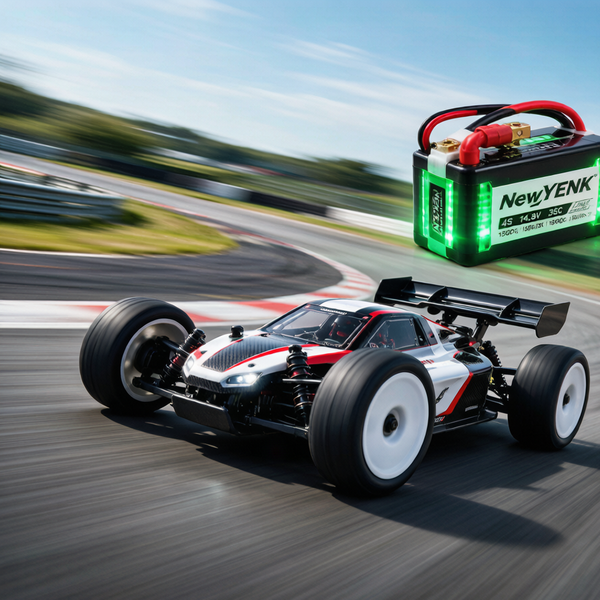
On-road racing focuses on speed, acceleration response and precise control.
For racing applications, battery selection usually prioritizes consistent power delivery and efficient weight management. A lighter battery can help improve handling, while stable output helps maintain performance throughout a race session.
An RC racing battery should provide reliable power during frequent acceleration and braking. If the battery output changes significantly under load, the vehicle may feel less responsive during important moments.
For competitive racing, the ideal choice is usually a balance between runtime and weight rather than simply selecting the highest-capacity battery.
Off-Road RC Battery Selection
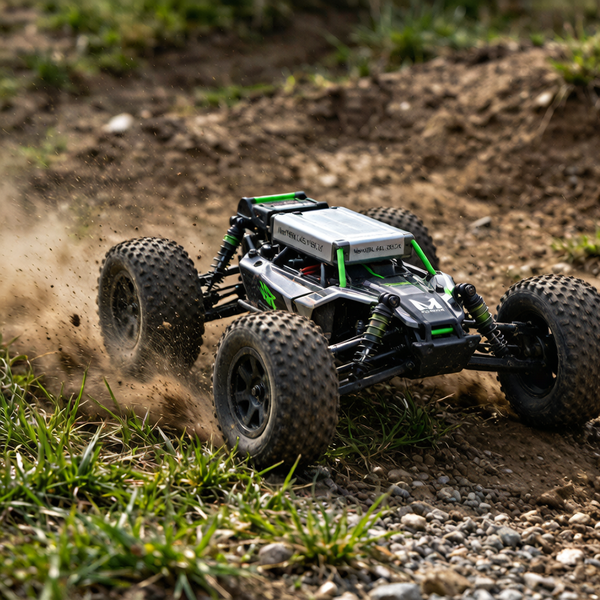
Off-road driving creates more demanding conditions because the vehicle often operates on uneven surfaces such as dirt, grass and gravel.
Compared with smooth tracks, off-road vehicles experience higher resistance and more frequent changes in motor load. Therefore, an off-road RC battery should focus on stable power delivery and reliable runtime.
A suitable off-road setup helps maintain consistent performance during longer driving sessions and high-load situations.
For larger off-road buggies, users often prefer battery configurations that provide enough energy for extended driving while keeping the vehicle weight within a reasonable range.
Battery Choice for RC Bashing
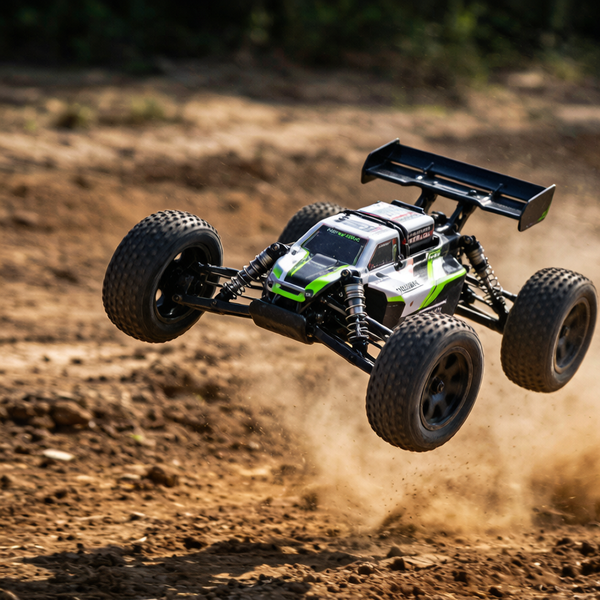
Bashing focuses on fun, durability and flexible driving rather than competition performance.
During bashing, RC vehicles often experience jumps, impacts and repeated acceleration. Because of this, battery selection should consider long-term reliability as well as power output.
A suitable battery for bashing usually needs a good balance between:
- Runtime
- Power delivery
- Vehicle weight
- Durability
Instead of selecting the highest specification battery, many users benefit more from choosing a configuration that matches their driving habits and vehicle setup.
How Capacity and Discharge Capability Affect RC Buggy Performance?
Battery capacity directly affects how long an RC buggy can operate.
A higher-capacity battery generally provides longer runtime, but it also increases weight and may affect handling. This is why racing setups and recreational setups often have different capacity preferences.
Discharge capability is especially important for RC buggies that require strong acceleration.
A high discharge RC battery can provide more stable current output when the motor demands additional power. This is useful for:
- Fast acceleration
- High-speed driving
- Heavy-load terrain conditions
However, higher discharge capability is not always necessary. The battery should match the motor and vehicle requirements instead of selecting the highest rating without considering the complete system.
How to Match an RC Car Battery Pack With Your Buggy?
Before purchasing an RC car battery pack, users should confirm that the battery matches both the physical structure and performance requirements of the vehicle.
Battery Size and Installation Space
Different RC buggies use different battery compartments.
The battery dimensions, connector position and mounting method should all be considered before selection.
A battery with higher capacity may provide longer runtime, but it may not fit every buggy platform.
Voltage Requirements
The battery voltage should match the vehicle’s power system.
Selecting the correct voltage helps maintain stable operation and ensures that the battery works properly with the motor and electronic components.
Driving Requirements
The most suitable battery also depends on how the buggy is used.
A racing vehicle may prioritize lightweight performance, while an off-road or bashing vehicle may require more runtime and stable power output.
Understanding the driving environment is one of the most important steps when selecting a battery.
Customized RC Buggy Battery Solutions for Different Applications
Different RC buggy platforms have different requirements, which is why battery selection often requires customization rather than a standard solution.
Yattox supports customized RC battery solutions for brands, distributors and project requirements, helping customers match battery configurations with specific vehicle designs.
Customization options can include:
- Battery capacity
- Voltage configuration
- Discharge performance
- Connector selection
- Wiring design
- Pack dimensions
For different RC applications, the battery solution can be adjusted according to vehicle size, performance requirements and installation conditions.
This approach helps RC brands develop more suitable battery options for racing platforms, off-road vehicles and other high-performance RC applications.
FAQ
What battery is best for an RC buggy?
The best RC buggy battery depends on the vehicle type and driving style. Racing setups usually focus on lightweight performance, while off-road and bashing vehicles often require stable power output and longer runtime.
How do I choose a battery for an RC buggy?
A suitable battery should be selected based on voltage compatibility, capacity, discharge capability, physical size and the way the vehicle is used.
Is a higher capacity battery always better for RC buggies?
No. Higher capacity provides longer runtime but also adds weight. The ideal battery depends on whether the priority is speed, handling or driving time.
Do RC buggies need a high discharge battery?
A high discharge RC battery is useful for vehicles that require strong acceleration and high current output. However, the battery specification should match the motor and vehicle requirements.
Conclusion
Choosing the right RC buggy battery requires understanding the relationship between the vehicle and its driving environment.
On-road racing setups usually require lightweight and responsive power delivery. Off-road vehicles need stable performance under heavier loads, while bashing setups require a balance between runtime, durability and power.
Instead of choosing a battery based only on capacity or discharge rating, users should consider the complete RC system and actual driving conditions.
By selecting the right battery configuration, RC enthusiasts, brands and distributors can achieve better performance, reliability and overall driving experience.